Community Corner
Holliston Railroad Was Something to Bragg About
The former town treasure was a victim of the times.
It was early Sunday, and the cold morning drizzle had frozen on the face of the square granite marker, obscuring the information that had once been so carefully inscribed. I ran my fingers over the remnants of information, once thought permanent, and shapes became letters, and letters became words. I believed I had found the spot.
I was in Braggville, on a quest to connect dots and make sense of our past, while reconciling our future. More precisely, I was in the Braggville Cemetery on Rockland Street, also known as the Bragg Family Cemetery, and there, beneath a pre-winter sheen, I believed I had found the final resting spot of John Fisher Bragg.
I don't know a lot about John Fisher Bragg, and no doubt future research could resolve with certainty the few assumptions I will make about his life. But I believe it reasonable to conclude that he is a descendent, most likely a grandson, of Arial Bragg, the man most responsible for Holliston's rise as a 19th century shoe manufacturing center, and the man for whom this small corner of Holliston, Medway and Milford is named.
Find out what's happening in Holliston-Hopkintonfor free with the latest updates from Patch.
What I know for certain about John Fisher Bragg is that he was the father of Mabel Bragg.
Mabel Bragg was born in Braggville on September 15, 1870. In time, she became a teacher of high regard. Despite claims to the contrary, Mabel Bragg is still widely recognized as having authored the classic children's book, "The Little Engine That Could."
Find out what's happening in Holliston-Hopkintonfor free with the latest updates from Patch.
For those who have never stumbled over one of its more than five million printed copies, "The Little Engine That Could" is a story of the power of positive thinking and perseverance. A small train engine, carrying a load of toys to children in the valley, must cross a hill whose daunting incline exceeds the train's normal capacity. Other larger engines, having no such disability, dismiss the Little Engine and claim it incapable of delivering its load. But the Little Engine, determined not to disappoint the children, refuses to heed the scornful sneers of its larger brothers. Chugging out a mantra of "I think I can, I think I can, I think I can," The Little Engine is able to climb the hill and ultimately deliver its treasured cargo.
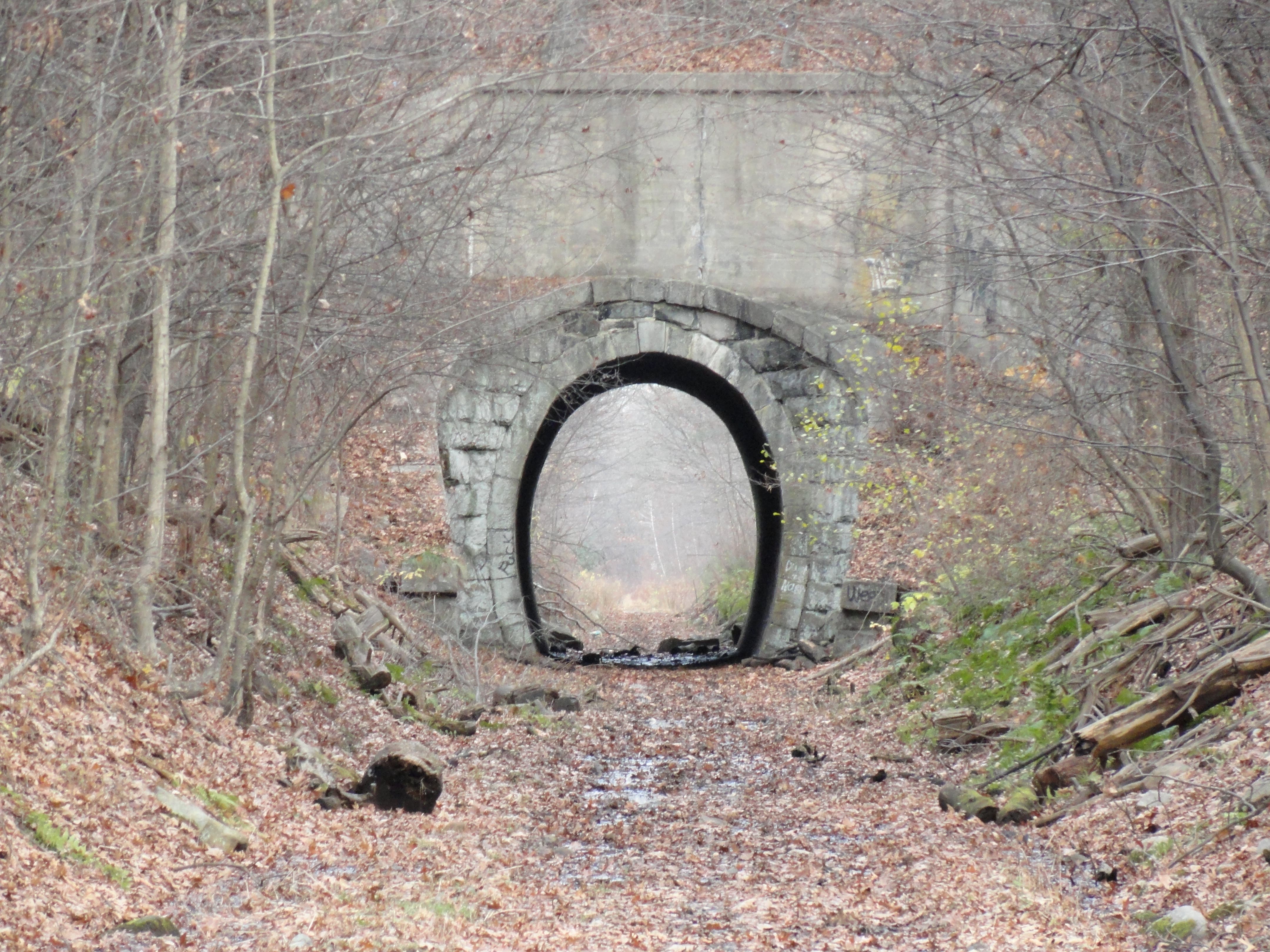
I grew up with this story, and upon learning of the Mabel Bragg connection, often wondered whether she, in its writing, pictured this engine coming through Holliston, up and over Phipps Hill (Summer Street tunnel notwithstanding), and down into Braggville. I like to think she did. Because in so doing, much like in the reading of a Spencer novel, I am able to visualize the story in a manner that conforms to my own understanding of its setting.
But, as fiction can portend reality, they'll be no more toys in Braggville. In a mid-November meeting, Selectmen moved closer to driving the final spike into an agreement that will forever end rail service to Holliston. And I must admit to being slightly saddened by this inevitable occurrence.
That agreement would provide for the purchase and lease of the original rail bed from current owner CSX, allowing the extension of the Upper Charles Rail Trail through town. Linking Holliston to Milford, Sherborn, Ashland and Hopkinton, the approximately 20-mile long trail is intended as an off-road path for non-motorized uses such as biking, walking and cross-country skiing.
I am not inherently inclined to disapprove of projects such as the rail trail. And I am not so naïve as to believe that with easy rail service available to Holliston residents through Ashland to the north and Norfolk to the south, that the reestablishment of a rail line through Holliston makes any sense.
Yet, as someone who first lived in Holliston on Regal Street, immediately adjacent to the twice-daily train runs that occurred then, I relate this permanent end of rail service with the passing of an older friend. I believed I would live to see it happen, and hoped that I wouldn't.
The first train reached Holliston on July 4, 1847. For more than a century, the rail line served as the town's primary artery, pumping life into our small community through the introduction of new people, commerce and industry.
Its loss closes another chapter in the history of our town, and further reinforces my belief that not all change is good. I leave the cemetery, and turning right onto South Street, I travel a brief distance before pulling over next to the former track crossing. I get out of my car, and to the west, see two people in the gloom, walking a dog down the path in my direction. We cross as I, armed with an old map, search for signs of the old Braggville Railroad Station. I see nothing, other than a stone retaining wall, its functional life far exceeding its practical use. Then, lost in a nest of overgrown brush, I discover a souvenir. I determine it to be a rail splice connection of some sort, and picking it up gingerly, I deposit it in the back of my car.
I brought it home. It is from here that I will reflect on this important period and aspect of our town's history. And it is also from here, when in lying in bed on hot summer nights, I will hear the rumble of freight trains through downtown Ashland, with their steady hum calling "I think I can, I think I can, I think I can."