Politics & Government
Legislature Sends Water Infrastructure Reform Bill to Governor
Sen. Eldridge and Rep. Dykema lead four-year effort to increase state investment in water infrastructure.


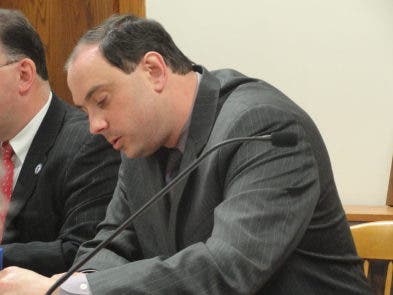
Submitted by the office of Sen. James Eldridge
The Senate and House passed final legislation that makes critical investments in our state’s water infrastructure while instituting reforms that will better protect our environment, water supply and make substantial contributions to public safety, economic development, tourism and the overall quality of life across the Commonwealth.
“After four years of hard work, I’m very pleased that the Legislature has passed ‘An Act improving drinking water and wastewater infrastructure’ this session,” said Senator Jamie Eldridge, D-Acton. “This bill, thanks to the leadership of Senate President Murray, Speaker Deleo, Rep. Carolyn Dykema (D-Holliston) and dozens of environmental, municipal, water and engineering stakeholders, will increase investment in water infrastructure across the state, reform how infrastructure is funded, and prioritize the use of green infrastructure to begin adequately addressing our state’s urgent water infrastructure needs. I could not be more proud of this bill and am excited to see how the legislation will spur innovation, jobs and improve water quality across the Commonwealth for generations to come.”
Find out what's happening in Holliston-Hopkintonfor free with the latest updates from Patch.
“It is becoming increasingly clear that the protection and management of our water resources is critical to our communities,” said Rep. Dykema. “This bill takes a significant step toward partnering with our cities and towns to better manage our water and wastewater systems while also preparing for long-term maintenance and investment.”
“In Massachusetts, we remain dedicated to addressing the water and wastewater infrastructure challenges affecting our communities,” Senate President Therese Murray (D-Plymouth) said. “A commitment to improving our water is a commitment to improving our economic strengths, and through this legislation, we are taking the first steps to ensure that our future is not limited by our access to clean drinking water.”
Find out what's happening in Holliston-Hopkintonfor free with the latest updates from Patch.
“As Speaker and representative of a coastal community, I’m keenly aware of the burden cities and towns have of in disposing wastewater,” said House Speaker Robert A. DeLeo, D-Winthrop. “I thank Senate President and my colleagues for helping to develop legislation that builds on the strides we have made in the area of clean water in recent years, including strengthening the Massachusetts Clean Water Trust. Measures, such as improving the process for towns handling of wastewater, and providing aid to those seeking to join the Massachusetts Water Resource Authority, and others, will help keep our waters clean in a responsible, efficient manner while putting resources into water technology innovation will place Massachusetts at the cutting edge of such technology and create jobs.”
“Clean water is a precious commodity,” said Representative Anne Gobi (D-Spencer), Chair of the Joint Committee on Environment, Natural Resources and Agriculture. “This bill helps to strengthen important partnerships with our towns to make sure that water is delivered safely and waste is dealt with effectively while instituting new technologies and approaches for more cost effective water infrastructure.”
The bill significantly expands the spending capacity of the Massachusetts Clean Water Trust, formerly the Water Pollution Abatement Trust, with an increase from $88 million to $138 million and imposes a spending floor of 80 percent. To allow for more flexibility, the bill creates a sliding scale interest rate from 0 to 2 percent and establishes a principal forgiveness program for qualifying projects.
The Massachusetts Clean Water Trust currently holds a “AAA” rating from Moody’s, Fitch and Standard & Poor’s and is the only statewide municipal bond issuer to maintain a “AAA” from all three major rating agencies.
The bill defines “green infrastructure” for the first time in statute and recognizes its importance in future water infrastructure rehabilitation and development efforts. The bill creates and allocates $3 million to a technical assistance program to be used for the development of asset management plans and to identify green infrastructure opportunities in the Commonwealth. Green infrastructure projects will also be considered in Department of Conservation and Recreation grant funding, for innovative water pollution control research and demonstration projects, environmental quality studies, management plans and training and support programs. The bill includes green infrastructure projects in the Massachusetts Department of Environmental Protection’s municipal technical assistance program to identify and plan for green infrastructure opportunities. The bill also incorporates green infrastructure in capital funding by authorizing the Water Pollution Abatement Trust to establish a preferred financing (loans below 2 percent; zero percent loans and principal forgiveness) for qualifying green infrastructure projects.
Additionally, the legislation provides $1.5 million for a water technology innovation grant program administered by the Massachusetts Clean Energy Center to promote the water technology industry in Massachusetts.
To aid coastal towns in developing alternative wastewater disposal options, the bill amends the Ocean Sanctuaries Act to create an approval process through DEP for discharging municipally treated wastewater into ocean sanctuaries.
To defray the cost of the entry fee, which often acts as a barrier for cities and towns wanting to join the Massachusetts Water Resources Authority (MWRA), DEP is also permitted to administer a matching grant program for communities seeking to join the MWRA or any other regional system.
Created by the Legislature in 1984 to provide wholesale water and sewer services, 61 communities are MWRA members, including 51 for drinking water purposes and 43 for wastewater purposes. Member communities still operate their own local distribution networks, which connect to the MWRA.
The bill also does the following:
· Gives the Public-Private Partnership Oversight Commission authority to assist in evaluating proposal for public-private partnerships received by cities and towns;
· Simplifies the regulatory burden of complying with Title V;
· Encourages regional projects by allowing public entities to jointly apply for planning grants to develop water pollution abatement plans;
· Requires DEP to disseminate regulations requiring interruption devices on newly installed or renovated irrigation systems; and
· Requires the Massachusetts Clean Water Trust to consult with the Division of Local Services to establish and publish guidelines for best management practices in water management.
The bill now goes to the Governor for his final approval.
Get more local news delivered straight to your inbox. Sign up for free Patch newsletters and alerts.