Neighbor News
Michael Coyne, dean of Massachusetts School of Law, offered tips for succeeding in divorce and family court proceedings and the dangers of self-representation on this week's Talking About Divorce radio show, hosted by Attorney Irwin Pollack.
Law school dean says 'be clear, courteous and in command' to succeed in divorce or family law - and don't go to court without a lawyer
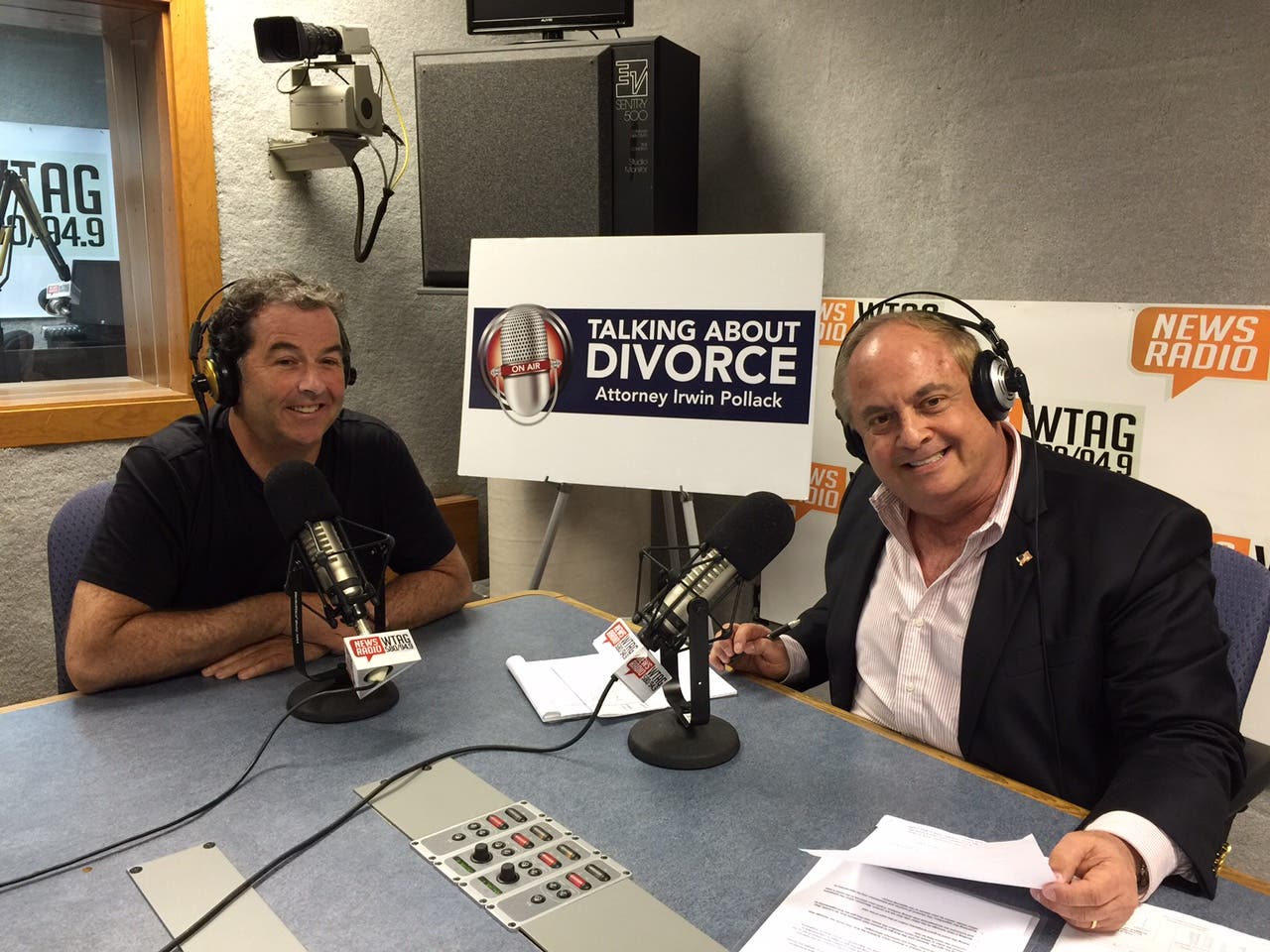

Michael Coyne, the dean of the Massachusetts School of Law in Andover, offered tips for succeeding in divorce and family court proceedings on this week’s Talking About Divorce radio show, hosted by Attorney Irwin Pollack. Coyne also explains some of the dangers of going to court without a lawyer.
PAXTON, MA – The key to success when appearing in court for a divorce, family law or any other type of case lies in the “Three Cs,” says Michael Coyne, dean of the Massachusetts School of Law in Andover. “Be clear, be courteous and be in command.”
Coyne was the special guest on this week’s Talking About Divorce radio show hosted by Attorney Irwin Pollack. He talked about successful courtroom strategies, as well as the dangers of self-representation in divorce and family law matters. He also noted that most family law cases are heard before a single judge, not a jury, which is why it is important to be properly represented.
Find out what's happening in Holliston-Hopkintonfor free with the latest updates from Patch.
“You wouldn’t take out your own appendix,” Coyne said. “I think on some cases, it’s just as foolish to think that you can represent yourself successfully in court. It’s why lawyers are often times necessary.”
When it comes to presenting a case in court, regardless of the legal matter, Coyne said he stresses to all law school students that it’s important to be clear as to what you want and about what you’re hoping to accomplish when you go to court. It’s important to know all the facts of the case, and to present them clearly so the court has straight-forward, trusted facts on which to base its decision, he said.
Find out what's happening in Holliston-Hopkintonfor free with the latest updates from Patch.
It’s also important to be courteous, not only to the judge and court staff, but also to opposing counsel and anyone else involved in the case, Coyne said. “As lawyers, as advocates, as people … be polite. Disagree without being disagreeable.” This is especially important to remember in divorce and family law cases, where emotions often run high, he added.
“The attorneys are the ones that judges sometimes have to remind, ‘You’re not the ones getting divorced,’ ‘’ Pollack noted.
The final, and perhaps most important point, is to be in command of the laws and court procedures, and even the different preferences of each judge, Coyne said. While the laws are the same, each judge and each court may have different policies and procedures. It’s important to how the judges and courts operate and follow those policies and procedures accordingly.
The latter point underscores one of the dangers of going to court without a lawyer, Coyne noted. A self-represented or pro se litigant doesn’t necessarily know the laws, rules of evidence or courtroom policies. So they may not understand why a judge won’t allow certain statements or evidence to be admitted.
“That’s where a pretty high level of frustration builds into the equation,” Coyne said. “A judge will often say, `I don’t want to hear that – that’s not relevant.’’ So a litigant will often times think, `I’m not being heard.’ ... But they’re not necessarily being heard on that point because the court made the determination that it’s not relevant, or it’s not coming from an admissible source.”
This is an example of how why a self-represented litigant is at a “significant disadvantage” during court proceedings, Coyne said. “A lawyer who works in the Probate & Family Court on a regular basis would be well-versed in and be able to navigate those waters a little better.”
Judges have a lot of discretion, and with that discretion, there’s room for error, Coyne noted. But it’s important to know how to protect the record in order to appeal a judge’s ruling. This is something the average lay person may not understand, which is why it is wise to be represented by an attorney during court proceedings, he said.
Coyne acknowledged that the high costs associated with legal fees and court appearance may deter people from hiring a lawyer to represent them. He said one of the goals of the Massachusetts School of Law is to make law school more affordable so attorneys can go back into their communities and offer legal services for reasonable fees. The goal, he said, is to make legal representation affordable so that people can get the protection they need.
About Talking About Divorce
Talking About Divorce is the only live and local radio talk show in the region focused solely on issues surrounding divorce and family law. Hosted by Attorney Irwin Pollack, founder and president of Pollack Law Group, P.C., Talking About Divorce is broadcast live each Sunday at noon on NewsRadio 580/94.9, WTAG. Learn more by visiting TalkingAboutDivorce.com.