Arts & Entertainment
Surviving A Week Without Power, Lessons Learned
Living without creature comforts for a week, brought on a greater sense of appreciation and determination.


Being one of the thousands of New Englanders without power last week following Irene's ruthless romp across the region, I have a better appreciation of how colonial-era New Englanders survived; through creativity and determination.
I really didn't know how much I depended on electricity, until it dissappeared last week, along with fresh brewed coffee, warm showers, and an internet connection.
I have never spent an abundance of time on the prairie or in the open wilderness, unlike Henry David Thoreau, who chose to forgo the comforts of Main street in search of a simpler lifestyle.
Find out what's happening in Holliston-Hopkintonfor free with the latest updates from Patch.
Henry David Thoreau hiked to Walden Pond and the nearby fringe of woods owned by his friend Mr. Emerson. The air was cool and smelled of rain and fir trees. "Here I will build myself a tiny cabin-not one inch bigger that I need," said Henry to a squirrel, who was watching him from a tall tree. "I will taste each season and listen to the voice of every creature I meet." From: "The Trouble with Henry," by: Deborah O' Neal and Angela Westengard.
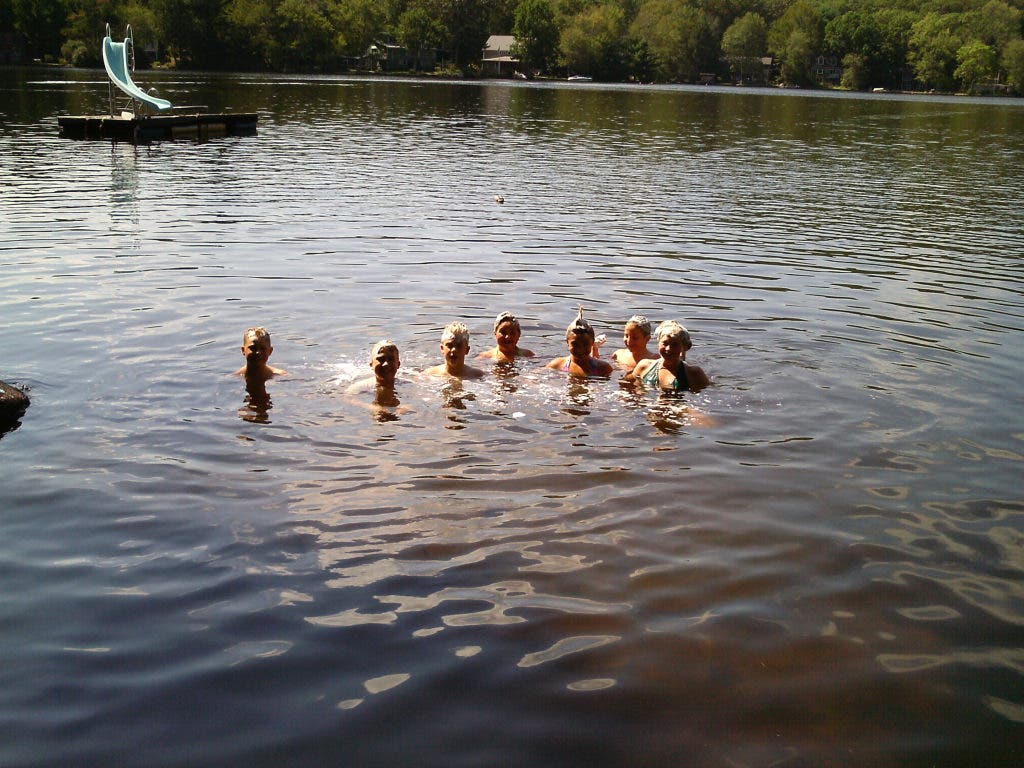
Like Henry, our family did enjoy the quiet respite during the morning hours listening to the birds, tree frogs, and the water, gently lapping against the shoreline.
Find out what's happening in Holliston-Hopkintonfor free with the latest updates from Patch.
We didn't miss the drone of the morning news filling our minds with the state of the economy or wars going on overseas, and the kids played cards in the morning instead of robotically turning on their ipods and electronic devices.
Living without power was like stepping back in time to a simpler lifestyle for our family. We grilled outside, fetched water in buckets, and read by candlelight.
After four day's however, our camping adventure began to get a little stale. Cold showers and lack of coffee made us all a little irritable.
We reminded our children of how the early settlers and pioneers survived all of their lives without running water and electricity, as they rolled their eyes.
Blissfully, our power did eventually come back on due to the arduous, combined efforts of the Hopkinton police and fire departments, visiting our neighborhood and assisting with NSTAR.
We did learn several lessons:
1. Our generator was a life saver- Having a generator allowed us to run our refrigerator, fish tank, and a few lights.
2. Extra batteries- We stocked up on extra batteries for our lantern and flashlights.
3. Extra propane- Being able to use the grill saved our meat from spoiling and provided days worth of meals. We saved hundreds of dollars from having to eat out at restaurants every night as well.
4. A ten-gallon, plastic water container - Before our power went out we filled up two containers of fresh water for drinking and washing dishes.
5. Entertainment- We downloaded a few movies on our ipods before power went out. Helpful for a few days. The rest of the time was spent playing outdoors, reading, and playing board games.
6. The neighborhood coming together- People in our neighborhood gathered together to help each other. We exchanged batteries, firewood, and chainsaws. We were able to spend time together with people that we never usually get to see.
Though losing our power for a week was trying experience for all of us, we learned that we don't necessarily have to have electronics on all of the time, and to spend more time with each other doing simple tasks is a good thing.
We were able to survive like the early settlers did, by banding together as a community to solve our problems, and enjoy the simpler things.