Health & Fitness
JP Green House — An Urban Homestead
We're trying to do the impossible: Live with two kids on a carbon-budget suitable for a roasting planet of 7 billion in an expensive US city. But watch us try.
The homesteading trend of the 1960s and 1970s is almost always described as a “failed movement.” If it was such a failure, I wonder why it is clearly on the rise again now. The climate movement, the sustainability movement, the localization movement--all of these are indebted to the radicals of the 1970s who saw the writing on the wall that told them the planet cannot take much more.
I call an urban homestead. I also call it a "demonstration home." For me, the homesteading part is the fun--gardening, canning, biking for transportation, re-using, hands-on parenting and general thrift. The idea of a "demonstration home" for low-carbon living relates to my dedication to climate change activism. It comes out of an attempt to demonstrate the joy and the necessity of living with less. I am convinced that the future will require this of us, and sometimes this is less fun, as I look ahead with trepidation.
I just finished Melissa Coleman’s memoir, This Life is in Your Hands, of her childhood on a Maine homestead. She is exactly my age (43), and although her prose varies, the book naturally grips those of us born in the 1960s and 1970s. Our parents could have been Melissa’s parents--Eliot and Sue Coleman. Inspired by Helen and Scott Nearing, they bought land on the coast of Maine, and set to farming with strict organic principles, vegetarian diets, and no indoor plumbing or electricity. And yes, things went badly.
Find out what's happening in Jamaica Plainfor free with the latest updates from Patch.
The Nearings had a famous formula that’s really appealing: put in four hours a day of hard manual labor, devote another four to intellectual pursuits, and then give four hours to community time, or social life. They ate like mice, cheated a bit here and there (trips to Florida in the winter), but basically it worked for them.
The Nearing formula collapses when you add children. Two people can maintain a homestead with the relatively leisurely pace described by the Nearings, as long as they have modest needs, but children, especially when they’re little, represent a full-time job for one person. And especially when you’re out in the woods with no Pampers. This immutable fact was proved ruinous for Melissa’s baby sister, and for the mental health of their mother. Eliot Coleman, however, has gone on to a brilliant career as a pioneer in organic farming and four-season growing in New England.
Find out what's happening in Jamaica Plainfor free with the latest updates from Patch.
This week the boys are away and I'm making peach jam, desperately weeding (against all odds of ever having one of those "pretty" gardens), trying to eat all the tomatoes as they ripen, and getting ready for a big climate protest in DC (see TarSandsAction.org).
My car-free life just took another hit, as Kuba's hockey schedule for the year dropped into the inbox: Two games a week in places like Somerville and Waltham. I puzzled once again over certain household expenses: why is insurance the biggest line-item in the budget? I'm considering whether to get the chickens this year or next. The coop is ready, but when will the city of Boston enable the permitting process for household livestock, so that we don't risk losing our birds?
Let me just admit right now that I think I'm trying to do the impossible: Live with two kids on a carbon-budget suitable for a roasting planet of 7 billion in an expensive US city.
But watch us try.
About JP Green House
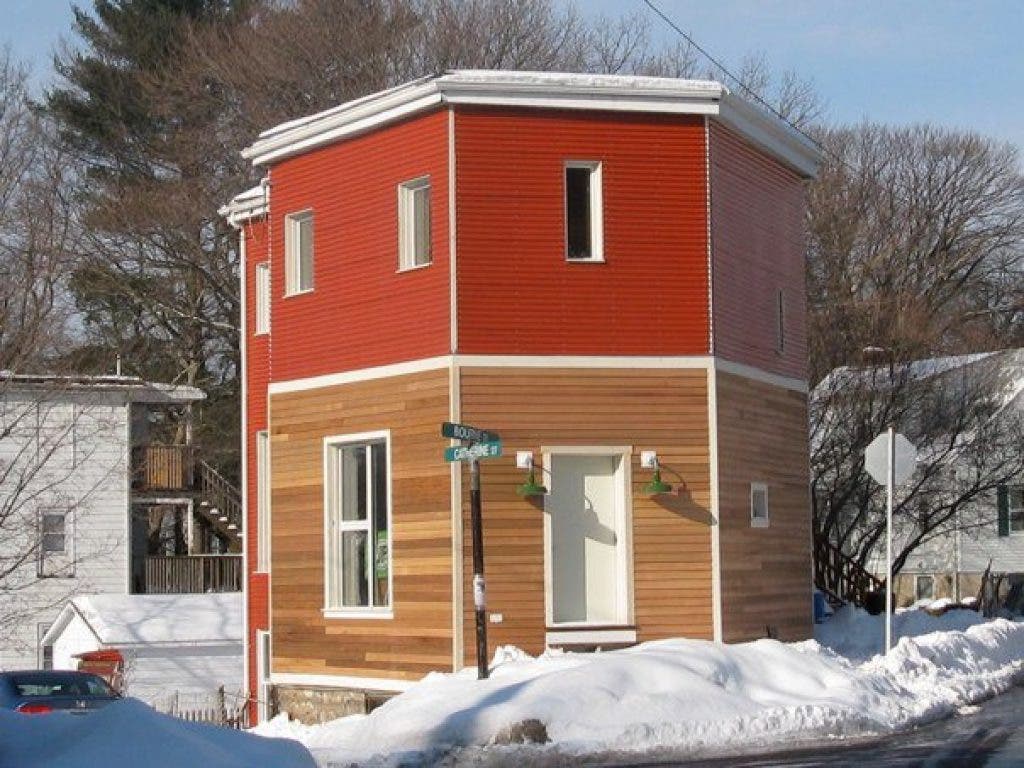
Our century-old house served the Woodbourne neighborhood as "Jack's Corner Store" for 70 years. We bought it in 2008 out of foreclosure,and rehabbed it from a derelict state to be a model for low-carbon living. The house features passive solar design, super insulation, recycled materials, triple-glazed windows, a heat transfer ventilation system and an air-to-water heat pump for hot water.
We maintain an average indoor temperature of 63 degrees in the winter without a heating system. Our organic garden provides all the produce for our family from April to November.
Follow us here on Patch, and on Facebook. We welcome visitors as well! Make an appointment by email: greenhousejp@gmail.com