Politics & Government
Candidates: What Makes Me Stand Out Is...
More than 100 people turned out to see the seven candidates for council-at-large seats discuss neighborhood issues at a forum on Beacon Hill.

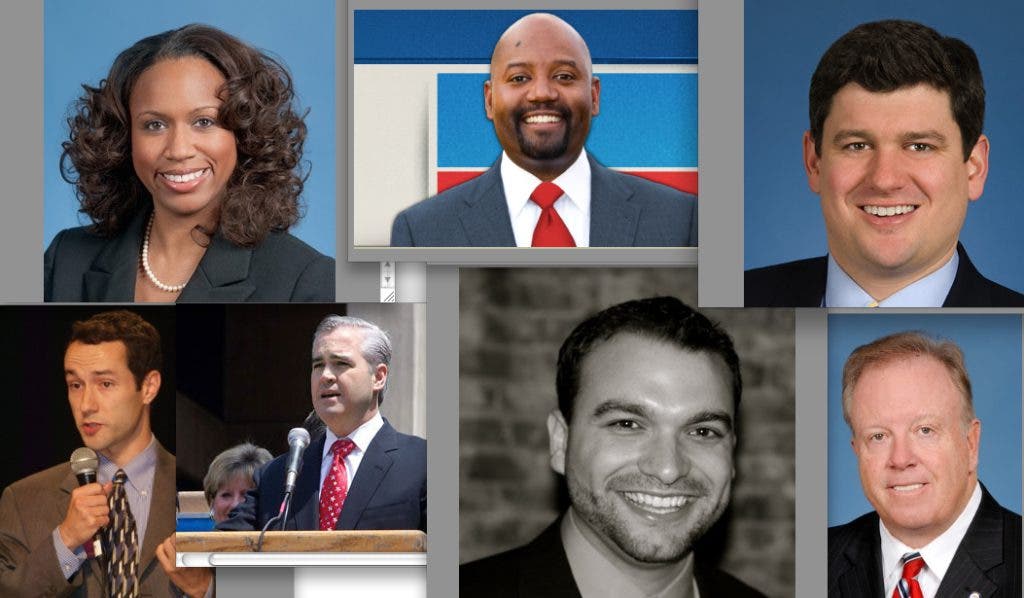
The seven candidates for the four councilor-at-large seats up for grabs Nov. 8 answered questions on a number of neighborhood issues at an Oct. 24 forum at Park Street School on Beacon Hill. The forum was moderated by Peter Nessen. Below is an shortened version of their answers. Note: The following are not direct quotes unless they are in quotation marks.
What makes you stand out from the other candidates?
Find out what's happening in Jamaica Plainfor free with the latest updates from Patch.
Stephen Murphy (incumbent, current president of city council): I bring a wealth of experience in business and finance. I will focus on increasing revenue over next three years.
Ayanna Pressley (incumbent): I've brought a different perspective, working on eradicating poverty and cycles of violence; I've advocated for women and girls, including issues of teen pregnancy and domestic violence.
Find out what's happening in Jamaica Plainfor free with the latest updates from Patch.
Sean Ryan: My goal in running is to elevate the discussion about what's going on in the schools. Specifically, to elevate the voice of parents. Everybody who wants a neighborhood school should have that option.
Felix Arroyo (incumbent): To improve opportunities for the young. And my commitment to the idea that you can feed, house, and clothe your family, and spend some time with them, without working three jobs to do it. Young people today don't have opportunities I had.
John Connolly (incumbent): I think abut our schools every day as a former teacher. I got expired food out of the schools, raised the dropout age to 18 and will work to revamp vocation education that will prepare students for jobs in green tech, high tech. I also do work around addiction and recovery.
Will Dorcena: Too many decisions get made behind close doors, behind the discretion of the public and the media. My big push in city council is to put our checkbook online.
Michael Flaherty: I want to make Boston work for everyone, to remove the pay-to-play development system, to move the $83 million (used in the city's busing program and administration) into the classroom, and to treat crime by tackling substance abuse.
What do you think of the proposal to re-establish neighborhood schools by allowing up to 75 percent of a school's seats to go to kids in the "walk zone" instead of the current level of 50 percent?
Pressley: "First we have to create a legitimate culture of opportunity and equity across our school system so that parents believe kids would get good education... This is a complicated problem that we've been dealing with for 30 years."
Ryan: I'm hoping to be the neighborhood schools candidate. I would support 75 percent. Would support complete neighborhood schools. The flight of the middle and working classes is continuing. "We need stability in the system. Neighborhood schools is not a perfect system but it will provide stability."
Arroyo: The ultimate goal should be neighborhood schools. And the ultimate goal would be to have a school that's so good that people want to go there. The idea is looking to what's available to us now and how we can fix the problems we have.
Connolly: I support the 75 percent proposal but it won't work. We need a more intricate solution. Need a consensus across all neighborhoods.
Dorcena: I would not support it. The way to solve it would be to have good schools in Roxbury and Dorchester. Supporting 75 percent would mean continuing keeping Roxbury and Dorchester kids in bad schools.
Flaherty: 75 is a fair and appropriate start. Fifty-fifty is not working and we are losing families.
Murphy: Because we are busing kids all over the city we have a lack of parental involvement. We spend $88 million on transportation. We should be building new schools.
What are the greatest problems facing Boston's neighborhoods?
Ryan: Schools and safety are the two biggest problems. We have less money as a city and less money as a society. "We all have to have an adult conversation about where this money is going to come from because we just don't have the money we used to."
Arroyo: The lack of jobs for young people.
Connolly: Youth violence. The best public safety policy is great public schools. A 16-year-old dropout is the most likely to be arrested. We also need more resources for English learners. The day is fast approaching that 50 percent of students in Boston public schools will be English learners.
Dorcena: Crime and violence, which need to be solved by police and families. School bullying is also a big issue.
Flaherty: "We do a great job reacting to crime, we don't do a good enough job preventing crime from happening." We need the guns off the street, substance abuse problems.
Murphy: The lack of infrastructure and city services downtown, which is where the city is growing.
Pressley: Street violence, petty crime, violence in homes. You're not going to have more commercial development until the city is safe.
What is your position on the proposal to expand the areas subject to the shadow law?
Arroyo: I support it. I believe that development could be a very good thing for a city but the downtown areas are not just for shopping; there are people who live here.
Connolly: I'm open to it and I am concerned. My concern is that it would hamper appropriate development and I don't want to do that in this economy. I don't want to rubber-stamp bad projects either. We need a balance.
Dorcena: I support it. "This is Boston. This isn't Chicago, this isn't New York." We have a two-year-old daughter and we spend a lot of time in the public garden. Overdevelopment is just not good.
Flaherty: Open space in our city is a jewel and should be protected but would like to have a little flexibility in it.
Murphy: It allows development to continue within zoning limits but would expand protection. All it's saying is to live within zoning limits. Why can't we have that?
Pressley: I appreciate the intent behind legislation and I am open to it but I'm concerned about shifting more control to the state.
Ryan: There are tons and tons of rules here. We shouldn't put development standards at the state level because it's harder to change at that level.
Where can the city find new sources of revenue and where should cuts be made?
Connolly: I think the fiscal health of the city overall is strong. We don't borrow to an excessive rate. But we have unfunded pension liabilities. We need to make sure large tax-exempt institutions are paying their fair share.
Dorcena: Our fiscal health is strong, but we need a very detailed accounting. Nonprofits need to pay more.
Flaherty: We need PILOT (Payment in Lieu of Taxes) reform to reign in colleges and hospitals that have continued to gobble up properties off the tax roll.
Murphy: We bond below our debt limit. We ought to look at developing Downtown Crossing with city money.
Pressley: Our fiscal health is sound, but when you have a bad economy there's really no such thing as a good budget. We could have more efficient snow removal.
Ryan: The education-debt bubble is going to pop and colleges won't have as much money. I don't support raising taxes, don't support raising fees, don't support PILOT. We have to do more with less. We spend $15,000 per public school student; a lot of that goes to busing and administration.
Arroyo: Half or more property is not being taxed. Half of us are paying the load for the other half. I wants the $1 billion we have invested in banks invested in banks that are investing in Boston.
Do you support gambling in Massachusetts?
Arroyo: Yes.
Connolly: We need a referendum
Dorcena: No.
Flaherty: Yes.
Murphy: Yes.
Pressley: No.
Ryan: We need a referendum.
How do we address continued institutional expansion?
Dorcena: Colleges are not opening their doors to kids from Boston. We need to hold their feet to the fire regarding the PILOT program.
Flaherty: Colleges and hospitals are some of the cities greatest employers but they do the city a huge disservice when they gobble up property, shifting the tax burden to residents. They also need pressure to keep students on campus.
Murphy: We rely on property taxes but 54 percent of property in Boston is tax exempt. If we don't do something in regard to PILOT, we will hit a wall and won't be able to pay for basic services like police and fire.
Pressley: They have to do a better job at housing their own populations. It's adversely affecting the quality of life. I don't want to demonize colleges, they do make this an attractive place. "They're just... being greedy."
Ryan: They are not being greedy, they are taking advantage of low interest rates. When it becomes apparent that most people can't pay off college debts and can't get jobs, these institutions will get hit hard. I think we're going to see some of these factors naturally resolve.
Arroyo: I understand they employ residents but they shouldn't take precedence over the people who live here. For example, it was a complete atrocity in Allston/Brighton when Harvard just decided to stop their project.
Connolly: I opposed Charles River swap with Harvard. I see institutions encroaching into neighborhoods and not talking to neighbors.
What do you think of the Boston Redevelopment Authority?
Murphy: It needs some reform. The problem with trying to change the BRA is that a new petition needs the signature of the mayor to move forward.
Pressley: The city needs a new planning arm. We need a meaningful community-input process.
Ryan: The BRA was created in 1950s to redevelop downtown and its crowning achievement is Government Center and (the destruction of the) West End, and nobody thinks that was good. There's not much development going on downtown compared to a few years ago and I haven't heard of any layoffs at the BRA.
Arroyo: Planning and development should be in separate departments. No other community combines them like we do.
Connolly: The combination of planning and development is a natural conflict of interest. A planning department should be a check and balance, not a money-making enterprise. We need complete transparency: online access to decisions, schedules, real time frames.
Dorcena: We need a standalone planning committee. We need to reign in the BRA by having the public pressure the mayor.
Get more local news delivered straight to your inbox. Sign up for free Patch newsletters and alerts.