Kids & Family
What Are The Numbered Signs At Partridge Island?
Is there something of local curiosity you'd like to know about? Email william.laforme@patch.com and I'll see what I can find out.


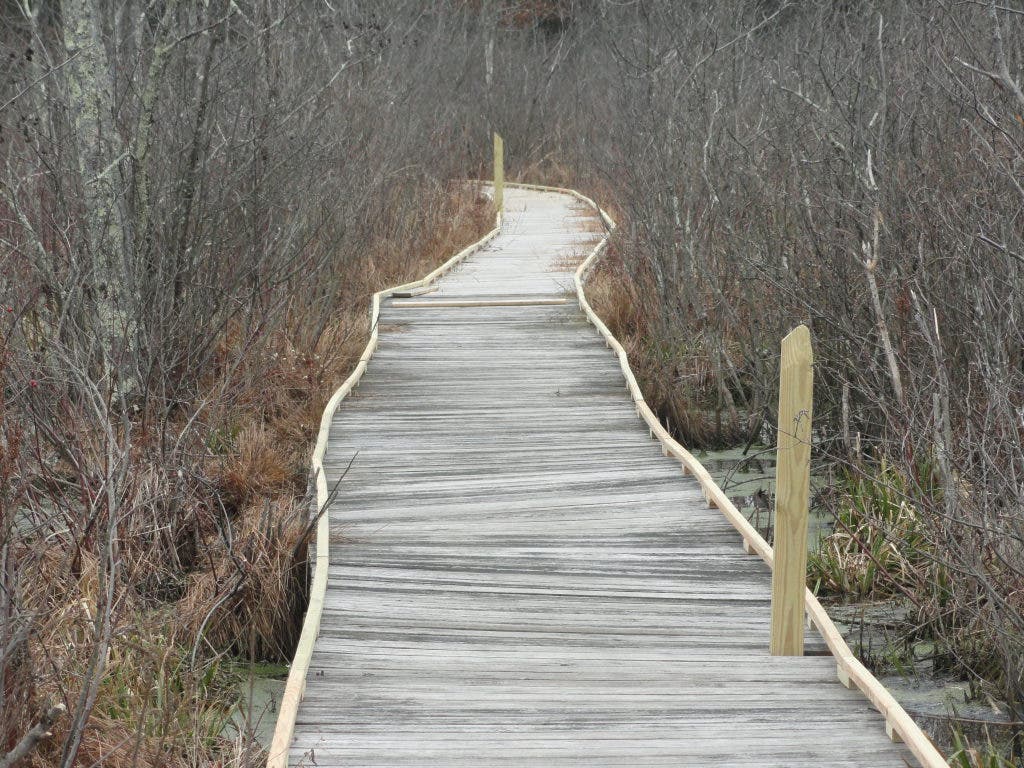
Visitors to the recently renovated Partridge Island boardwalk may have noticed in recent months that there are now numbers mounted on signposts that go along the walkway. But what do they mean?
A year or two ago, Eagle Scout Mike Welter of Troop 48 did a service project that allows walkers to learn more about the plant and animal life in and around Reedy Meadow.
As somebody once said in a great film, "Fall gave winter a miss and went straight into spring." With that in mind, here's a look at what those numbered signposts are all about just in case you happen to find yourself out walking on that trail. And if you're not, don't worry.
Find out what's happening in Lynnfieldfor free with the latest updates from Patch.
Thanks to the Lynnfield Conservation Commission for providing this information:
Sign #1
Find out what's happening in Lynnfieldfor free with the latest updates from Patch.
Alder
The Alders can be found as shrubs or trees. They are commonly found in cool wet lands in elevations up to 2,800 feet. They have either a brown or white bark, and keep their winter buds on the tree or shrub.
Winter berry
This shrub can be 5 to 15 feet in height, and has a grey or black bark. Greenish-white flowers bloom from April to July.
Swamp Azalea
This shrub grows about 5 feet tall, and about 12 feet in width. Its leaves are dark green, and has white, sweet scented flowers, which bloom in the summer. It is commonly found in low lying wetlands.
Sign #2
Sensitive Fern
These ferns can grow up to 4 feet tall and 1 to 2 feet in width. They grow best in shady areas, and are very dark green. They live in meadows and woods, swamps and stream banks, because the sensitive fern requires constant moist soil.
Swamp Rose
This is a shrub which can grow up to 7 feet high. The flowers are a light Pink or light purple. The plant is native to Eastern United States, and is usually found along streams, marshes, and swamps.
Sign #3
Yellow Iris
This plant forms on the banks of lakes, ponds, streams, and rivers. The soil in which it grows in is moist or flooded for most of the year.
Buckthorn
This is commonly a shrub or a small tree that may grow up to 22 feet tall. The bark is gray or brow. Small black fruits form during the fall on Buckthorn.
Sign #4
Sweet Pepperbush
This shrub grows from 6 to 12 feet in height, but is very narrow. The shrub has very fragrant white flowers. Sweet Pepperbush thrives in wetlands, especially swamps.
Skunk Cabbage
This large leaf plant grows in wetlands. The leaves are dark purple, with green patches. The plant is very short, and the leaves grow directly from the ground.
Pickerel Weed:
This plant can grow up to 3½ feet tall. The leaves are a shiny green and the flowers are violet. This plant usually grows along river banks, or wetlands such as marshes, or swamps.
Sign #5
Red Maple
This tree often grows from 40 to 60 feet tall. They are mostly found in low wetlands. Red maple trees also have reddish stems and twigs, and their flowers are followed by small red fruit in the early summer.
Tussock Grass
This grass grows in clumps, or bunches, rather than evenly spreading across a large area. They are most commonly found in wetlands, savannas, woodlands, and forests.
Spotted Turtle:
The Spotted Turtle has yellow spots on the head, neck, legs, and upper shell. The background color is black, and it has orange markings on the face. The number of spots increases with age.
Sign #6
Dogwood Bush
A variety of these species can grow in poor soils, and tolerate air pollution. They grow along streams or ponds. Most have bright red or purple stems.
Virginia Rail
This rail lives in fresh and slat water marshes. It has a wingspan of 13 inches and is 9.5 inches long. Its back is brown and black. It has a long dark red bill, and a grey face. The rail also has a chestnut colored breast and throat.
Sign #7
Spotted Salamander
This salamander has a bluish-black body with orange spots that run from its head to its tail, and are about 9 inches in length. These salamanders live throughout eastern Canada, Eastern U.S, as well as Midwest U.S. They are most commonly found in low-lying forests close to wetlands. Spotted Salamanders only come out during the night to feed.
Black Crowned Night Heron
The black-crowned night heron is 23-28 inches tall. It has a wingspan of almost four feet. It has a black crown and back, gray wings and a white underside. It is found all along the eastern United States.
Sign #8
Sora
This is a small rail which lives throughout North America. They are about 9 to 10 inches in length. They have a blue-grey face and belly. They also have a small, thick yellow beak.
American Bittern
This bird lives in both fresh and saltwater wetlands. It has a length of 28 inches, and a wingspan of 42 inches. It has a brown belly, a white neck, yellow eyes, and dark wing feathers.
Duckweed:
Common Duckweed is a small light green free-floating plant. It has one to three leaves. Big Duckweed has one to four leaves. Duckweeds are most commonly found in dense colonies in swamps or marshes, undisturbed by waves. Often duckweed will cover the surface of the water and cut off oxygen to fish, and sunlight to underwater plants. Ducks carry duckweed to other bodies of water. This is where Duckweed’s name originated from.
Get more local news delivered straight to your inbox. Sign up for free Patch newsletters and alerts.