Sports
Marblehead Tackling Concussion Safety
While most school districts in the state are beginning concussion safety and prevention programs as a result of recent legislation, Marblehead has been tackling the issue for years.
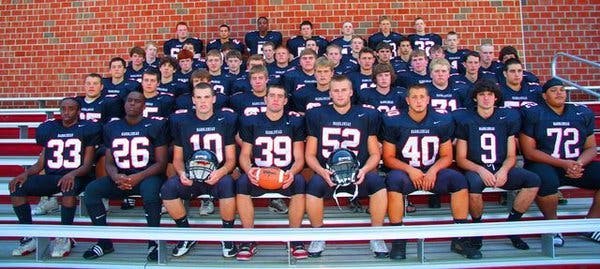
In recent years, the medical community, fueled by troubling physical and mental health concerns of current and former athletes, has turned its attention to guarding the safety of youth participants in contact sports. Concussions, most notably those in high school football players, have taken the forefront of the discussion nationwide.
In Massachusetts, state lawmakers intervened in July with a bill requiring additional precautions be taken in monitoring the symptoms, effects and recovery from concussions received during extra-curricular activities.
Originally planned for implementation on Sept. 1, the Department of Public Health announced last week it would not have the necessary steps for implementation and processing prepared to meet the now passed deadline, for which a new date has not been established.
Find out what's happening in Marbleheadfor free with the latest updates from Patch.
Marblehead is Ahead
But Marblehead is already ahead of the curve. Newly hired athletic director Mark Tarmey stressed the importance of education in a recent discussion on concussions.
Find out what's happening in Marbleheadfor free with the latest updates from Patch.
"The biggest mistake a coach can make is putting a player back into action when not educated on the effects of concussions," said Tarmey. "I'm of the belief you always have to err on the side of caution."
A key in a coach making an informed decision regarding the safety of a player goes beyond knowledge of the injury, he said, and relies on knowledge of the players involved.
"Every kid is different," said Tarmey. "I've seen the biggest hit you can imagine on a kid with no effects, and another routine collision lead to serious health risks. You've got to take all things into account and handle each case differently."
The biggest rule change that results from the passing of the bill allows referees to send a player out of a game for evaluation if he suspects damaging effects from a hit. The team staff will then decide on the ability of the player to return to action.
Up to this point, Marblehead has taken a proactive stance on concussion safety measures ahead of the signed law according to Tarmey.
In addition to safe tackling techniques taught by the coaching staff, Marblehead High School has invested funds beyond the league and state requirements to maintain the condition of its helmets, has hired professionals to train their athletes on proper equipment fitting and subjects high school athletes to pre-season testing to scan for prior brain trauma and monitor any possible harm sustained during athletic competition Tarmey detailed.
A new piece to Marblehead's safety program includes the use of an online training program, NFHSlearn.org, which is intended to educate coaches on symptoms, effects and dangers of concussions. While the program is now encouraged, participation will be required by all athletic coaches starting next year.
Not Just Football
Despite the best efforts and lengthy list of precautions taken by the Marblehead administration and athletics department, concussions are a risk in any sport in which the head is left unprotected.
"Head injuries can happen in any sport or activity when a helmet is not being worn," said Marblehead High School football coach Jim Rudloff. "Cheerleading, basketball and even water-skiing, which I can tell you from personal experience, all come with the risk of concussions."
The biggest factor in football-related concussions, in the opinion of Rudloff, is the improper use of safety equipment.
"Years ago, we would put on a pair of sneakers, a pair of jeans or a helmet and we'd break them in before they were really comfortable," said Rudloff. "Now, kids expect everything to fit comfortably right away, so they put on the helmet and if it's uncomfortable they take some air out or loosen the chin strap rather than breaking it in."
These commonly used tactics by high school and youth athletes, as well as the practice of cutting mouth pieces to increase comfort, often negate the structural improvements made by helmet manufacturing companies.
A Change in Formation
A second major change to football procedures this season in the MIAA as a result of concussion safety awareness relates to kickoff formation. Teams can no longer use the wedge formation for kickoff returns, with the intent of eliminating rows of players clashing head-on at high speeds.
While this appears to be an obvious piece to a safety plan, Rudloff suggests it may actually increase the dangers players face during kickoffs.
"About 60% of all kickoff returns at this level are a wedge formation," he said. "Now, teams are going to run more left and right returns, which leads to more cross-field blocking and, in my opinion, more clipping penalties and blows to the side of the head. The players are going to be tackled at different angles and they may not see these hits coming in time to prepare for the blow."
While Rudloff was clearly opposed to the non-wedge ruling as a safe alternative for kickoffs, he is an advocate for brain safety and said he is willing to give the new regulations time.