Schools
Students To Get Cafeteria Upgrade
Spanish language instruction for 4th and 5th graders postponed for a year.
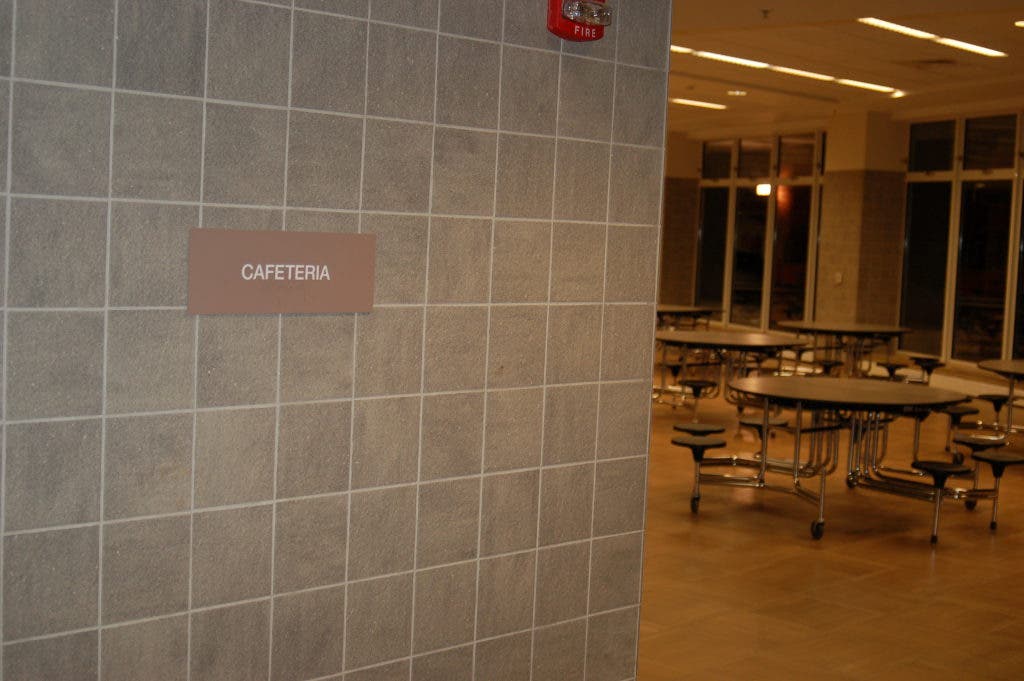

Students will soon have a point of service system in the cafeteria that will help manage their accounts, speed up the serving lines and give the food service staff valuable consumer information.
Fourth and fifth graders at the will not be taught Spanish next year.
And the old oil-burning boiler at the may soon conk out.
Find out what's happening in Marbleheadfor free with the latest updates from Patch.
Those were only a few of the items that came out of the School Committee's deliberations on next year's budget Thursday.
The committee voted to spend up to $25,000 to purchase a computerized point of service system for the cafeteria immediately.
Find out what's happening in Marbleheadfor free with the latest updates from Patch.
Richard Kelleher, director of food services, predicted the system would be in place by May, which would give the staff, students and parents a few weeks this school year to learn the new system.
Student accounts and payments are mostly done now with “old school” methods that use paper and are slow and labor intensive, he said.
“This is not what I expected,” Kelleher said. “This is wonderful.”
The system, whichinvestigated at the Gloucester Public Schools before returning to Marblehead, would cost about $22,000, he said.
Its capabilities are tremendous, even placing automated calls to the home of students that are behind in paying for their lunches, he said.
Kelleher told the committee that in general the food service program is making progress in regaining the confidence of the parents in the operations. “We still have too many parents making lunches,” he said. “I'm pleased with where we are, but we have a long way to go.”
He outlined how he was adding a large amount of information on food ingredients to the school Web site.
Committee Chair EuRim Chun urged Kelleher to meet with parents of students with food allergies and diabetes to determine what information they want on the ingredients of the food served.
Kelleher conceded that he has focused more of his time on making the mechanics of the program work better. “I need to build better relationships” with school groups like the PTOs, he said.
Superintendent Paul Dulac and Village School Principal Michael Hanna recommended to the committee that adding Spanish language instruction for 4th and 5th graders should be postponed for a year to allow the staff time to incorporate it for 30 minutes three days a week into the social studies curriculum.
Spanish is currently taught starting in the sixth grade.
Hanna said he favors teaching foreign languages as early as possible, but with other course work such as keyboarding for fourth graders and wellness classes for sixth graders, there must be some time in the day for teachers to have preparation time. Teachers are guaranteed preparation time in their contract, he said.
The delay would also save about $100,000 in staff salaries, Dulac said. “I decided to remove my original recommendation to add a new Spanish teacher to Grade 4 and a Spanish teacher for Grade 5 until further study is conducted and until the new superintendent can review the proposal,” he wrote in a memo to the committee.
The committee seemed disappointed in the delay in teaching Spanish. Committee member Dick Nohelty said teaching Spanish is very important for the students' future. “We are already a bilingual country. It is just us English-speaking people who don't know it,” he said.
Richard Matthews, facilities director, warned the committee that the Gerry School boiler may stop working. His concern is that it will be difficult to relocate the students. So the school may have to rent a boiler.
He also told the committee that he is asking the town's water and sewer department to visit the high school to determine why the school is using so much water. He suspects that it is the students playing with the automatic toilet flushing systems and automatic water flow in the sinks.
“These are nice systems to have, but they are easily played with,” he said.
Matthews also told the committee he is studying the schools' playgrounds in hopes of installing recycled rubber instead of the more expensive and less durable mulch currently used.