Health & Fitness
Aching Feet and Tasty Eats
At the Boston International Seafood Show several open ocean fish farm CEOs sat down with me to talk about sustainability and recirculation aquaculture systems (RAS).


At the Boston International Seafood Show, I finally sat down to have a Pepsi after being on my feet and chasing down tastings of the free seafood of every type and sort being peddled by producers, wholesales and processors.
I had shrimp, octopus, and Atlantic salmon, with sweet and sour and hot sauces as well as this nice cold Pepsi.
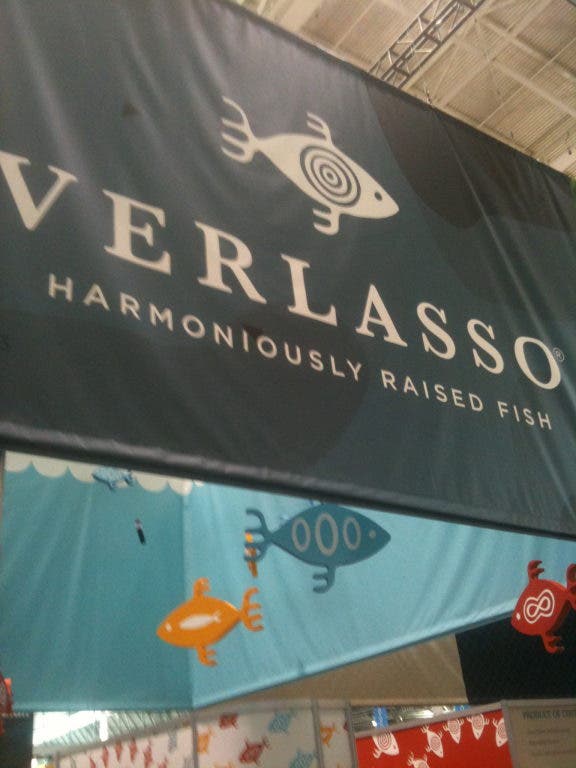
I'm here for two preset interviews with Brian O'Hanlon of Cobia farm Open Blue in Panama, and Chilean Atlantic Salmon farmer Scott Nichols, director of Verlasso.
Find out what's happening in Martha's Vineyardfor free with the latest updates from Patch.
"We are excited about a new hatchery we are building on site," O'Hanlon told New England Aquafarmer. "We would like to build in redundancies and consistencies we figured out in the smaller old hatchery."
"The hatchery we use is a closed containment Recirc. System with broodstock 2 generations old before we allow eggs and sperm together to produce our fingerlings for farming," Scott Nichols explained to New England Aquafarmer.
Find out what's happening in Martha's Vineyardfor free with the latest updates from Patch.
I was interested in these two farms because of their efforts in producing fish with a keen eye to sustainability--closed system recirc. facilities and contained ocean farm technology that maintains a 0-percent release ratio so far.
What's unique about both for me is the farms are led by Americans who took their know-how and technologies out of country because of the slow-to-start policies in place and consumer attitudes around offshore aquaculture. Both issues are moving in the right direction these days but taking forever to catch up with the rest of the world, from where we import 95-percent of our seafood consumed here in the U.S.A. Over 70 percent of that is farmed overseas and growing.
In order for offshore aquaculture to take hold here, more farms doing there utmost to sustainably grow their fish fed on algae enhanced protein diets that derive their Omega-3 content from natural marine plant organisms without further depleting forage fish need to be covered.
I plan to highlight farms and hatcheries living to these same standards here and in the publications I currently work for as well as the mainstream media as well. You can read both interviews in the next Hatchery International (April/May)