Health & Fitness
Here on an Island: Taking stock of our changing climate
We're not talking about slow, steady climate "change" that we can adopt to smoothly. These changes are chaotic and disruptive and month by month, increasingly capable of being very destructive.
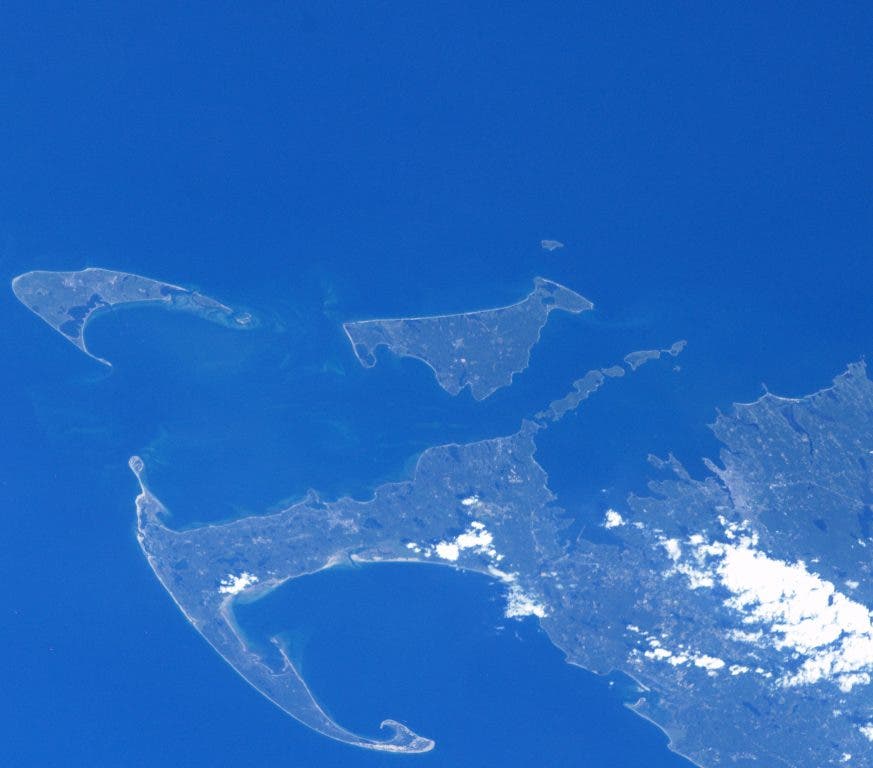


To quote first from the Vineyard Gazette: “Oak Bluffs highway superintendent Richard Combra Jr. reported "quite a bit of damage" to the already storm battered and weakened East Chop Drive. "It's kind of getting a little frustrating with these reoccurring storms," he said. "Normally we get one every five years; seems like it's every two weeks." That's hardly an exaggeration this fall and winter so it brings into sharp focus, as a very serious Island concern, the consensus among meteorologists and climate scientists – that these conditions will be getting worse.
I thought I was paying attention pretty well, but this year has sure been a loud wake up call. As early as last summer I was aware of climate change projections that warned of a harsher winter coming here connected to the unprecedented massive polar ice melt last summer as well as a very high probability that there would be more severe and more frequent storms in the north Atlantic carrying higher than normal storm surge tides. When I heard those predictions I still allowed a little 'maybe' to mask the urgency. I won't make that mistake again! These meteorologists and climate scientists seem to really know their stuff. I can't think of a better word than tragic to describe the feeling now when we remember they've been warning us of an approaching climate crisis for 25 years. It's not approaching any more. It has arrived.
A running account from Climate Central during our latest extra robust nor’easter has this quote: “According to research by Climate Central scientists, on Nantucket Island, where coastal flooding is occurring from this storm, the sea level has risen by about half a foot during the past 50 years. Higher sea levels provide a higher launching pad for storm surges from hurricanes and nor’easters, making it possible for relatively weak storms to cause major damage.”
Find out what's happening in Martha's Vineyardfor free with the latest updates from Patch.
Human caused climate change is here, it is chaotic, it is happening faster than predicted and is responsible for unseasonable cold as well as heat. Last Wednesday, March 20th, Dr. Jeff Masters at weather underground posted, "The culprit is the jet stream, which has taken on an unusually contorted shape that is allowing cold air to spill down over the Eastern U.S. and Western Europe, but bringing near-record warmth to portions of Greenland … a mathematical relationship has been found between wintertime Arctic sea ice loss and the increase in unusual jet stream patterns capable of bringing cold, snowy weather to the Eastern U.S., Western Europe, and East Asia ..." The day before Climate Central stated, “Some computer models have been projecting that, sometime during the next couple of days, the Greenland High could come close to setting the mark for the highest atmospheric pressure ever recorded. The blocking pattern has helped direct cold air into the lower 48 states as well as parts of Europe, while the Arctic has been experiencing dramatically warmer-than-average conditions, particularly along the west coast of Greenland and in northeastern Canada. Blocking patterns are often associated with extreme weather events, from heat waves like the one that occurred last March, to historic cold air outbreaks and blizzards.”
We're not talking about slow, steady climate “change” that we can adopt to smoothly. These changes are chaotic and disruptive and month by month, increasingly capable of being very destructive. This is an actual emergency, even if not happening all at once. What can we do about it? As residents of an Island, here in the path of storms like Sandy, an Island which will also feel more acutely the economic impact of higher food and Agricultural supply prices because of droughts, floods, etc. in other areas – can we do anything about it? Can we here on Martha's Vineyard Island do anything at all to slow the rising tide of Climate Chaos?
Find out what's happening in Martha's Vineyardfor free with the latest updates from Patch.
YES! The first step is to start paying more attention to what is happening to our climate. A lot more attention. It's not that hard to do ... millions of people are doing it. Now that the unmistakable effects of climate chaos have come to our shores with unprecedented frequency these last two years it should get a lot easier for us to pay more attention. It's a direct threat to our near term quality of life here – why would we not pay attention?
The climate change crisis is not too big for us as individuals and as a community to work on. Not yet. The more you find out about it the more empowered you feel, oddly enough. Yes, it's the whole planet's weather we're talking about – and yes, the unconscious reaction is, 'I can't do anything about that, I can't change the weather'. But wait, that's just the point. We already have changed the weather. And if we get a grip on ourselves – we might be able to stabilize it somewhat, at least enough to avoid all the disaster coming our way if we do nothing.
A tremendous amount has been learned in the last two years and not just the reality that climate chaos is now a thing of the present. We have learned the hard technical details of just how much oil, gas and coal we can burn in the next decade and how much we cannot burn – if we want to slow down the damage we see increasing now. And we have learned new details about the unpleasant reality that the most powerful industry in the world is actively blocking our freedom to protect this Island and our lives here. This is totally unacceptable. The inspiring thing you can pick up on now is how many brave folks are working super hard and smart to reverse that.
Since information and inspiration by example are building blocks for constructive action, a few of us here have started a local 350 Martha's Vineyard group and facebook page. Our parent group, 350.org, is the International Climate Action organization started by writer Bill McKibben that has done so much in the last two years to mount an effective response to this emergency. Along with a newly radicalized Sierra Club, 350.org helped bring close to 50,000 people to DC on February 17th to let Barack Obama know he's on the spot – that we are facing the biggest national emergency in our history – and as President it is in his power to be part of the solution, or a big part of the problem.
After the devastating drought in major food producing regions worldwide which will be with breadbasket area farmers again this spring, after hurricane Sandy, which could have easily hit here, and after that committed and focused crowd showed up at the president's door step – a lot more people are paying more attention. The NY Times, Time Magazine, USA TODAY launching new special climate crisis special coverage or coming out in high profile editorials against Tar Sands Oil development via the KXL pipeline and in support of the rapidly growing fossil fuel divestment campaign. The “off-campus” part of that Campaign is something we will be developing here on Martha's Vineyard in the coming months.
As 350.org founder and president, Bill McKibben, said in an email, "Cities in particular can help pinpoint the absurdity of, on the one hand, spending huge sums to build seawalls while at the same time investing in the companies that make it necessary". "The logic of divestment is pretty simple," says Jay Carmona, who recently joined 350.org to oversee off-campus divestment projects. "If you don't like what a company is doing, you don't pay them to do it."
While 350.org's divestment efforts have thus far focused primarily on campuses, the new program will encourage a much wider range of institutions and organizations to examine the impact of their investments. Towns, counties or cities, Jay Carmona says, are an obvious target: "A lot of people are trying to tackle climate change at the municipal level, and it makes little sense for them to be trying to do that while also invested in fossil fuel companies that are working against those changes. Divestment is targeting the one thing that those companies can't buy, which is their reputation," says Carmona.
We're talking a real EMERGENCY here. So it is hoped that the current information posted on the 350 MVI facebook page can be a valuable local resource for you. From scientific data on storms in our area, to local institutional divestment away from fossil fuel industry support, to a call for working together on new Climate Change curriculum in Vineyard Schools which can empower our kids in meeting the challenges of this world that is ours to save together - we hope you will visit the page, comment like crazy, pay attention - AND GET INVOLVED!
Thank you in advance. Let's do this!
Chris Riger
Mas Kimball
350 Martha's Vineyard Island