Community Corner
Landmark Affordable Housing Project in Foreclosure
Bank has frozen the Martha's Vineyard Housing Fund's accounts, but the Fund will continue, says executive director.

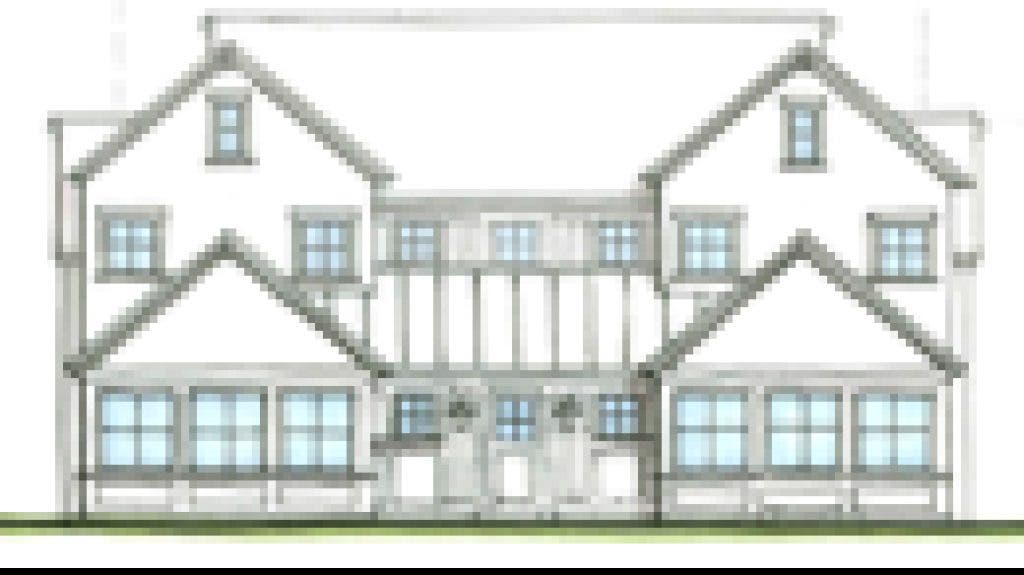
It wasn’t supposed to turn out this way.
Bradley Square was intended to be a landmark example of affordable housing on the Island. The Martha’s Vineyard Housing Fund—formerly the Island Affordable Housing Fund—purchased the half-ace Oak Bluffs property in 2007. The intention was to renovate the historic Denniston Home, the site of the Island’s first African-American Church, and to construct new buildings on the site that would feature residential units, live/work studios, a commercial space, and a multi-purpose room. The NAACP of Martha’s Vineyard was to find a permanent home there; it was to serve as an extension of the budding Oak Bluffs Arts District.
Governor Deval Patrick and Professor Charles Ogletree attended the ground-breaking in 2008.
Find out what's happening in Martha's Vineyardfor free with the latest updates from Patch.
But in the end none of the project’s plans came to pass. The development was marred by years of opposition and financial struggles. Last year the MVHF announced it was pulling the plug on the project and putting the property on the market. It has yet to sell, and is currently listed at some $200,000 less than the original purchase price.
In the meantime, mortgage bills have gone unpaid, and so on June 15, Martha’s Vineyard Savings Bank began foreclosure proceedings, effectively freezing all of the MVHF’s accounts.
Find out what's happening in Martha's Vineyardfor free with the latest updates from Patch.
“The sudden disappearance of charitable donations following the recession and the political headwinds that the project encountered were obviously major challenges that the Fund hadn’t expected when it first acquired the property,” said Ewell Hopkins, executive director of the MVHF, in a press release.
“The combined goals of preserving an historic African-American site, as well as developing affordable housing and artist spaces, were (in retrospect) laudable but too ambitious.”
The news—though not necessarily unexpected—is yet another blow to the MVHF, which has faced scrutiny in recent years over past practices.
The MVHF purchased the property at the height of the housing boom for $905,000. The purchase came suddenly; the MVHF acted quickly on an opportunity to save the Denniston House from possible destruction. It hastily raised $200,00 for the down payment, and drafted a development plan that would cost some $5 million—money it did not have committed or on hand.
Former MVHF executive director Patrick Manning oversaw the purchase; he left the MVHF and the Island in 2009.
Manning earned a reputation for staging lavish fund-raising galas, bringing attention and large sums of money to MVHF. But just months after his departure, it appeared all was not as well as it had seemed under his tenure. Then-new executive director Hopkins made a sudden announcement: The MVHF was unable to make a $20,000 monthly payment to a Dukes County Regional Housing Authority rental subsidy program, leaving many Island residents in danger of losing their housing. The towns were forced to step in to foot the bill.
The MVHF has since cut staff, changed board members, scrapped past party fund-raising practices and re-focused under Hopkins' leadership on direct, sustainable means of procuring donations.
Hopkins said he and the MVHF have learned valuable lessons from the Bradley Square development, and that he harbors no ill will toward the bank, which he says has acted reasonably. He was surprised, however, to learn that the bank had frozen restricted accounts, and said he wishes the bank could take more situation-specific actions.
“I still hold out hope that they’ll say, “Well, maybe we were a little too extreme,’ and somehow free up those accounts, because they’re directly associated with services to the community that are vital,” said Hopkins.
In the days since foreclosure proceedings began, the MVHF has opened new accounts with Edgartown National Bank.
“We have to make sure that people know that we’re open for business—that it’s not about supporting the fund; it’s about supporting the community,” said Hopkins. “The more success we have with that goal, the better chance we have of moving forward.” He and his board remain deeply committed to the Bradley Square property, and hope to see it used in a way that benefits the public, he said.
The MVHF said it must now turn its focus on “implementing its fund-raising strategy to address the housing needs of the Vineyard by developing permanent rental and home-ownership solutions, which will assist in creating a more sustainable island community.”
Patch spoke with Hopkins at length about the future of the MVHF and lessons learned from Bradley Square. That interview can be seen here.
Get more local news delivered straight to your inbox. Sign up for free Patch newsletters and alerts.