Health & Fitness
A Book Review (?) from a Photography Blogger
Aside from Catcher, I believe there are only two other fiction books that I would read again. One is To Kill a Mockingbird, another classic, and the other is The Things They Carried.
I'm not much of a reader.
And you're saying, "Wait a minute, he loves Patch."
Yes, that's true, I do. I meant in a book context. And maybe I should change that statement:
Find out what's happening in Milfordfor free with the latest updates from Patch.
I'm not much of a fiction reader. I love non-fiction. (Wikipedia is my savior.) That being said, in English class this year, we read, among other books, The Catcher in the Rye. I'm not quite sure why I like it so much, but I did. I really did. (Reference to the book, in case you were wondering.)
Aside from Catcher, I believe there are only two other fiction books that I would read again. One is To Kill a Mockingbird, another classic, and the other is The Things They Carried, by Tim O'Brien.
Find out what's happening in Milfordfor free with the latest updates from Patch.
Everybody knows the former, so I'll only talk about TTTC. It's a tossup between fiction and non-fiction, and it's never explicitly stated which it is. I believe that there are elements of both. Taken from Wikipedia:
The Things They Carried is a collection of related stories by Tim O'Brien, about a platoon of American soldiers in the Vietnam War.
To the naked eye, it seems like pure non-fiction. Some things are really weird, however. And that's the only way I can describe them. Tim O'Brien, the author, ends up going back to the field he fought in, except with his daughter.
I would recommend this book, not only to high school students, but to adults as well.
And if you haven't read Catcher or To Kill a Mockingbird, I recommend those too.
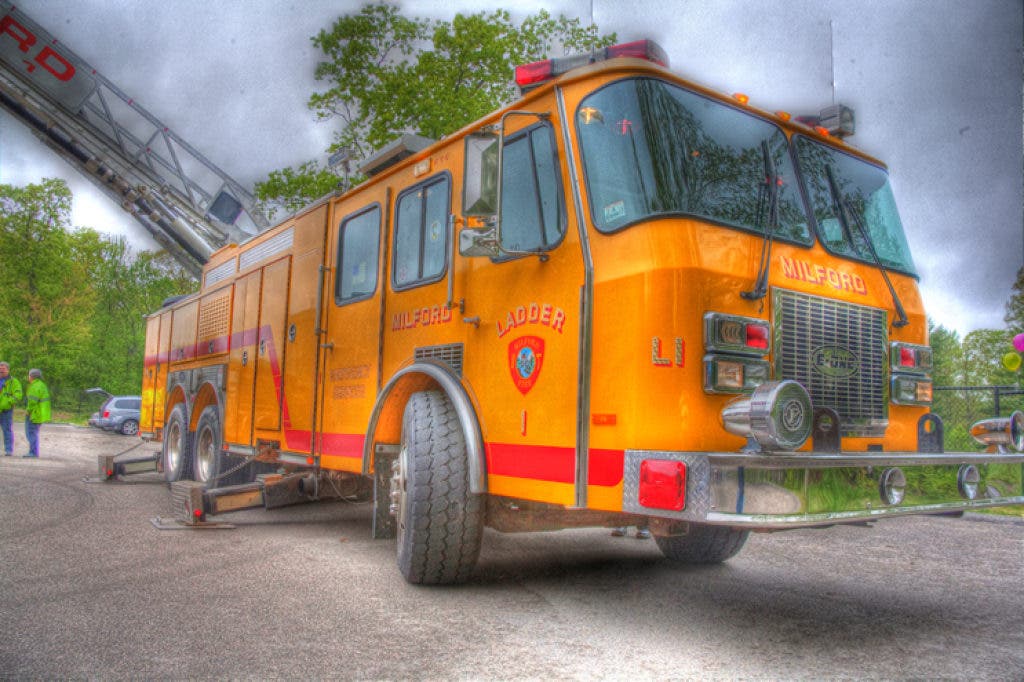
Hmm...a picture: This is an HDR (high dynamic range) picture of Milford Ladder One. An HDR requires multiple pictures (usually three), one underexposed (dark), one normal, and one overexposed (light). These pictures are combined manually in a photo editing software, which is difficult, or using software like Photomatix Pro, which is specifically made for HDR. Once the images are combined, any number of settings can be adjusted, from smoothness of the combined images to saturation of the colors.