Health & Fitness
The Ticks Are Here: Protect Yourself And Your Pets
The Milford Board of Health shares some important tips on protecting you, and your pets, from ticks and their diseases.


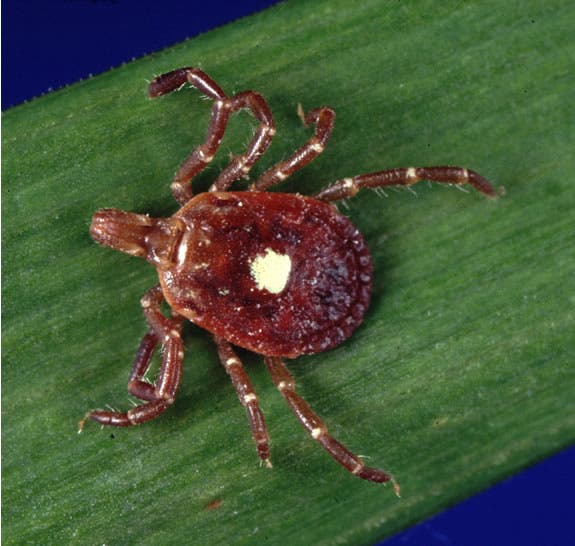
From Milford Board of Health/Paul Mazzuchelli: Spring has arrived, and with the warmer weather comes the emergence of ticks, which can carry a variety of diseases. Ticks are excellent vectors for disease transmission. They are second only to mosquitoes as vectors of human disease, both infectious and toxic. Every year we see more ticks spreading more diseases, many of which are difficult to diagnose and treat. The Milford Board of Health advises residents to take ticks seriously and encourages all individuals to take precautions against tick bites when outdoors.
Ticks do not start off with diseases like Lyme disease; they acquire it. The primary culprits for producing infected ticks are rodents and birds such as white-footed mice and American robins. Ticks become infected with disease-causing pathogens when they feed on the blood of these reservoir hosts. White-footed mice are common and often quite abundant across much of the eastern United States, including Massachusetts. Chipmunks and squirrels also infect deer ticks.
Most ticks go through four life stages: egg, six-legged larva, eight-legged nymph, and adult. After hatching from the eggs, ticks must eat blood at every stage to survive. In both the northeastern and mid-western U.S., where Lyme disease has become prevalent, it takes about two years for the tick to hatch from the egg, go through all three stages, reproduce, and then die. The nymphs are the most dangerous because they can go undetected for days, which means there’s a stronger chance of them transmitting Lyme disease.
Find out what's happening in Milfordfor free with the latest updates from Patch.
The key to preventing tick-borne diseases, such as Lyme disease, and other tick-borne diseases, is to avoid tick bites and find and remove ticks promptly. Areas that are heavily wooded or have tall grass or brush are more likely to be infested with ticks, especially between April and September, with the highest risk of disease transmission occurring during the warmer months.
The Milford Board of Health offers the following tips to help reduce the chance of ticks making contact with your skin:
Find out what's happening in Milfordfor free with the latest updates from Patch.
- Use Environmental Protection Agency (EPA)-registered insect repellent. To find EPA-registered products, go to www.epa.gov/insect-repellents/find-insect-repellent-right-you. Always follow label directions.
- Use products that contain permethrin on clothing and gear such as boots, backpacks and tents.
- Wear light-colored clothing to make the ticks easier to see.
- Wear long pants, and tuck the legs into your socks or boots.
- Keep your shirt tucked in.
- Bathe or shower as soon as possible after coming indoors (preferably within two hours) to wash off and more easily find ticks that are crawling on you.
- Carefully examine gear and pets for ticks.
- Place clothes in a dryer on high heat for 10 minutes to kill ticks on dry clothing after you come indoors.
In addition to protecting yourself and your family, there are several approaches you can take to lower the risk of contracting a tick-borne disease by reducing the number of ticks on your property. This approach I call Integrated Tick Management (ITM). Self-protection and getting rid of tick habitat will be the first and most benign steps. Where infestation with infected ticks is high, people and their pets are becoming infected, and children are at risk, very effective acaricides can be sprayed on your property by a licensed applicator with specialized equipment who is required to minimize any environmental impacts.
1. Start by putting distance between tick habitat and people habitat. Deer ticks are not out in the middle of your mowed lawn. They live and thrive where yards border wooded areas, or where there are ornamental plantings, gardens or areas that provide shade and moisture.
- Create a 3 foot-wide buffer of stone, wood chips or other landscaping material to separate your lawn from tick-friendly areas—and to serve as reminders of the difference between areas where ticks are and likely aren't.
- Move children's play areas away from tick habitat.
2. Create a tick-safe zone through landscaping.
- Clear brush, leaf litter, and other debris from lawns and the sides of trails.
- Completely eradicate invasive vegetation, particularly Japanese barberry, honeysuckle and bittersweet. These plants provide excellent deer tick habitat.
- Mow the lawn frequently and keep leaves raked.
- Keep swings, slides and other children's outdoor play equipment away from yard edges and trees.
3. Judiciously apply acaricides (tick-killing pesticides) sprays or granules to your yard perimeter, shady perennial beds, and along woods paths and trails.
- While the risk of tick bites can be reduced by personal protection and landscape management in some cases this may not be enough. Where infestation with infected ticks is high, people and their pets are becoming infected, and children are at risk, very effective EPA-registered acaricides can be applied to your property by a licensed applicator with specialized equipment who is required to minimize any environmental impacts. The products used today for tick control are much less toxic than in the past, and are used in very low concentrations.
In summary, the best way to prevent tick bites is to avoid habitats where ticks can be found, or use repellent if tick-infested areas cannot be avoided. It is also important to conduct a full-body tick check as soon possible (see below instructions). Use tweezers to remove ticks that have attached to your body.
The best way to remove a tick is to use fine-tipped tweezers to grasp it as closely to the skin’s surface as possible and gently pull upward with steady, even pressure until it is free. Avoid twisting, jerking or crushing the tick during removal. Make sure to wash your hands and the site of tick attachment with soap and water after removal.
The most common symptoms of tick-borne diseases include fever, chills, headache, fatigue, muscle aches and joint pain. Early detection of tick-borne diseases is important to prevent potentially severe complications, so people should seek medical care if they develop symptoms suggestive of a tick-borne disease after spending time outdoors.
Get more local news delivered straight to your inbox. Sign up for free Patch newsletters and alerts.