Politics & Government
Legislature Passes Police Reform Legislation
Legislation creates new independent commission, increases de-escalation protocols and puts in place procedures to address structural racism
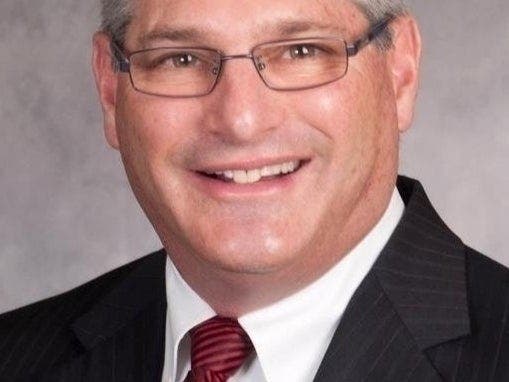
Boston (12/2/2020) - House Speaker Robert A. DeLeo, Senate President Karen E. Spilka and Representative Linsky (D-Natick) joined their colleagues in the House and Senate to pass S.2963, An Act relative to Justice, Equity and Accountability in Law Enforcement in the Commonwealth. This legislation is a comprehensive and intentional legislative response to police malpractice in Massachusetts communities and across the country. S.2963 creates an independent, civilian-led commission to standardize the certification, training and decertification of police officers. It bans the use of chokeholds, limits the use of deadly force, creates a duty to intervene for police officers when witnessing another officer using force beyond what is necessary or reasonable under the circumstances and takes steps to break the school-to-prison pipeline. Finally it creates the first-in-the-nation statewide moratorium on biometric surveillance systems, which includes facial recognition technology.
“After six months of negotiations I was proud to join my colleagues in voting for this legislation, which establishes a path for continuing assessment of the role of race in our state institutions through significant and important reforms to policing in Massachusetts” said Representative Linsky. “I want to thank Speaker DeLeo, President Spilka, Chair Cronin, Representative González, Senators Brownsberger and Chang-Diaz as well as my colleagues in the Legislature for all their hard work in passing this legislation that will reestablish accountability and trust in our communities around law enforcement.”
A summary and outline of the bill’s provisions is as follows:
Find out what's happening in Natickfor free with the latest updates from Patch.
The bill creates a Massachusetts Peace Officer Standards and Training Commission (MPOSTC)—an independent state entity, the majority of which is composed of civilians—to standardize the certification, training and decertification of police officers. The commission will have independent power to investigate misconduct and will serve as the civil enforcement agency to certify, restrict, revoke, or suspend certification for officers, agencies and academies. It will also perform duties such as regulating use of force standards, and the maintenance of a publicly available database of decertified officers. Within the Commission, there will be two divisions: The Division of Police Training and Certification, under the management and control of the newly established Committee on Police Training and Certification, and the Division of Police Standards.
An Act relative to Justice, Equity and Accountability in Law Enforcement in the Commonwealth establishes strong guardrails governing the use of force, prohibiting certain actions and requiring the use of de-escalation tactics. The Committee on Police Training and Certification will promulgate regulations for use of force standards in areas including the use of physical or deadly force, the discharge of a firearm into a fleeing motor vehicle and the use of tear gas, rubber pellets and dogs. The legislation also bans the use of chokeholds.
Find out what's happening in Natickfor free with the latest updates from Patch.
The legislation establishes a duty to intervene, requiring that an officer intervene if they see another officer using physical force beyond that which is necessary or objectively reasonable based on the totality of the circumstances, unless intervening will result in imminent harm to the officer or another identifiable person.
In addition, the legislation requires a police department with advance knowledge of a planned mass demonstration or protest to attempt, in good faith, to communicate with the organizers of the event. The department will be required to make plans to avoid and de-escalate potential conflict and designate an officer in charge of these plans.
S.2963 establishes a special legislative commission to study and examine the civil service law. This commission will study the hiring procedures, personnel administration rules, employment, promotion, performance evaluation, and disciplinary procedures for civil service employees, municipalities not subject to the provisions of the civil service law, and the Massachusetts State Police to improve diversity, transparency and representation in the recruitment, hiring and training of these groups.
The legislation also creates three special legislative commissions to study the presence of institutional racism in the criminal justice system and make policy or legislative recommendations to eliminate disparities.
• Special Commission on Structural Racism in Correctional Facilities
• Special Commission on Structural Racism in Parole Process
• Special Commission on Structural Racism in Probation Services
The legislation sets new standards for qualified immunity in which qualified immunity would not extend to a law enforcement officer who, while acting under color of law, violates a person’s right to bias-free professional policing if that conduct results in the officer’s decertification by MPOSTC. It also establishes a commission to investigate and study the impact to the administration of justice of the qualified immunity doctrine in the Commonwealth.
The bill bans any public agency or employee from acquiring, accessing, or using any software that captures biometric data, including facial recognition, except by the Registry of Motor vehicles. A law enforcement agency may only request that the RMV perform a search of its facial recognition database in cases of immediate danger or in pursuant of a warrant based on probable cause. The legislation also establishes a special legislative commission to study the use of facial recognition technology by the Massachusetts Department of Transportation.
Included in the legislation are a number of measures relating to reforms within the Massachusetts State Police, including a provision that requires MPOSTC to approve training by the state police, certify state police officers and allows the colonel of the state police to be appointed from outside the ranks of the state police.
The legislation sets limits on student record sharing by schools, directs the Committee on Police Training and Certification to develop an in-service training program for school resource officers and gives the MPOSTC the power to issue a specialized certification for school resource officers.
In addition, the legislation includes the following provisions:
• Banning racial profiling by prohibiting law enforcement agencies from engaging in racial profiling;
• Requiring the Department of Public Health to collect and report data on law enforcement-related injuries and deaths;
• Expanding eligibility for record expungement from one criminal or juvenile record to two. The legislation also allows multiple charges stemming from the same incident to be treated as once offense for the purposes of expungement;
• Criminalizing the submission of a false timesheet by a law enforcement officer, punishable by a fine of three times the amount of the fraudulent wages paid or by imprisonment for not more than two years;
• Strengthening the penalties for law enforcement officers who have sexual intercourse with, or who commit indecent assault and battery on, a person in custody or control of the law enforcement officer; and
• Strengthening the criteria for which a no-knock warrant may be issued.
The legislation establishes the following commissions, task forces and studies:
o Body Camera Taskforce;
o Community Policing and Behavioral Health Advisory Council study of community-based crisis response;
o Permanent Commission on the status of African Americans;
o Permanent Commission on the status of Latinos and Latinas;
o Permanent Commission on the status of people with disabilities;
o Permanent Commission on the status of Black men and boys;
o Commission to study the feasibility of establishing a statewide law enforcement officer cadet program;
o Commission on corrections officer training and certification;
o Commission to investigate and study the benefits and costs of consolidating existing municipal police training committee training academies; and
o Commission on emergency hospitalizations.
The bill now goes to the Governor.
###