Politics & Government
Natick Researchers Making a 'Second Skin' to Protect Soldiers
The U.S. Army Natick Soldier Research center is developing a 'second skin' for chemical-biological protection.


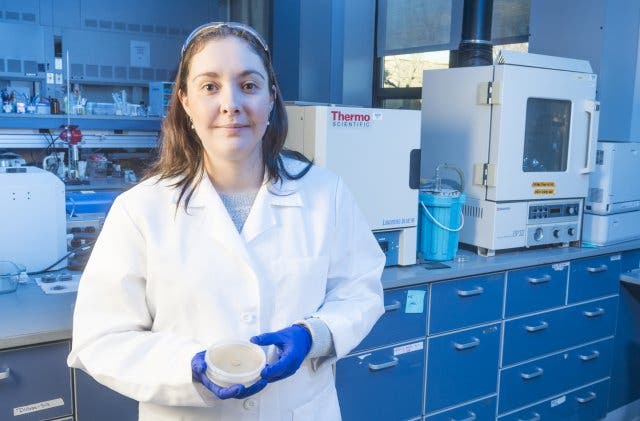
NATICK, Mass. (Jan. 28, 2016) -- Whether you’re thick-skinned or not, sometimes a second skin is crucial to survival, especially for a soldier.
Researchers at the U.S. Army Natick Soldier Research, Development and Engineering Centre are collaborating with the Massachusetts Institute of Technology, the University of California at Santa Barbara, the Air Force Civil Engineering Center and the U.S. Army Edgewood Chemical Biological Center to develop a “second skin” as a form of chemical-biological protection.
The Defense Threat Reduction Agency sponsors the project, which is a high-priority effort.
Find out what's happening in Natickfor free with the latest updates from Patch.
“The second skin will be a protective ‘skin’ engineered with textile materials as a substrate that will adapt to the environment that the Soldier is in,” said Dr. Paola D’Angelo, an NSRDEC research bioengineer, in a statement. “The idea is that the skin will be lightweight, it will not retain heat, and it will be air and moisture permeable.”
“The material design is based on the use of responsive polymer gels, including organohydrogels and functional chemical species such as catalysts,” said Dr. Ramanathan Nagarajan, senior research scientist for Soldier Nanomaterials at NSRDEC, in the announcement. “The second skin will be able to sense chemical and biological agents, which will trigger a response within the gels.
Find out what's happening in Natickfor free with the latest updates from Patch.
Nagarajan added that that response would close up the pores of the textile and keep the chemical or biological agent from getting in to the skin. The agent would also be inactivated during this protection state.
“Anthrax, for instance, is one of the biggest threats,” D’Angelo said in the statement. “So we need to find a way to detect it and kill it onsite. So the second skin not only senses the chemical or biological agent but it also has a response. It has a protection component as well as a deactivation component to it.”
Dr. David McGarvey, a research chemist at ECBC, and ECBC’s Dr. William Creasy provided expertise in the testing of the technologies against hazardous chemicals, according to the release.
“The greatest benefit of the collaboration is that it has allowed each of us to do what we do best,” McGarvey said in a statement. “Entering into a completely new area of research can be fun, but it takes time and resources to develop a new expertise. With very limited funding, our group of collaborators was able to quickly create and test a number of new technologies.”
Read the full article via U.S. Army here.
Get more local news delivered straight to your inbox. Sign up for free Patch newsletters and alerts.