Community Corner
Natick's Heritage Landscapes
See the latest in Natick history expert Peter Golden's history column.
For those who live in Natick and have an interest in local history, or come here in order to more fully understand our past, a wealth of information, materials and homes are available for consideration. For instance, at least three major works published within the last two decades focus exclusively on the Natick Plantation, the “Praying Indian Village” founded in 1651 by John Eliot and his Native American followers.
One volume concerns itself with the political conditions and real estate transactions surrounding the latter days of the Plantation, while another explains the various religious conventions that motivated Native American settlers to come here through the courtesy of a Nipmuc sachem name John Speen. His clan made camp along the Charles in South Natick for many years before the arrival of Eliot and the Praying Indians.
Another beautifully written book traces the course of King Philip’s War and its impact on the Natick community.
Find out what's happening in Natickfor free with the latest updates from Patch.
Along with these three volumes, a host of locally authored town chronicles illuminate Natick’s past. Most can be found in the local history section of the
Among the materials relating to historic Natick are a variety of artifacts on display at the Historical Society in the on Eliot Street in South Natick. They include a portable pulpit attributed to Daniel Takawambpait, an Indian missionary and successor to John Eliot.
Find out what's happening in Natickfor free with the latest updates from Patch.
The books, while profound and well written, are obscure to the extent it is likely only a handful of local residents and visitors will ever read them. An extraordinary collection of World War II memorabilia is kept in the Museum of World War II in West Natick, but attendance is by appointment only, and strictly limited.
Natick’s historic homes and buildings, on the other hand, are available for all to see for no more than the price of a stroll or a short drive. Dating from the 17th century to the early years of the 20th, many are laden with historic significance while others are notable for their architectural style and originality of design.
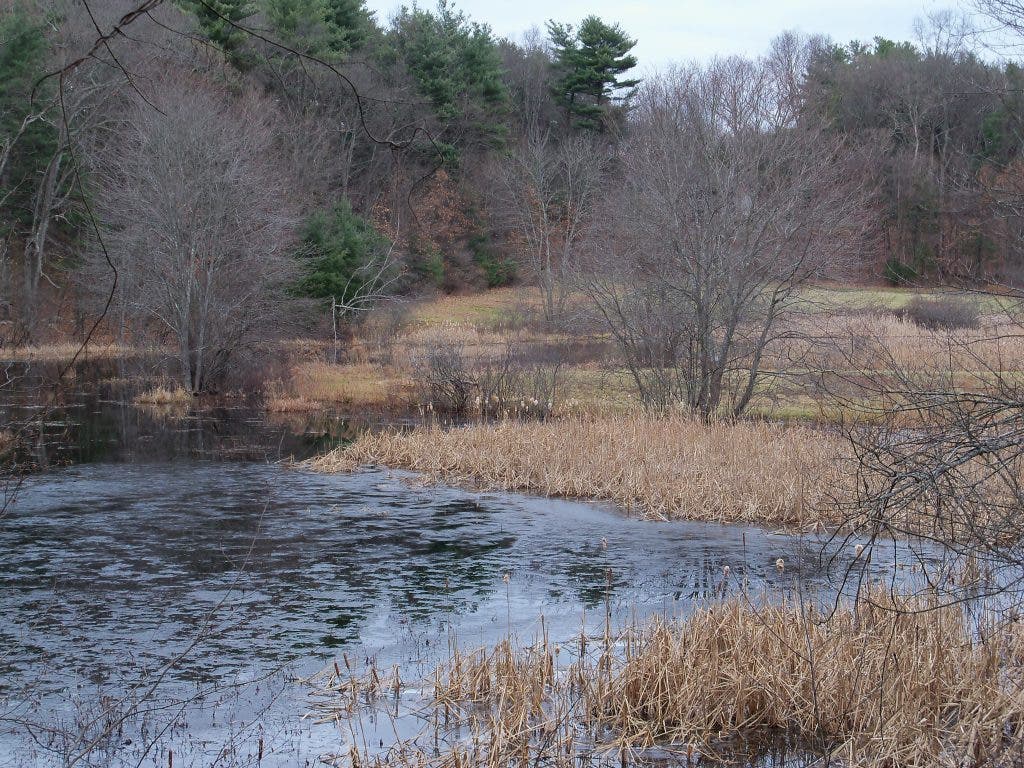
But there is another aspect to Natick’s history that invariably is overlooked or forgotten all together. Our open space and natural landscape, from the colonial-era graveyards that dot the town to a bird sanctuary, town forest, cedar swamp and gravel pit amount to upwards of 1600 acres, many of which are rich in historical association and features.
As odd as it may seem, our graveyards merit special attention, if only for the rich trove of information they represent to those who wish to explore the finer details of Natick’s past. Tombstones often supplement written records of births and deaths while family relationships and community associations.
Many Natick residents know the locations of our cemeteries. But few know the intersection of Union and Eliot Streets, just to one side of the Eliot Church in South Natick, covers a Native American burial plot, the graves of which date from the earliest days of the town and in some cases may be of even greater antiquity.
Logic, based on careful research in nearby towns, suggests that Natick, like many places along the Charles River and throughout MetroWest, was an Indian settlement for centuries before the arrival of the English in the region in 1620.
But it is Natick’s unique inventory of forests, waterways and trails that gives one real pause. Too numerous to list in detail, they range from the Town Forest and Lake Cochituate to the Natick Community Organic Farm and Lookout Farm. The latter dates from 1651 and has been called the oldest, continually operating farmstead in America.
To the west of Lookout Farm lies Broadmoor, an Audubon Wildlife Sanctuary notable for its historic associations, not the least of which is the Thomas Sawin House, the oldest built structure in the town.
To walk at Broadmoor, the breathtaking beauty of the 800+ acre site aside, is to step back in time in the most literal sense, for in all its vastness, Broadmoor comprises a significant fraction – literally a fifth – of the acreage of the Natick Plantation. That this landmark property should have survived across a span of 360 years, pristine and largely undeveloped, is nothing short of miraculous.
Skirting the southern flank of Broadmoor is the Charles River, a combined larder (fish and wildfowl) as well as transportation corridor for Native Americans in a previous age.
Elsewhere in Natick, our town forest, a parcel of 100 acres given to the community by Mrs. H.S. Hunnewell in 1932, is distinguished by the beauty of a sunken meadow at the West end of Jennings Pond and a high, forested hill, a refuge for red hawks, coyote and deer.
Known as the last, substantial piece of land in town held by Native Americans, it abuts the land occupied by the home of Captain William Farris, who was among the first English settlers of the town and may well have commanded Praying Indian troops in the mid-18th century.
Just to the north of the Town Forest and across Route Nine, lies the “Sunkaway,” a seventy-acre parcel of swamp, pond and woodlands known to conservationists as “The Great While Cedar Swamp.”
In centuries past the bark and wood of cedars was a vital resource for building canoes, weaving baskets and covering “wikiups,” the dome-like structures favored by Natick’s Praying Indians for seasonal shelter.
Half a mile to the west of the Sunkaway lies Lake Cochituate, where a substantial Native American village located around the site of the present-day Mass Turnpike tolls, was decimated by raiding Mohawks in the late 1670s. On the southern end of the lake lies Pegun Cove, another Native American place.
Tying together many of these wonderful open spaces is a series of trails, walking paths and sidewalks, many devised by Robert Eisenmenger, a former member of the town’s planning board.
Like the places they connect, some of those are historic in their origins, as well. With your kind permission, we shall save their story for another day.