Neighbor News
Before You Plant a Tree This Fall, Check Where Your Sewer Line Runs
Greater Boston homeowners can reduce future root intrusion risks by planning around underground sewer lines.

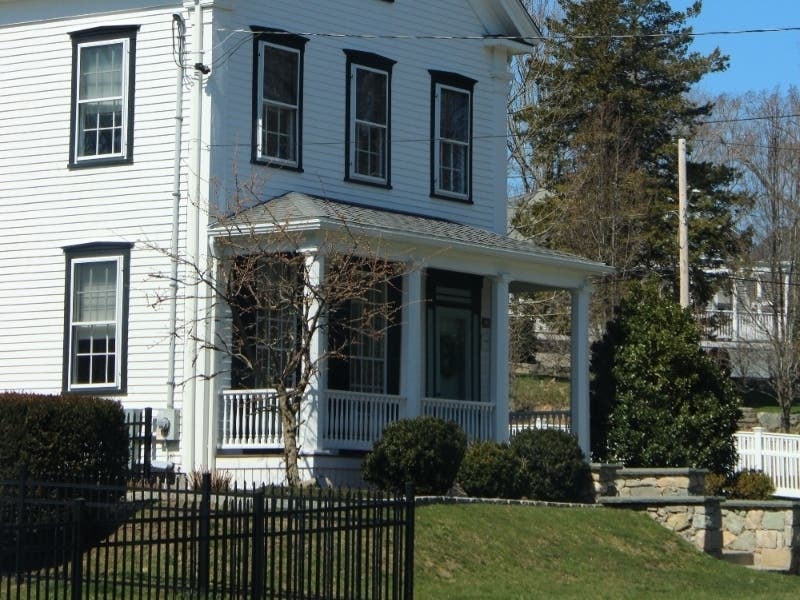
Fall is a great time to plant trees and larger shrubs, but before you pick a spot in the yard, it is worth thinking about what is underground.
In older Greater Boston communities like Belmont, Watertown, ArlingtonCambridge, Cambridge, Newton, Lexington and Winchester, mature trees and aging sewer lines often share the same space. That can create problems when roots eventually reach a cracked or separated section of pipe.
Tree roots naturally grow toward moisture. If an older sewer line has a small leak, failed joint or other opening, roots can find their way inside and continue growing through the pipe.
Find out what's happening in Newtonfor free with the latest updates from Patch.
Rhino Rooter owner David de la Rocca says homeowners often focus on what a new tree will look like above ground without considering how its root system may spread below it.
“Most people are thinking about sunlight, property lines and how big a tree will get above ground,” said de la Rocca. “It is worth thinking about what is underground too. Knowing where your sewer line runs before you plant can help prevent a problem years down the road.”
Find out what's happening in Newtonfor free with the latest updates from Patch.
A tree planted too close to a vulnerable sewer lateral does not necessarily cause an immediate problem. Root intrusion can take years to develop.
The risk is higher when the pipe already has cracks, loose joints, corrosion or damage. Once roots get inside, they can catch toilet paper, grease and other debris, gradually restricting flow and contributing to recurring clogs or backups.
Homeowners planning fall landscaping can take a few simple steps to reduce the risk:
- Find out where the sewer lateral runs. Knowing the path between the home and municipal sewer connection can help guide planting decisions.
- Think about the tree’s mature size. A small tree today can develop a much larger root system over time.
- Avoid planting large trees directly over sewer lines. More distance gives roots less opportunity to reach a vulnerable section of pipe.
- Pay attention to older plumbing systems. Homes with previous root problems or recurring main-line clogs may already have weaknesses in the sewer line.
- Consider an inspection if the line has a history of trouble. A sewer camera inspection can reveal cracks, separated joints or previous root growth before a complete blockage develops.
De la Rocca says homeowners sometimes assume roots simply break into sewer pipes, but the condition of the pipe is often just as important as the tree.
“Roots usually need a way in,” he said. “If there is a crack, a failed joint or another opening, that is what gives them access to the moisture inside the line.”
That also means clearing roots does not always solve the underlying problem.
Hydro jetting or mechanical equipment can restore flow when roots are already inside the pipe, but if the opening remains, roots may return.
For homeowners planting this fall, a little planning can help avoid that cycle.
“A tree that is five feet tall today may be there for decades,” said de la Rocca. “Taking a little time before planting to understand where your sewer line is located can save you from having to deal with roots in that line later.”
Rhino Rooter has more information on preventing root intrusion here:
https://www.therhinorooter.com/post/root-intrusion-sewer-line-prevention
Rhino Rooter is a family-owned plumbing, sewer and drain company based in Belmont and serving communities throughout Greater Boston. For more information, call 617-360-1553 or visit www.therhinorooter.com.