Politics & Government
Bog Owner Can Remove 500,000 Yards of Sand
The Zoning Board of Appeals approved changes in cranberry grower Jeff Kapell's payments for potential repair of Billington Street.
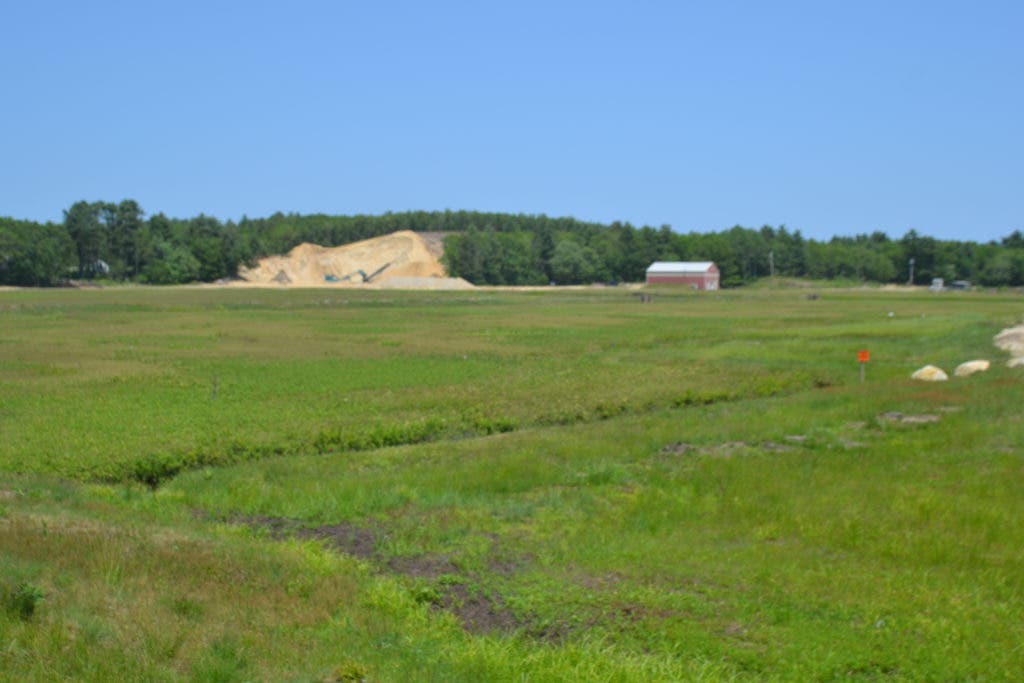
Last October, the Planning Board endorsed the idea from the start. In November, some members of the Zoning Board needed more convincing, then endorsed it also.
West Plymouth cranberry grower Jeff Kapell proposed installing a three-acre tailwater recovery pond on part of his 70-acre farm. Tailwater is the water that comes off a bog after irrigation. It often picks up elements of fertilizer that damage lakes and ponds downstream. A recovery pond creates more of a closed system - the water is pumped into the pond for re-use in irrigation.
A recovery pond on Kapell’s land would improve the water quality of Billington Sea and Cook’s Pond, a source of water for the town’s Bradford Well. Kapell offered to give up his right to take water from Cook’s Pond and to sell, at a below market price, 15 acres of woodland adjacent to the pond.
The engineered plans required the removal of approximately 500,000 cubic yards of sand to create the pond.
Find out what's happening in Plymouthfor free with the latest updates from Patch.
The Zoning Board attached all the usual conditions for an earth removal permit controlling length of operation, operating hours, erosion control and a maximum number of truck trips per day.
Then, at Kapell's request it included, an unusual condition - that Kapell, the DPW and the building commissioner examine Billington Street after removal of each 125,000 cubic yards. Kapell would then "gift" all the expense of road repair.
Find out what's happening in Plymouthfor free with the latest updates from Patch.
“At first, I was dead against it,” board member Michael Main said in a Wednesday night meeting. “Now, I’m pretty happy with these conditions.”
But, no one involved in the project shares his happiness, especially not the contractor, AD Makepeace.
“The problem is, causation is difficult to nail down,” Plymouth attorney Richard Serkey, representing Kapell, said. “The concern of ADM is this would not work out. They believe they would become the reconstructor of choice of Billington Street.”
He said what sounded good in the meeting room, has not worked in the world outside the room.
“Mr. Kapell will not find a contractor who will accept this decision,” Serkey said. “That kind of experience on the ground trumps what a lawyer may say before a town board.”
Building commissioner Paul McAuliffe told the board that in practice, no one could attribute a particular piece of damage in the road to a particular cause.
Kapell suggested the board replace the condition with a requirement he pay into a special fund a penny for every cubic yard removed. If the project reached its maximum of 500,000 cubic yards, the town would have $50,000 dedicated to repair and maintenance of Billington Street. Other earth removal projects use the same practice.
Main and board member James Simpson remained unconvinced.
“I have no project with the condition as it stands,” Kapell said.
After it heard other cases, the board began debate on the Kapell condition change. Chairman Peter Conner asked McAuliffe if he saw any way the project could continue with the existing condition. McAuliffe offered a thorough explanation of why it could not.
The board voted unanimously to approve the change.