Politics & Government
Manomet Farm Receives State Grant
Holmes Farm will use the funding to restore cranberry bogs.
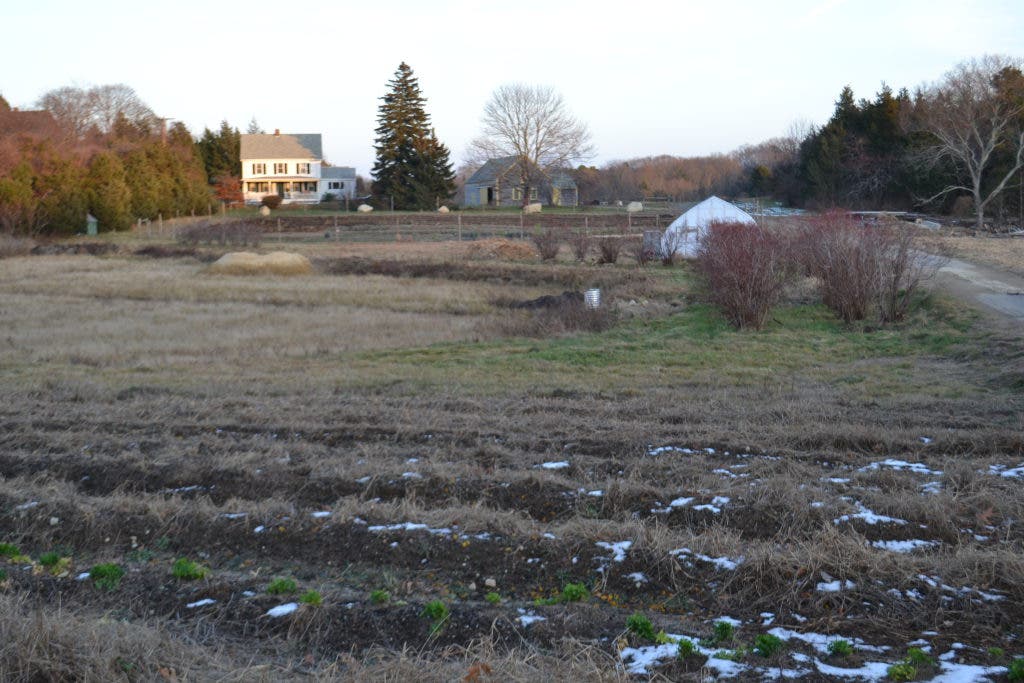
Manomet residents know it as that old farm that went to weed over the past two decades, then came to life last spring and summer. Vegetables sprouted at the Holmes Farm at 127 Manomet Point Road in the spring and a road-side farm stand sold them as they matured through the summer.
"We're putting a lot of infrastructure into the farm," operator Jennifer Friedrich said. "We have a complete variety of vegetables, a CSA (Conumer Supported Agriculture), the farm stand, blueberries and cranberries."
Find out what's happening in Plymouthfor free with the latest updates from Patch.
The farm received a $15,100 grant today to buy sand to restore 4.2 acres of cranberry bogs. Friedrich plans to level the bogs and rehabilitate them to "certified organic" standard. The bogs will be replanted with old Howes and Early Black vines.
"They're the traditional Massachusetts varieties," Friedrich said.
Find out what's happening in Plymouthfor free with the latest updates from Patch.
The Holmes family farmed the land for more than 100 years. They sold it to neighboring Manomet Center for Conservation Sciences in 1991. Friedrich and Edible Yards leases the land from the center.
She's using her experience of six years as the farm manager of the UMass Cranberry Experimental Station to bring the old bogs back.
"We'll use state of the art irrigation and practices to reduce the carbon footprint of the farm," Friedrich said.
The farm will sell the cranberries as dry-picked, organic, fresh fruit.
Officials from the Massachusetts Department of Agricultural Resources (DAR) awarded 35 farm projects across the Commonwealth with grants for projects designed to increase compatibility between agricultural practices and protection of the state’s natural resources. The grants total $475,000.
“These grants will help protect the state’s natural resources and improve conditions for our farming families,” Gov. Deval Patrick said. “We are committed to helping our local farmers create jobs to support agricultural economies across Massachusetts.”
The funding will support projects such as automated irrigation systems for cranberry operations, manure storage areas, compost pads, fencing, milkhouse wastewater treatment areas, and zone tillage equipment for a vegetable operation.
“I want to applaud the efforts of this year’s recipients and all those who have participated in the program since its inception,” Lt. Gov. Timothy Murray said. “Through this program, our Administration continues to work with local farmers to not only provide industry resources, but also additional aid to protect the Commonwealth’s land, air and water for years to come.”
“This grant program helps farmers protect the state’s environment and encourages sustainable agricultural practices,” Energy and Environmental Affairs Secretary Richard K. Sullivan Jr. said. “These investments reflect the commitment of the Patrick-Murray administration and our state’s farmers to reducing impacts on our natural resources.”
AEEP fund practices that improve water quality, promote water conservation and improve air quality. Farmers selected to participate are reimbursed for the approved costs of materials up to $30,000. Since 1999, AEEP has funded 387 projects statewide, providing growers and producers approximately $4.5 million to address environmental concerns on their farms. This program also helps advance several of the strategies outlined in the recent Climate Change Adaptation report.
“AEEP has been a proven tool in helping us safeguard the environment, while ensuring that our local food supply remains viable,” DAR Commissioner Scott J. Soares said. “We are delighted to support our local farmers in their efforts to ensure a sustainable future for their farms and I congratulate all of this year’s award recipients.”
The program is one of several within DAR’s Division of Agricultural Conservation and Technical Assistance, whose mission is to enhance the viability of agricultural enterprises and safeguard natural resources through preservation, environmental stewardship, technology, technical assistance and education.
To date, Holmes Farm has received $120,000 in grants, primarily from the USDA, to demonstrate 21st century, organic farming practices.
What's next? More small fruit plantings and the creation of pollinator habitats.
"That's to attract natural, local pollinators like bumble bees," Friedrich said. "We think it's a great project for the neighborhood and for Plymouth."