Politics & Government
Murray, Coakley Request Reexamination of Nuclear Storage in Light of Japan Nuclear Crisis
Senate President Therese Murray and Attorney General Martha Coakley are asking the NRC to take another look at wet storage of spent fuel rods in light of the nuclear crisis in Japan.


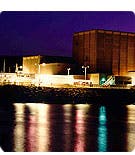
In light of the nuclear crisis at Japan’s Fukushima Daiichi power plant, President Obama has directed the Nuclear Regulatory Commission to conduct a comprehensive safety review of all nuclear power plants in the U.S.
At the same time, state Senate President Therese Murray and Attorney General Martha Coakley are asking the NRC and the Department of Energy to reexamine the safety of wet storage of spent fuel rods at nuclear plants in the U.S., particularly at Pilgrim and Vermont Yankee. Yesterday, Vermont Yankee received approval from the NRC for a 20-year license extension. The plant must still get state legislative approval to continue operating after its original license expires next year.
Murray and Coakley sent a letter to NRC Chairman Gregory B. Jaczko and Secretary of Energy Steven Chu yesterday outlining their concerns with the way in which spent fuel rods are stored at Pilgrim and Vermont Yankee. The wet storage is the same of storage used at the Japanese plant where crews battled fires ignited when fuel rods were exposed to the air after the recent tsunami damaged the storage casks, causing water to spill.
Find out what's happening in Plymouthfor free with the latest updates from Patch.
“Despite our continuous advocacy for the NRC to consider alternative storage at these plants, the NRC has refused to do so – saying that the risk of breach and fire is ‘insignificant.’ The events in Japan show that a breach can occur, and we are asking the NRC to revisit that assessment,” the letter reads in part.
Pilgrim is in the midst of the relicensing process. Coakley’s office has filed petitions with the NRC, asking for more safety inspections and that the federal government make good on the Nuclear Waste Policy Act of 1982m which obliged the federal government to begin removal of nuclear waste from power plans in 1998. Under the act, Massachusetts customers have paid more than $24 billion into a spent nuclear fuel fund that would pay to remove the rods to a federal storage repository.
Find out what's happening in Plymouthfor free with the latest updates from Patch.
“Nuclear power can and should play an important part of meeting our future energy needs. However, the federal government should ensure that these plants are safe and that their decisions are transparent. We are urging you to re-evaluate these issues in light of the events in Japan,” the letter concludes.
Last week, Pilgrim spokesman Dave Tarantino said that the likelihood of what happened in Japan is even lower here, despite a new NRC report that increased the plant’s risk of an earthquake to nearly one in 10,000. Tarantino said Pilgrim is designed to withstand a 6.0 earthquake, the most powerful quake ever recorded in the region.
Get more local news delivered straight to your inbox. Sign up for free Patch newsletters and alerts.