Neighbor News
Plimoth Plantation to Host a Night of Food and Film Featuring From Billions to None: The Passenger Pigeon's Flight to Extinction
Plimoth Plantation to Host a Night of Food and Film Featuring From Billions to None: The Passenger Pigeon's Flight to Extinction
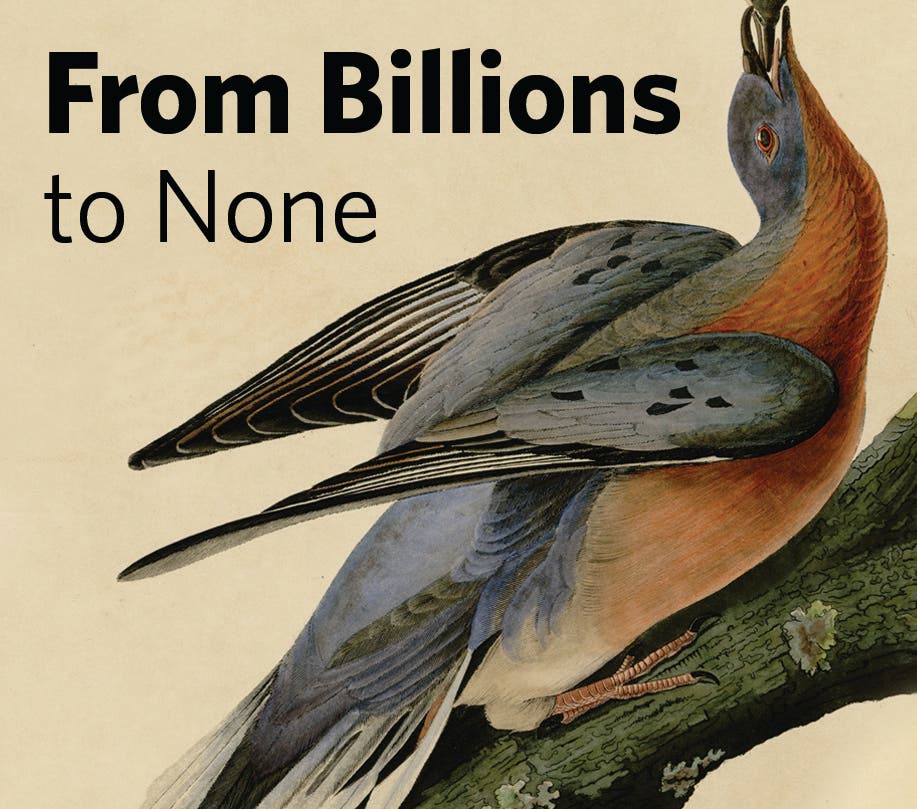
On Friday evening, September 5, join Plimoth Plantation for a Night of Food & Film as we mark this centenary year of the passenger pigeon’s extinction with the screening of the documentary film From Billions to None: The Passenger Pigeon’s Flight to Extinction. Explore this iconic bird’s presence in 17th-century Plymouth, its current relevance to habitat and species conservation successes, and sustainable use of natural resources.
Stay for a post-film discussion with the film’s co-writer and co-producer Joel Greenberg and a panel of bird conservation leaders and historians. Before the film, enjoy a reception of seasonal artisan culinary delights inspired by the Passenger Pigeon, locally sourced beer and wines, and a special signature drink. Copies of Joel Greenberg’s book, A Feathered River Across the Sky: The Passenger Pigeon’s Flight to Extinction, will be available for purchase and signing. Tickets are $30 per person or $50 per couple and can be purchased in advance by calling (508)746-1622, ext. 8346 or online at
Find out what's happening in Plymouthfor free with the latest updates from Patch.
Edible South Shore & South Coast magazine is the media sponsor for this Night of Food & Film event. The South Shore and South Coast have been home to hunting, gathering, fishing, farming—and great eating—for over 10,000 years. Edible South Shore & South Coast magazine is committed to identifying and sharing the local and sustainable food sources that the Southeastern Massachusetts area has to offer today, and preserving local options for future generations.The event is also presented in collaboration with the South Shore Natural Science Center, dedicated to educating the public about the natural and cultural environments of the South Shore.
The plight of the passenger pigeon is unlike that of any other bird. With a likely population between 3 and 5 billion, it was the most abundant bird in North American and probably the world. Yet human exploitation drove this species to extinction over the course of a few decades.
Find out what's happening in Plymouthfor free with the latest updates from Patch.
The loss of the passenger pigeon set the stage for the earliest waves of environmentalism in America. The story continues to inspire activism even now, a century after the death of “Martha,” the last passenger pigeon (named after George Washington’s wife) who lived her 29-year life in the Cincinnati Zoo and died on September 1, 1914. According to Greenberg, “The fate of the passenger pigeon is a cautionary tale— proof that people need to pay attention and not take the natural world for granted.”
WHEN:
Friday, September 5, 2014
Reception 6-7 pm
Film & Discussion 7-9 pm
Book signing to follow
$30 per person/$50 per couple
WHERE:
Plimoth Plantation, 137 Warren Avenue, Plymouth, MA 02360
About The Film:
From Billions to None: The Passenger Pigeon’s Flight to Extinction is a dramatic film that is the keystone of the ambitious multi-media project that uses the passenger pigeon story, of a billions-to-zero extermination in less than 50 years, to explore important present day issues. The centenary of this recent extinction offers a once-in-a-lifetime opportunity for this film to sharply focus new attention on habitat conservation and species survival—and help all species avoid the fate of the passenger pigeon.
About the Moderator:
Wayne Petersen is Mass Audubon’s Director of the Massachusetts Important Bird Areas (IBA) program. He has led trips and tours, lectured, and conducted birding workshops across North America for over thirty-five years. Wayne was a founding member of the Massachusetts Avian Records Committee and serves on the advisory committee for the Massachusetts Natural Heritage & Endangered Species Program. His writing projects include authoring the National Audubon Society’s Pocket Guide to Songbirds and Familiar Backyard Birds (East), coauthoring Birds of Massachusetts and Birds of New England, co-editing the Massachusetts Breeding Bird Atlas, and contributing to The Audubon Society Master Guide to Birding, The Sibley Guide to Bird Life & Behavior, and Arctic Wings.
Panelists:
Joel Greenberg has over 25 years of experience working on natural resource related issues in the Midwest. He is currently a Research Associate of both the Chicago Academy of Sciences’ Peggy Notebaert Nature Museum and the Field Museum. Joel has authored four books including Of Prairie, Woods, and Waters: Two Centuries of Chicago Nature Writing; A Natural History of the Chicago Region; and his most recent work A Feathered River Across the Sky: The Passenger Pigeon’s Flight to Extinction. He has been a leader in Project Passenger Pigeon, and co-produced the documentary, From Billions to None: The Passenger Pigeon’s Flight to Extinction.
Robert Charlebois is an interpreter in the Wampanoag Homesite at Plimoth Plantation. He serves in a consulting role for the Museum’s Reference Library, in addition to his duties at the Artisan Craft Center constructing Porcupine Hair Headdresses, which he has been making most of his life. A former teacher, he has worked at both public schools and at First Nation schools in both the U.S. and Canada. He is a member of the Abenaki Nation, Painted Turtle Clan.
John Galluzzo is Director of Education for the South Shore YMCA’s South Shore Natural Science Center and the author of 35 books on the history and nature of the South Shore of Boston. He is a nationally-known Coast Guard historian, a regular columnist for South Shore Living magazine, and a longtime contributor to the Hull Times, for which he has written a weekly column for more than a decade. John is a frequent lecturer and holds a weekly radio spot on 95.9 WATD FM, through which he encourages people to explore the history and nature of the South Shore.
John Kricher, Ph.D., is a Professor of Biology at Wheaton College, Norton, Massachusetts. Dr. Kricher teaches courses in ecology, ornithology, and vertebrate evolution. His most recent book is Tropical Ecology, now the leading textbook on the subject of global tropical ecology. He has also authored The Balance of Nature: Ecology’s Enduring Myth and Galapagos: A Natural History. Other books include the best-selling A Neotropical Companion, and three North American ecology field guides in the Peterson series. John is a Fellow in the American Ornithologists Union, has served as president of the Association of Field Ornithologists, and president of the Wilson Ornithological Society.
Kathleen Wall is the Colonial Foodways Culinarian at Plimoth Plantation. Kathleen has been cooking, gardening, and baking as a 17th century housewife in the museum’s English Village since 1980. Kathleen’s writings about colonial foodways can be found on her blog Pilgrim Seasonings, Notes and Recipes from a 17th Century Kitchen. Through workshops like Hard Core Hearth Cooking and lectures such as Pioneer to Pilgrims, she inspires today’s cooking with unbelievable recipes and techniques from the past.
About Plimoth Plantation
Plimoth Plantation is a 501(c)3 charitable organization and a living museum dedicated to telling the history of Plymouth Colony from the perspective of both the Pilgrims and the Native Wampanoag people. Located less than an hour’s drive south of Boston in Plymouth, Massachusetts, (Exit 4, Route 3 south) and 15 minutes north of Cape Cod, the Museum is open daily from 9 am to 5 pm, 7 days a week, from the third Saturday in March through the end of November 2014. Plimoth Plantation is a private, not-for-profit educational institution supported by admission fees, contributions, memberships, function sales and revenue from a variety of dining programs/services/special events and Museum Shops. Plimoth Plantation is a Smithsonian Institution Affiliate and receives support from the Massachusetts Cultural Council, private foundations, corporations, and local businesses. For more information, visit www.plimoth.org.