Politics & Government
Plymouth's Population Increases 9.22 Percent, Still Less Than Predicted
Town Clerk thinks Census may have undercounted the town's population.


Well, either the U.S. Census undercounted or Plymouth’s population increased less than town officials expected.
In December, Town Clerk Laurence Pizer predicted the town’s population would increase by about 9,000 since the 2000 Census. While it did increase, the numbers weren’t quiet as high as he, and other town officials, expected.
The town’s official population stood at 56,468 when Census workers did their door-to-door review. Pizer had predicted about 59,000. Still, Plymouth is the third fastest growing town in the state, behind Boston and Worcester. Boston added more than 28,000 residents, Worcester gained more than 8,300 and Plymouth added 4,767 residents, a 9.22 percent increase.
Find out what's happening in Plymouthfor free with the latest updates from Patch.
Pizer was unable to account for the overestimate. He said the model used by the Planning Department to estimate population was used in 2000 and had been accurate “almost to the number.”
“At this point, obviously it didn’t work out as exactly as it did in 2000,” Pizer said.
Find out what's happening in Plymouthfor free with the latest updates from Patch.
Pizer guessed that the average household size has decreased, but he said a more possible explanation is an undercount by Census workers.
“I suspect there are more people who don’t want to be counted, but it could be a combination of the two scenarios,” Pizer said.
When asked if the undercount could be due to illegal immigrants living in Plymouth, Pizer said it was a possibility, but he said it is more likely that its due to people being more private with their information.
“Even though it’s required by federal law to respond to the Census, people are more protective of their information. I think the level of cooperation has decreased,” Pizer said.
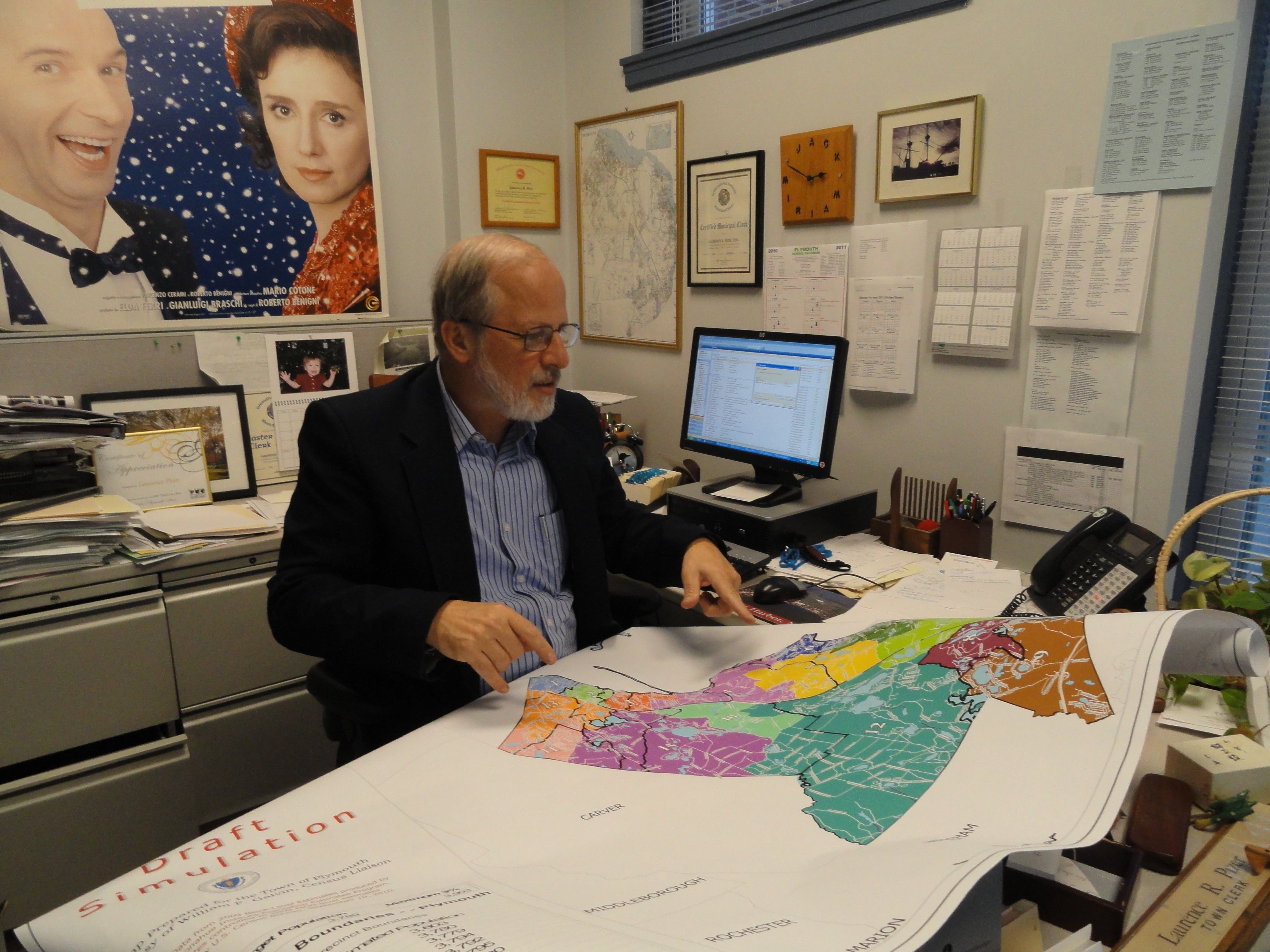
In December, Pizer was working on a scenario of creating two new voting precincts, bringing Plymouth’s total to 16. He said now the town should only need one additional precinct. The town has added one precinct every 10 years since 1980.
“We ran the numbers and we might be able to squeak through with one additional precinct,” Pizer said.
The cost is one thing to think about he said.
“Every time you have a precinct you have to add a voting machine and polls and add poll workers and that adds thousands of dollars. I think we’ll be able to make it at 15.”
Pizer will meet with the town’s IT department to begin generating maps that will carve a new precinct. The map will have to several things into consideration, including topography, roads, and neighborhoods. The minority population of Plymouth is too low to be taken into consideration, Pizer said. If it were higher, the town would have to ensure that minorities are not excluded in the process.
The map has to be in place by June. The Board of Selectmen will hold a public hearing on the map, and approve it before it is sent to the state’s Local Election District Review Commission for final approval.
Then, Pizer said, the town will have to wait to see how the state divides its other voting districts, including the state representative districts, state Senate, Congressional districts and Governor’s Council district. The creation of those districts is always interesting to watch, Pizer said; particularly when the state is losing a Congressional seat.
Get more local news delivered straight to your inbox. Sign up for free Patch newsletters and alerts.