Politics & Government
Protecting our water resource
The Town has imposed water restrictions, reported on the quality of drinking water.
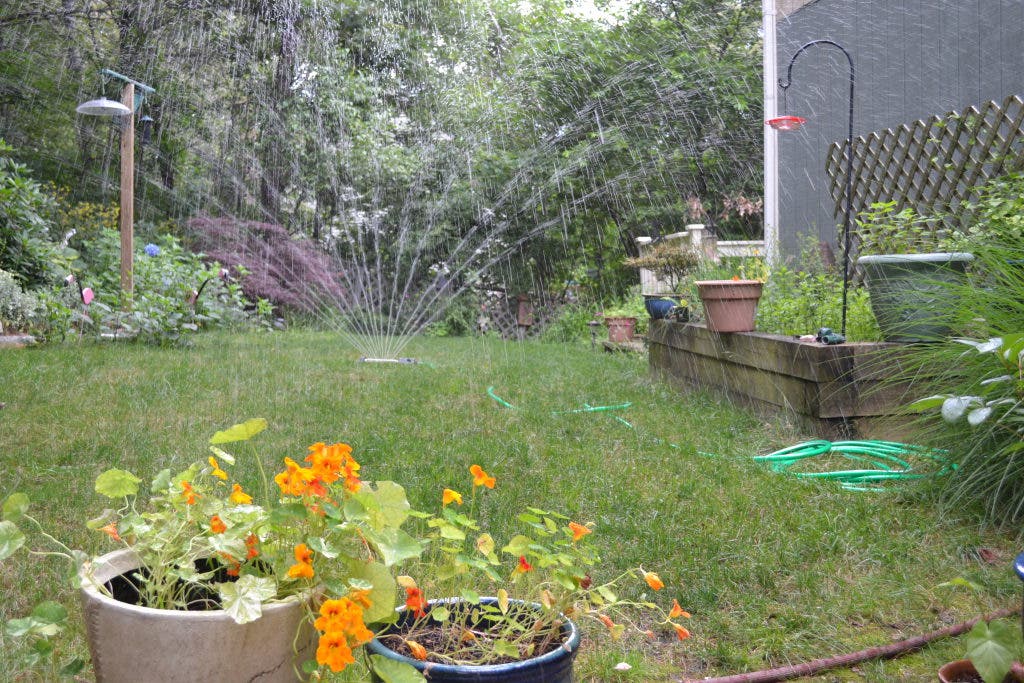
The National Weather Service says to expect sunny days and clear nights. The Town says to expect cutting you lawn and garden watering in half.
Outdoor watering restrictions have gone into effect for another summer. Odd numbered addresses may water only on odd numbered dates, even on even. And on those days, lawn owners may water only between the hours of 5 and 7, a.m. and p.m.
Water superintendent Rick Tierney has two reasons for the restrictions - wear on equipment and water withdrawal limits imposed by the state.
“The equipment runs pretty close to 24 hours a day,” Tierney said. “You don’t want equipment running that long. It may break down.”
Tierney has no room for a single break-down. The town has six water zones from North Plymouth to Cedarville. Two of them have only one well. If the pump or filtration system for one of those wells has a mechanical problem, the households of that zone have no water supply.
The high summertime demand also affects multi-well zones.
“We have three wells in Manomet,” Tierney said. “We can barely keep up with the demand. That demand is pretty much driven by lawn irrigation.”
Plymouth sits on one of the richest aquifers on the east coast. But, the state’s Department of Environmental Protection (DEP) imposes one water withdrawal limit on every municipality - 80 gallons a day per user. Plymouth has approximately 40,000 water customers.
“The state treats everyone the same,” Tierney said. “We know that number is about to go down to 65. It’s better to be prudent with our resources now than have to double back in the future.”
The summer brings another problem for the water department. At the same time the water levels in the storage tanks drop, the sun heats the water. That increases the chance for biological contamination. The water department controls that threat with disinfectant which poses additional risk for contamination.
“It’s an ongoing struggle,” Tierney said.
Water customers received the annual water quality report this week. It lists 15 possible contaminants. All of them tested extremely low. The report represents the water quality, but is not exhaustive.
“The report would have to be six pages long to list all the contaminants we test for,” Tierney said.
The DEP and federal EPA sets the standards the water department must test for and report. The department also tests for coliform and other bacteria weekly. It regularly tests for volatile organics and other chemicals.
In the mid 1990s, the Manomet water zone had a problem with bacteria arising from biofilm, a coating of microbes in the water mains. Tierney’s predecessors spent three years disinfecting and flushing the system.
No such problem exists today.
“Our forefathers have done a pretty good job protecting that resource,” Tierney said. “It’s our job to pass that along.”
Protecting that resource means the water department working with the departments of planning and development, zoning, environmental management and engineering to ensure threats to the water supply do not encroach on wells. It means enforcing “best practices” standards on fertilization of golf courses and de-vegetation along power lines.
“Our water quality is superb,” Tierney said.