Community Corner
Study: Racial Pay-Gap Widening in Massachusetts
A financial study finds Massachusetts has a more than 50 percent gap in median household income between white people and people of color.


This just in: the pay gap isn’t a myth, and it doesn’t just exist between men and women.
But not only does the pay gap still exist, a new financial report from WalletHub shows that it has actually increased in the past decade.
WalletHub compared the median household income, homeownership rates, unemployment rates, poverty rates, higher education and the rate of those who are uninsured between white people and people of color in each state for their report.
Find out what's happening in Plymouthfor free with the latest updates from Patch.
They found that black and hispanic populations tend to fall in the lowest level of finances and educational achievement.
A recent Pew Research Center study reported the same phenomenon and discovered the wealth-gap between black and white workers is at its highest since The Great Recession of 1989 when white people were 17 times richer than people of color.
Find out what's happening in Plymouthfor free with the latest updates from Patch.
In 2013, Pew reports, white households were 13 times more wealthy than black households.
“Wage disparities — caused by discriminatory policies and institutional racism — account for two-thirds of the racial income gap,” according to the WalletHub report.
- Also Read: You’ll Never Guess How Much Smoking Costs You in Massachusetts
- Good News for Your Wallet: Massachusetts Makes List of States with Best Driver Insurance
And the report shows Massachusetts has one of the biggest disparities in salary between white people and people of color in the country. The state has the ninth biggest racial pay gap out of all 50 states and the District of Columbia.
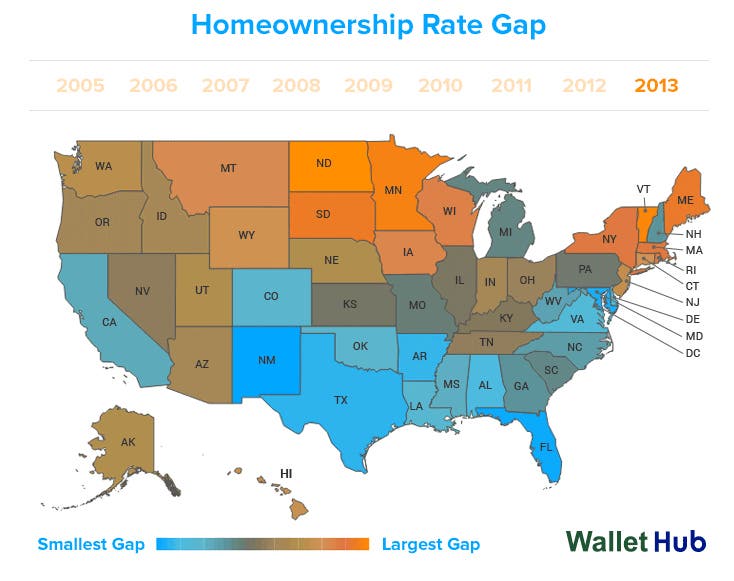
The highest median household income gap between white people and people of color in Massachusetts was 51.76 percent. The study also found that 58.12 percent more white people hold bachelor degrees or higher degrees than people of color in Massachusetts and 64.18 percent more own homes.
But perhaps the most shocking number shows the poverty rate gap between white people and people of color in Massachusetts at 272.8 percent. In all cases, hispanic people were the most disadvantaged in Massachusetts.
Poverty gaps this drastic have less to do with those in poverty and more to do with political systems, which allow gaps like this to exist, according to WalletHub’s experts.
“Race is a function of power and power in the United States is disproportionately held by the two major political parties who control the political process,” Omar H. Ali, associate professor of African and African-American history at the University of North Carolina, said to WalletHub.
In order to target and attempt to change the racial wealth gap, Ali suggests starting young.
“Development – that is, our capacity to recognize opportunities and take advantage of them – is something that middle-class and wealthier people in the nation tend to be able to exercise more frequently and better (like a muscle) than poor people,” Ali said in the report.
He said giving children across racial lines access to more developmental programs, such as travelling, going to summer camps and exploring museums, would help them have more opportunities later in life.
Image via WalletHub
Get more local news delivered straight to your inbox. Sign up for free Patch newsletters and alerts.