Community Corner
Summer Fun in the Gas-Light Era
That summer trip to the amusement park actually has some history behind it!

As summer draws to a close, you may be planning a last family trip to a theme park. Today we may enjoy (or not!) roller coasters that could keep up with cars on the highway while traveling upside down, but the idea of amusement parks is hardly new.
In the 1890s, electric trolley systems sprang up all over the country, providing a democratic form of transportation to cities and towns across America. During the week, workers and schoolchildren used the trolleys.
How to get people to ride on the weekends? Build family parks! Almost all of the early amusement parks (also called trolley parks) were built by street railway companies. Trolley parks flourished in the early 20th century. Usually located near a lake, river or ocean, they featured places to swim and boat, ice cream and other food, boardwalks, dancehalls, theaters, arcades, and, yes, a few rides like carousels.
Find out what's happening in Plymouthfor free with the latest updates from Patch.
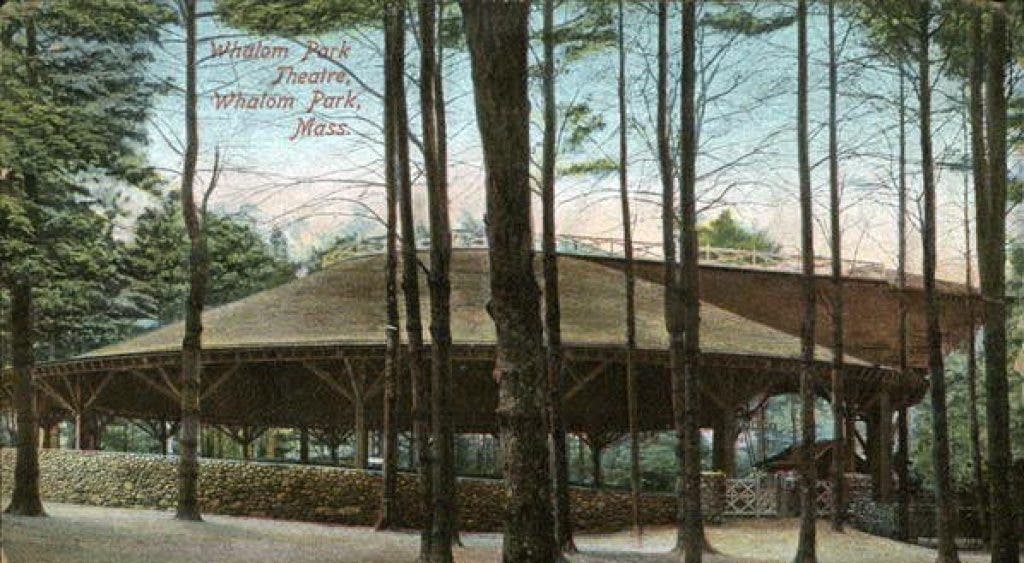
One of the earliest and best-known park locations is Coney Island in New York. Even before electricity, people could get there on the horse-drawn street railway. Riverside Park (now Six Flags) in Agawam, near Springfield, Mass., started as a picnic grove in 1840. By the turn of the century, it had become a trolley park operated by the Springfield Street Railway. Whalom Park on Lake Whalom in Lunenburg, was one of the earliest trolley parks, opened by the Fitchburg and Leominster Street Railway in 1893. When it closed in 2000, it had been in continuous operation 107 years! Canobie Lake Park in Salem, NH, was built in 1902 by the Hudson, Pelham and Salem Railways. While the park suffered along with the decline of trolleys and closed for a short time in 1929, it was purchased by private individuals and is still in operation today. Its trolley station is now used as a building for skeet shooting.
Plymouth County had Mayflower Grove, a park located on Little Sandy Pond in the Bryantville section of Pembroke. Opened in 1901, it was operated by the Brockton and Plymouth Street Railway. While trolley service to Mayflower Grove ended in 1925, the park lasted until 1945. Now the spot is occupied by private homes.
Find out what's happening in Plymouthfor free with the latest updates from Patch.
A few years ago, I interviewed two Plymouth centenarians, Jeanette Morton Holmes and Harold Boyer, about their reminiscences of Mayflower Grove. Jeanette Holmes (1902-2006) remembered the special trip to Mayflower Grove with her family at the end of summer. Friends who rode the trolley gave them coupons from their strip tickets. The coupons were good for rides, like the tunnel slide, which children rode on an oilcloth cushion, or for the novelty concession.
Harold Boyer (1908-2009) went once or twice a summer with his family. An avid music fan, he remembered the stage shows and dance bands, including the Ellsmore-Nash Band, which played jazz there in the early 1920s. Occasionally Harold even performed at Mayflower Grove, filling in for the drummer in Joe Pioppi’s Orchestra, playing Irving Berlin tunes.
From tame carousels to roller coasters that travel 50 miles per hour, amusement parks have evolved over more than a century. So when you are wondering what you were thinking getting on a death-defying roller coaster, you can smile and think, “This is history, too.” But don’t tell your kids!