Neighbor News
Wind Turbine Infra Sound Boone North Carolina 1985
Prepared for the U.S. Department of Energy Contract No. DE-AC02-83CH-10093. Noise complaints related to the DOE/NASA MOD-l wind turbine.
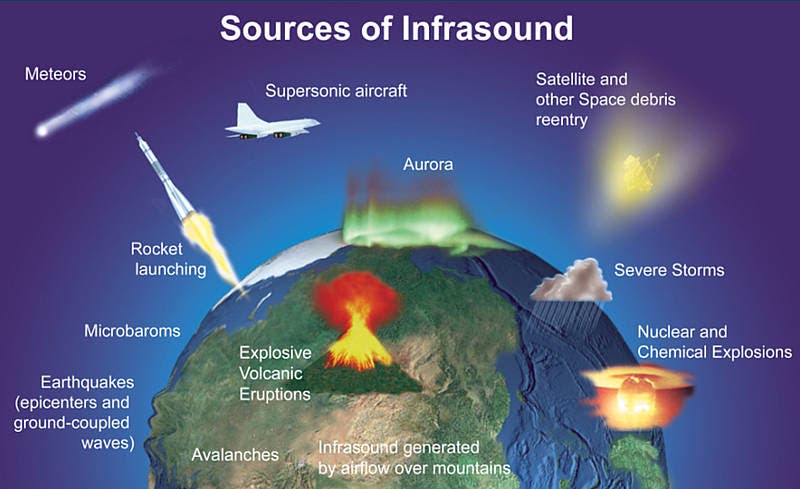
Infra Sound, Boone, North Carolina 1985
Prepared under Task Nos. 1066.70 and 4803.10 WPA No. 171A Solar Energy Research Institute A Division of Midwest Research Institute 1617 Cole Boulevard Golden, Colorado 80401
Prepared for the U.S. Department of Energy Contract No. DE-AC02-83CH-10093
Find out what's happening in Plymouthfor free with the latest updates from Patch.
Neil Kelley, Principal Scientist --Wind Energy Section
This document summarizes the results of an extensive investigation into the physical factors surrounding noise complaints related to the DOE/NASA MOD-l wind turbine operating near Boone, North Carolina.
The work reported here presents the results of investigative efforts of staff members of the Solar Energy Research Institute (SERI) and its subcontractors: the Fluid Dynamics Research Laboratory of the Massachusetts Institute of Technology (MIT), the Departments of Meteorology and Mechanical Engineering of Pennsylvania State University, and the Departments of Mechanical and Aerospace Engineering of the University of Colorado-Boulder.
Find out what's happening in Plymouthfor free with the latest updates from Patch.
Complaints of noise emanating from the operating MOD-l were confined to about a dozen families living within a 3-km radius of the turbine, about half of whom were annoyed frequently. 3-km equals almost 2 miles.
These families represented a very small fraction of the total households within this radial distance, a number exceeding 1000 homes, including most of the town of Boone itself.
In summary, the complaints centered on the following perceptions: ..
The annoyance was described as an intermittent “thumping” sound accompanied by vibrations. ..
A “feeling” or “presence” was described, felt rather than heard, accompanied by sensations of uneasiness and personal disturbance. ..
The “sounds” were louder and more annoying inside the affected homes. .. Some rattling of loose objects occurred.
In one or two instances structural vibrations were great enough to cause loose dust to fall from high ceilings.
The primary objectives of SERI’s investigation have been (1) to identify the physical mechanisms responsible for the generation, propagation, and human response (impact) of the annoying “sounds” related to the operation of the MOD-l turbine and (2) to develop suggestions for its amelioration.
A definitive set of physical measurements that document the characteristics of the MOD-l acoustic emissions, the vertical structure of the atmospheric velocity and thermal fields controlling the sound propagation, and the internal acoustic pressure variations and structural vibrations of two of the affected homes has been obtained through a series of field surveys.
In addition, a number of supporting wind tunnel and full-scale tests using a small, downwind turbine have been conducted to enhance our basic understanding of the suspected physical processes involved.
To aid in the investigation, a numerical model of the noise generation process has also been developed. These field measurements and model results allowed us to conclude the following: ..
The annoyance was real and not imagined.
Click here to read the entire report :