Schools
Beverly School Sees Benefits in 'Whole Child' Education Model
Shore Country Day School focuses on children's overall well-being by carefully balancing academics, athletics, and the arts.

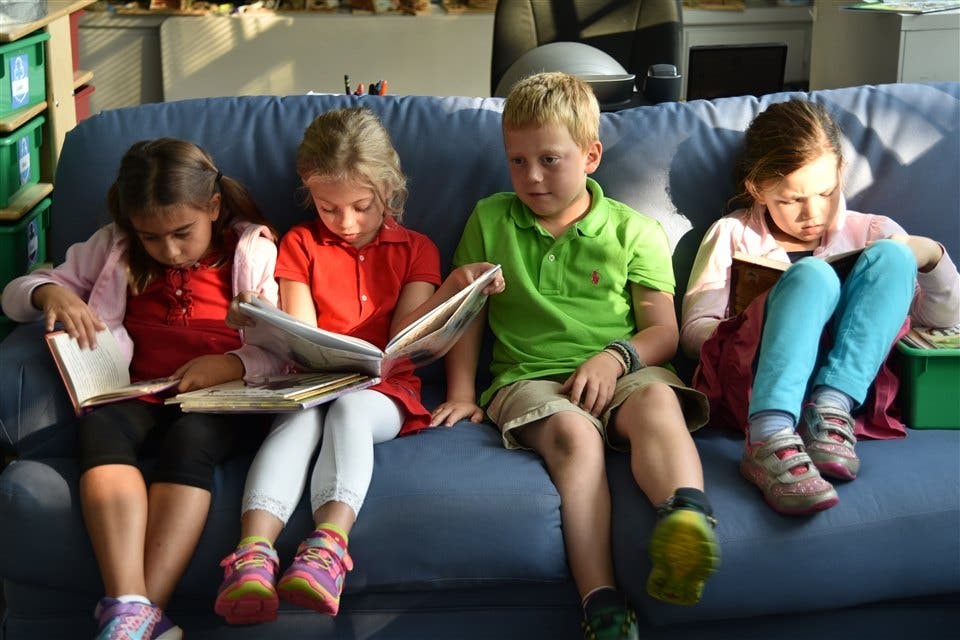


Leaders at Beverly’s Shore Country Day School have spent much of the past school year conducting intensive focus-group research into the ways parents, faculty members, students, and outside community members perceive the institution. Working with consultants and experts from leading independent schools across the country, they’ve been surprised to discover that these highly varied groups all share similar views of the school. From the very youngest students to the most experienced teachers and parents, research participants have all identified three major areas they say distinguish Shore: its emphasis on experiential learning and risk-taking, its tradition of encouraging deep connections between teachers and students, and its insistence on the central role of community and caring in the culture of the school.
Asked to explain the unusually consistent feedback from such diverse audiences, Shore’s new Lower School Head, Sara Knox, offers, “It all comes back to the students.”
Knox—formerly a classroom teacher, language and literacy specialist, and administrator at the Francis Parker School, San Diego’s largest independent day school—is a proponent of “whole child” education, which emphasizes emotional and physical health alongside academic inquiry. “What our parents, teachers, and students showed us by their responses is that focusing on the whole child works, and it’s what we all want.” For evidence, says Knox, just look at the students. “They are curious. They are eager. They are happy. They look for challenge, and they persevere. Hearing about it is one thing, but seeing it in action speaks volumes for what Shore does for students and for what students do for Shore.”
Find out what's happening in Readingfor free with the latest updates from Patch.
Whereas many schools allow arts and athletics to languish in an elective structure, Shore requires that students “go outside their comfort zone” to participate in everything the school has to offer, especially at the younger grade levels. From taking their place on the big stage in Shore’s Theatre for the first time, to jumping into a new sport, Shore wants children to try, according to Knox. “We want them to struggle and also succeed. We want them to find their passions by experiencing so much. And once they do, we see them blossom.”
Founded in 1936, Shore has from its very beginning emphasized balance in education. Today, the school is known just as much for its robust offerings in athletics and the arts as for its rigorous academics. Yet “balance” at Shore does not mean pushing all students along the same path. “We are not a school that breeds one type of child,” asserts Knox, ”and we pride ourselves on that. Year to year, our graduates leave us with very different sets of skills and passions. At the core, they are good kids. But one is a violinist, another a mathematician, another a lacrosse player, and yet another an environmentalist.
Find out what's happening in Readingfor free with the latest updates from Patch.
“Attending to the whole child means not asking students to conform to a narrow set of academic standards and outcomes,” Knox continues. “Instead, it requires us as educators to meet children ’where they are,’ engaging individual learners with highly individualized instruction that nurtures emotional well-being, physical health, and intellectual growth.”
This type of philosophy is seen by experts as essential in today’s world, where rote learning and the accumulation of knowledge no longer measure up in society and workplaces where character skills such as creativity, resilience, teamwork, curiosity, and time management are ever more valuable. According to the Whole Child Initiative, “The demands of the 21st century require a new approach to education to fully prepare students for college, career, and citizenship. Research, practice, and common sense confirm that a whole child approach to education will develop and prepare students for the challenges and opportunities of today and tomorrow.”
Shore’s teachers and administrators seem to agree. Through new facilities such as the Innovation Lab and Theatre, through community experiences such as Shore’s House system and service days, and through plentiful opportunities for genuine inquiry and collaboration, Knox says, “The school ensures children develop those critical skills we know correlate with success—and happiness—in life.”
Schools are changing, and Shore is surely helping to lead the way. Areas of focus such as mindfulness and movement are now finding their place across the curriculum. Student-led discussions are becoming central to learning as early as fourth grade. Concern for the community is a theme students of every age explore throughout their Shore experience.
“All of these innovations, while perhaps not unique to our school, mean that we can offer a uniquely comprehensive whole-child approach that is made stronger by deep and powerful relationships between students and faculty—a hallmark of our school,” says Knox.
A whole faculty, passionately dedicated to the whole child—Shore’s proven model may well be one more schools should study.