Health & Fitness
Noted Pianist Virginia Eskin Soloist with Reading Civic Concert Band
Ragtime is highlight of recent band concert.
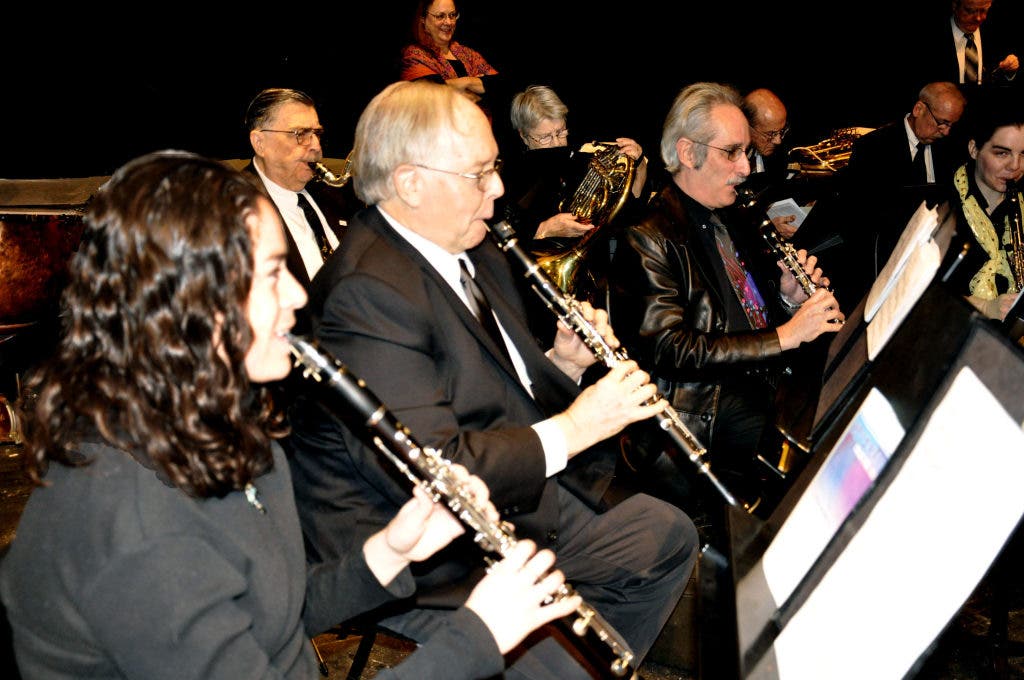


The Reading Civic Concert Band celebrated Black History Month with a program featuring black composers who wrote in a variety of idioms, frequently with references to their African heritage. The band was assisted in this endeavor by Virginia Eskin.
A celebrated pianist who has performed with major orchestras around the globe, Bostonian Eskin is also well-known as a student of ragtime. Her father was a sideman with the famed Paul Whiteman Orchestra, and she naturally grew up playing jazz around the house. A good enough cellist to play professionally, she decided to concentrate on piano and attended the Royal Academy of Music in London.
On assignment from the Newport Music Festival to look into the career of Amy Beach, Eskin was amazed to discover that this little-known composer had created a library of compelling works.
Find out what's happening in Readingfor free with the latest updates from Patch.
Discouraged from performing by her husband, Beach gave up her career as a virtuoso pianist, but spent her married years composing in a variety of styles and became the first American woman to compose a symphony.
In an era of bra-burning feminism, Eskin was inspired to set out and write this and other stories of women composers of the 1920s and 1930s who had been neglected by history. Ultimately, these stories were produced in a radio series, First Ladies of Music, which was broadcast nationally. Eskin’s discography includes many classical performances of these American women composers.
Find out what's happening in Readingfor free with the latest updates from Patch.
Although a classical pianist, Eskin continued her playing of jazz and developed an interest in how black musicians introduced a black idiom into more classical forms, two of which were played on the RCCB program. She was also able to intertwine her interests in feminism and jazz with her recording Fluffy Ruffle Girls, Women in Ragtime.
Lucinda Ellert, musical director of RCCB, coincidentally shares these twin interests with Eskin. Ellert for more than 20 years has been the leader of Happy Feet Dance Orchestra here in the Boston area, a 1920s revival band specializing in historic jazz tunes by Ellington, Redman, and Henderson. She and Eskin have collaborated before, including a RCCB concert in 2008.
The centerpiece of the concert featured James P. Johnson, the Father of the Stride Piano, a style bridging the ragtime and jazz eras, who was best known as the composer of the Charleston, the dance craze of Roaring Twenties. Not content to play only jazz tunes, and inspired by George Gershwin’s Rhapsody in Blue, Johnson set out to use this new classical form by also incorporating jazz elements, emphasizing black themes from ragtime, blues, and spirituals.
His Yamekraw: A Negro Rhapsody, written in celebration of a black settlement in Savannah, Georgia, was first performed by Fats Waller in a 1927 Carnegie Hall concert. Later, Johnson asked the composer William Grant Still to prepare a new orchestration of the piece, and it is in this form that it was played on the RCCB concert. Basically a concerto for ragtime piano, complete with jazzy cadenzas, Eskin and the band ably integrated the stylistically different sections of the piece.
Florence Price was born in Little Rock, Arkansas, and started her study of piano at age 4. An accomplished pianist by her teens, she entered the New England Conservatory in Boston, where she graduated in 1906 with a degree in organ and piano performance. Her talent was such that the head of the conservatory personally found her a job as a church organist.
Educated in European classical music, Price approached this style on its own terms without resorting to black themes and techniques. After her marriage, she moved to Chicago where she continued to compose and teach.
Her Symphony in E Minor was played by the Chicago Symphony Orchestra at the Chicago World’s Fair in 1933, the first time a symphony written by a black woman had been played by a major symphony. Ultimately her body of work combined European classical forms with rhythms and themes of African heritage. Two movements of her Symphony No. 3, arranged for symphonic winds by Lucinda Ellert, were performed, the “Andante” demonstrating her conservatory background and “Juba” reflecting a dance from slave plantations which involved stamping and slapping of the legs and chest.
William Grant Still, perhaps the most celebrated black classical composer of the twentieth century, was represented on the program by three movements of The American Scene, a musical depiction of various geographical features and regions of the U.S. After studying at the Oberlin Conservatory of Music, Still became an arranger for W. C. Handy, the first black conductor of many major American orchestras, and a composer of a variety of works, only some of which featured elements of his black heritage.
Virginia Eskin performed alone Florence Price’s genre piece Tropical Noon, Fats Waller’s Gladyse, and James P. Johnson’s Mule Walk, giving a great demonstration of her ragtime talent and proving herself to be a great crowd pleaser.
The program was filled out with marches by James Reese Europe, a noted ragtime figure in the early 20th century as well as the director of the band of the 369th Infantry Regiment “Harlem Hellfighters” in WWI, and by current military officer Dwayne S. Milburn who is the associate bandmaster of the U.S. Army Field Band. The final piece on the Black History Month program was Indigo Run, a musical portrayal of the Carolina lowlands by Professsor Cedric L. Adderley.