Business & Tech
Controversial Rolling Machine Comes to Reading
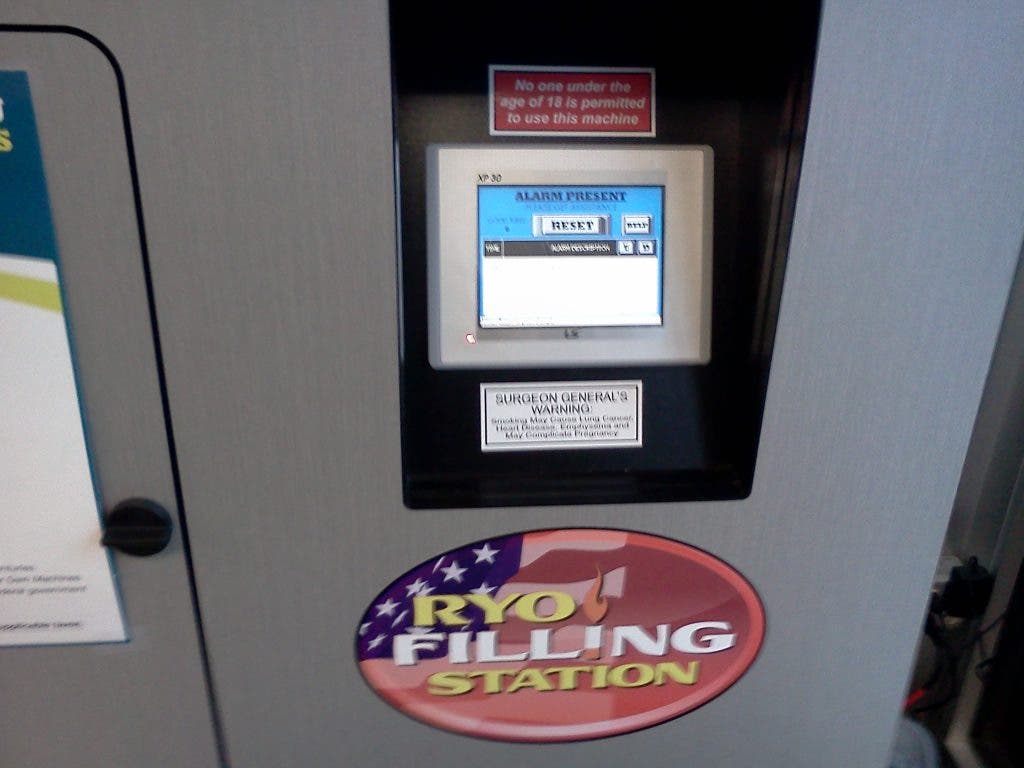
The RYO Machines Filling Station is up and running at Mobil on Main Street.
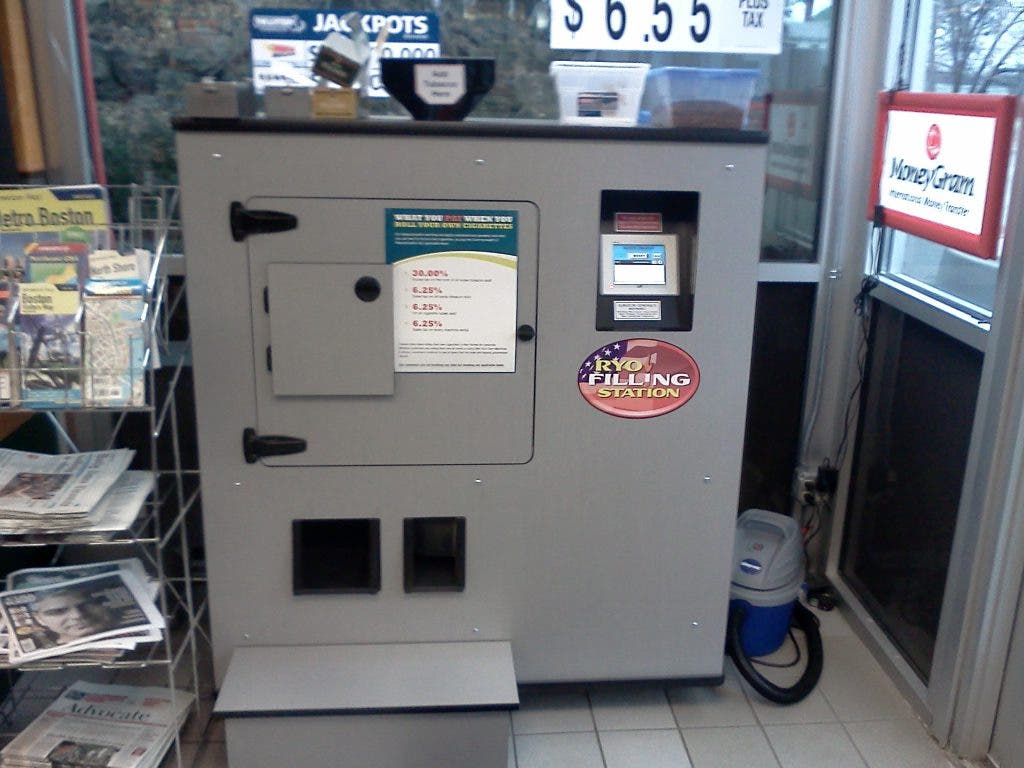


Smokers in Reading who are tired of paying the hefty state tax on pre-manufactured cigarettes now have another, albeit highly controversial, option—at least for the time being.
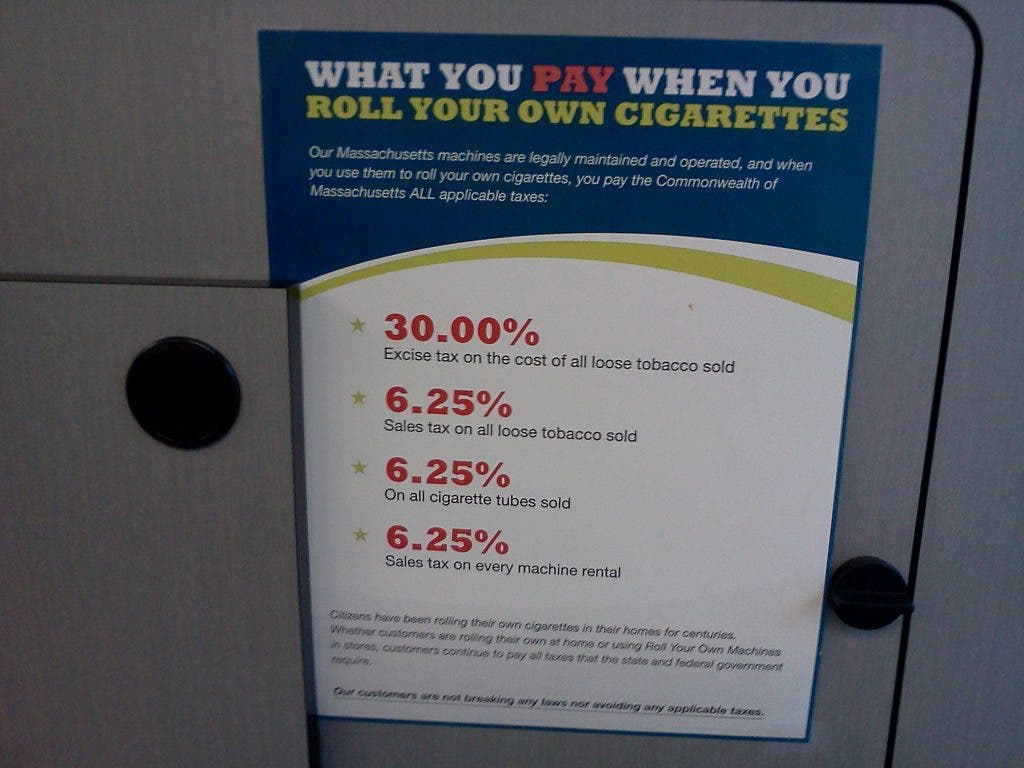
A new RYO Machines Filling Station in the Mobil Mart attached to the Mobil Gas Station on Main Street allows customers to walk away with 200 rolled cigarettes for a fraction of what they would pay for the pre-rolled version, thanks to avoiding the nearly $2.51 per pack in taxes Massachusetts charges cigarette smokers. Currently, the state taxes loose tobacco at 30 percent of the wholesale price, which makes it much more affordable than pre-rolled cigarettes.
The machine produces one carton of rolled cigarettes for roughly $30—one-third of what it would cost to buy a carton of manufactured cigarettes.
Find out what's happening in Readingfor free with the latest updates from Patch.
While this practice is currently legal in Massachusetts, it has drawn heavy criticism from state politicians and health officials, who say it is a blatant and willful attempt to skirt the state taxes and potentially provides easier access to tobacco products to minors.
The operator of the Mobil Station located at 178 Main St., Joe Pizzio III, who runs three other stations in the area with his father, said he had the same concerns when considering installing the device.
Find out what's happening in Readingfor free with the latest updates from Patch.
Concerns
“We had the same concerns as far as anyone being able to do anything illegal,” said Pizzio. “Believe me, if there was a chance anything illegal could happen I wouldn’t take the chance. My father and I, we’re just a small business, we’re not looking to break any laws or do anything illegal.”
Although these machines are legal in Massachusetts, many communities have taken steps to ban them—including Malden and Worcester—and at least one Bay State lawmaker has uttered harsh words against this practice.
“It’s a willful attempt to evade the tax that is in Massachusetts,” said State Senator James Timilty, Chairman of the State Revenue Committee to CBS Boston. “We should shut them down. “I think the Attorney General and the Department of Revenue have the tools. It is a constitutional issue when it comes right down to it, taxes have to be enforced uniformly throughout the Commonwealth.”
The City of Malden recently sent out a notice to local retailers regarding the rolling machines being in violation of city by-laws, according to Maureen Buzby, Tobacco Coordinator for the Reading Health Division, as well as six other towns in the area. Buzby, who indicated she was aware of these kinds of machines, but had yet to hear about the one in Reading, said the Health Division does have concerns.
“They are not illegal, but we do have concerns about access to tobacco,” she said. “Access for youths is a concern.”
According to Pizzio, there is no greater risk of any underaged tobacco sales because the process for operating the rolling machine requires the same face-to-face transaction as purchasing a pack of regular cigarettes.
The customer must approach the cashier, purchase tobacco, rolling tubes and a machine rental—each taxed individually—before acquiring a code to operate the machine. “The customer walks right up to the cashier, just like you would buy a pack of cigarettes,” Pizzio said.
Government Response
One of the issues with the machines, is how to classify them; are they cigarette manufacturing equipment, vending machines or just oversized tabletop rolling machines?
This question is paramount in the case of Reading, as per Section 16.6 of the Board of Health Regulations, “cigarette vending machines or any other device for the sale or distribution of tobacco products are prohibited except in private, non-profit organizations.”
But store owners like Pizzio who operate these machines aren’t any more eager to be labeled as manufacturers, especially in light of what has been happening in other states, not to mention rumblings from State Attorney General Martha Coakley’s Office and recent federal initiatives.
The U.S. Tobacco Tax and Trade Bureau of the Treasury Department issued a ruling in September of 2010, stating that any retailer with a rolling machine was engaged in the manufacture of cigarettes, and liable for all applicable taxes.
This would mean machine owners would need to pay for the same costly permits as a Phillip Morris or an R.J. Reynolds.
According to the Fall River Herald News, in late 2010, lawyers for RYO Machines obtained a temporary restraining order, followed by an injunction, in Ohio to stop the federal mandate. The case is still pending.
Attorney Bryan Haynes told the Herald News that the Massachusetts Attorney General’s office has issued to some storeowners what’s known as “Civil Investigative Demands,” a demand for information regarding how a business operates—one step in the investigative process. According to the Herald News, Coakley’s office refused to confirm any ongoing investigation into the machines, other than to say the office takes steps to investigate all potential illegal activity.
Another way the state may choose to address these rolling machines is by taxing loose tobacco at, or near, the level of manufactured cigarettes, closing the loophole that make the products RYO Machines produce appealing for consumers hit hard in the wallet by steep tariffs on brand name cigarettes.
This is a prospect that has RYO Machines concerned, as chief executive officer Phil Accordino told the Syracuse Post-Standard.
“They will wipe us out,” he said. “I can guarantee you that we will not beat them. I’m just hoping we get a little time to stay in business.”
Accordino is joined by retailers like Pizzio in that sentiment.
“This is a way for me to try and keep my head above water,” said Pizzio. “People see a Mobil sign, they see gas prices going up and they think I’m getting rich ... We basically work on a break even basis ... It’s a small profit margin on fuel.”
Pizzio said that between the machine in Reading, which is still new, and another machine he has at his East Boston store, there is a significant demand for this service and he is looking into purchasing a third machine.
“People are going to smoke no matter what,” he said. “The way I see it, it’s just a way for my customers to save money.”