Business & Tech
Economic Summit Presents Challenges, Opportunities
Moving of DPW facility one of many topics discussed by town leaders.


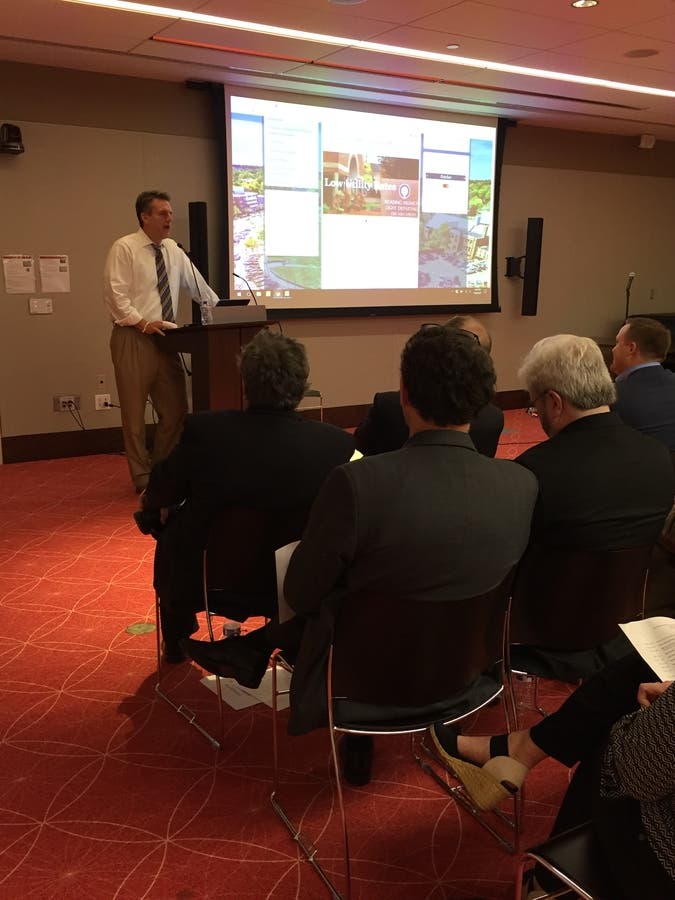
If you were one of the more than 4,000 voters who said no to last year's override because you felt the town wasn't doing its part, listen up. Reading's leaders want you to know they understand your frustration and at the Economic Development Summit Wednesday at the Library the focus was on what's been done, and what will be done.
"The 40 to 60 percent margin told us we were really lousy at communicating with our residents," said Town Manager Bob LeLacheur, MC of an event that is the first of many leading to a potential override vote next spring.
The three-hour discussion featured eight speakers, some like the Massachusetts Secretary of Housing and Economic Development Jay Ash, talking in general terms of what communities must do in 2017. He talked of millennials moving into Boston with companies to follow. "The world is changing really quickly. The days of everyone who is in Reading, staying in Reading, are long gone."
Find out what's happening in Readingfor free with the latest updates from Patch.
Ash suggested market-rate housing in downtown areas as one key to economic success. And he warned Reading leaders not to assume today's Reading business will be there tomorrow. "If I were you I'd protect my base first by contacting your important businesses and ask what they need from town government. I would really put out the welcome mat for people you've known for a long time."
Selectman Barry Berman brought the discussion back to Reading. With a 92 percent residential tax rate and with commercial taxes approximately $12 million a year less that peer communities the town has challenges. "We're at an economic cross-roads," said Berman. He gave two options, the first being endless override votes, the second, "grow the pie. How do we do No. 2 so we don't have to do No. 1?"
Find out what's happening in Readingfor free with the latest updates from Patch.
Berman listed the changes made in recent years including simplifying the permitting process as well as changes to the zoning laws, all with the goal of attracting more business. He also said the town has addressed the need to sell itself as a place to set up shop.
Andrew Corona is Reading's Economic Development Director and his power point included updates on two impressive projects. The first was the joint effort with Wakefield to move the town's DPW facility to camp Curtis Guild, the first such joint relationship in the Commonwealth according to Corona and a clear indication the town is thinking outside the box.
By moving the DPW, currently situated off Newcrossing Road behind Stop & Shop, the town has land it can develop. According to estimates based on various size developments, the town can bring in between $300,000 and $1.2 million a year in taxes. Right now the town gets nothing for the same land.
And those developments ... the town wants to know what you think should be built there and a survey is on the Reading web site. Don't say they didn't ask. While on the site check out features such as available properties in Reading, starting with the empty Walgreen's in downtown. The site makes it easy for any investor to get a quick look at what properties and sites are available in town.
The other project is the development of the post office on Haven Street. It will include 50 condominium units on the space where the parking lot is now. The front of the development will be retail and face onto Haven Street. The entrance to the condos will be across from the Knights of Columbus on Sanborn. Construction is expected to begin next year.
There is no guarantee those projects, and others being proposed, will solve what ails Reading.
"Our wildest economic development success will not remove the need for future prop 2 1/2 overrides," said LeLacheur.
But at least the town is trying.
Get more local news delivered straight to your inbox. Sign up for free Patch newsletters and alerts.