Arts & Entertainment
Flutist Aspires to Play a Note Above the Rest
Theobald plays final BYSO performance and looks ahead to USC.
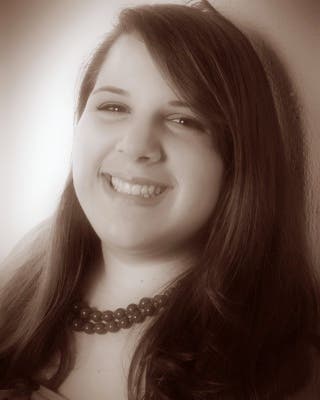

Emily Theobald, a Boston Youth Symphony (BYS) flute player and 2010 graduate of Reading Memorial High School, has always remembered a quote by an anonymous author which helped to bring her self-discipline and success:
"Amateurs practice until they get it right, and professionals practice until they can't get it wrong."
Theobald, who played her final performance with Boston Youth Symphony Orchestra (BYSO) in June, started playing the piano when she was 6 years old. When she saw a flute in a music store, she instantly knew that was the instrument she would base her career upon. Two years later, Theobald put aside piano practice.
Find out what's happening in Readingfor free with the latest updates from Patch.
Referring to the posture needed to play the flute, a teacher at the music store thought that young Emily's arms weren't long enough to play the instrument.
"If you have ever seen someone playing the flute, you would see what he meant," she said.
Find out what's happening in Readingfor free with the latest updates from Patch.
Even so, she started playing the flute at 9 – one year after stopping her piano lessons.
Easing into each phase of her musicianship, Theobald played locally at the Northshore Youth Symphony Orchestra (NYSO) until her freshman year at Reading Memorial High School. In the summer following her freshman year, she auditioned and was selected for entry into the BYSO. She also increased her rehearsing time to three hours a day and four hours daily over the summer.
The BYSO consists of three levels: The Junior Repertory Orchestra (JRO), the Repertory Orchestra (REP), and the BYS, which is the most advanced of the three levels. Theobald is proud of being in the BYSO, especially because there are only four flute spots in the orchestra.
She said playing an instrument takes commitment because there are many hours spent alone trying to improve. She added a performer in an orchestra can't try to be the star of the show.
"It's a team sport playing an instrument."
Certainly, anyone who practices publicly knows that nervousness is a natural part of performing, but nerves don't always have to be a barrier to a good performance. Theobald knows that stress is a different kind of nervousness than paralyzing anxiety.
She uses this knowledge to her advantage, and explained, "Nerves can be positive because they can add energy to your performance. Negative nerves come from the fear of knowing you're not prepared."
Unfortunately, there is always the possibility of having an instance when everything doesn't go quite as smoothly as she would hope. The one and only time this has happened to Theobald was during a dress rehearsal 15 minutes before her first one-hour-long flute solo performance.
It was the summer between her sophomore and junior year when two keys didn't work on her flute -- the keys got stuck and would not return to their original positions.
The soloist regained composure when she learned that the flute teacher was nearby.
"The flute teacher showed up and saved the day," said Theobald.
It turned out to be a minor glitch. The instructor put the springs back into place on the broken keys, and the performance went on as scheduled.
Inspired by father
Emily's father, Tom, is "definitely" her inspiration. She said he went to Boston Conservatory for his education. From there, he was a percussionist in a group of musicians with whom he was touring.
"He definitely helped me through any struggles I had when I wanted to give up," she said, adding, "It can be frustrating."
Her hard work paid off. She received a merit scholarship from the University of Southern California, Thornton School of Music, where she will major in music performance. She said her greatest aspiration is either "to go to graduate school or get into an orchestra."
Being accepted into a professional association, such as the Boston Symphony Orchestra (BSO), is a couple of steps away for her. She said that subsequent to the BYS, she would have to audition and be chosen to play for a regional orchestra before aiming for a spot in an organization, such as the BSO.