Politics & Government
Officials: Action Needed on Health Care Costs
Health insurance was one of the main discussion points during a forum led by Rep. Bradley H. Jones Jr. at North Reading Town Hall on Friday.

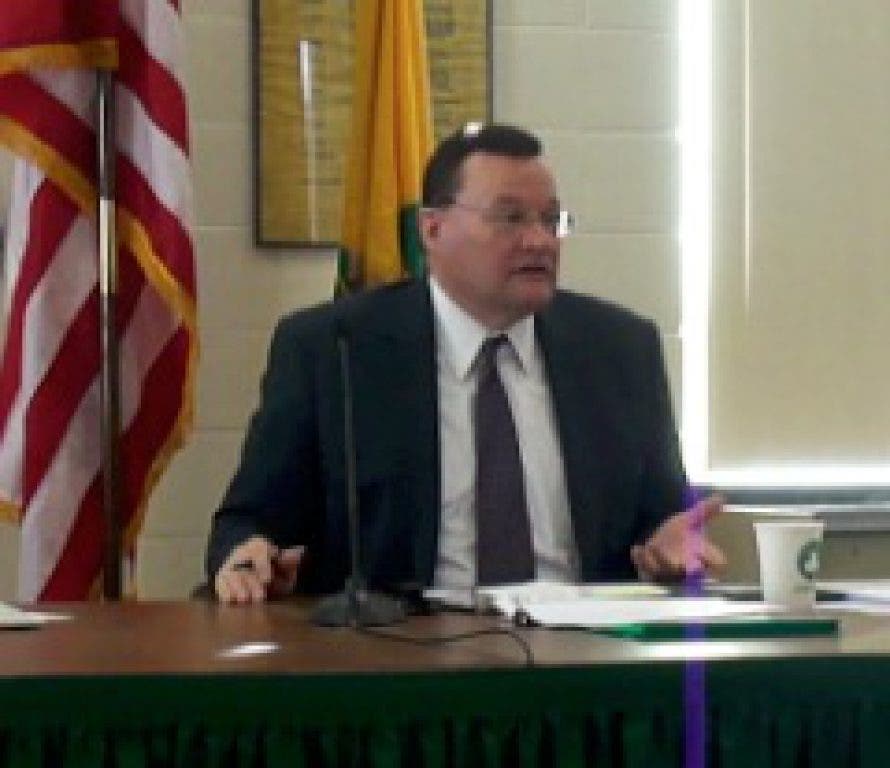
With cuts in local aid coming in 2012, health insurance reform is needed to provide savings to cities and towns across Massachusetts, state Rep. Bradley H. Jones Jr. and other local officials said Friday at during a forum sponsored by North Reading United for Education and Stand for Children.
Gov. Deval Patrick’s comes with a 7.2 percent cut in unrestricted general government aid, with North Reading in line to get $1.39 million in 2012, down from $1.5 million in 2011. The town stands to receive $6.45 million in Chapter 70 school aid, up from $6.42 million in 2011.
In total, the town will receive $74,097 less in overall state aid in 2012, according to the budget proposal. However, the town is looking at an increase of around 11 percent, or close to $500,000, in health insurance costs, said Robert Mauceri, chairman of the Board of Selectmen.
Find out what's happening in Readingfor free with the latest updates from Patch.
Municipal health care is one of the biggest cost drivers for cities and towns, Jones, R-North Reading, told an audience of more than 50 people, adding that he believes the governor’s budget proposal did not do enough to address it.
“That was a source of frustration on my part,” said Jones, the House minority leader. “The governor proposed a cut in unrestricted aid, and his idea is to make that up on the health care side.
Find out what's happening in Readingfor free with the latest updates from Patch.
Patrick’s health insurance proposal, which he will file with the Legislature, requires all cities and towns to either join the Group Insurance Commission or institute a program of equivalent value and cost by the start of the 2012 fiscal year. The bill also requires cities and towns to move eligible municipal retirees into Medicare, which the governor’s office estimates would save municipalities between $15 million and $30 million each year.
The governor’s office estimates that the two measures will net $120 million in savings for municipalities statewide, which will help sustain local services and retain jobs, according to a press release issued in January.
“This proposal is a critical step toward delivering material savings in health care costs to cities and towns at a time when they need it most,” Secretary of the Executive Office of Administration and Finance Jay Gonzalez said in a statement in January. “In this challenging fiscal environment, taxpayers can no longer be asked to fund overly generous health benefits at the expense of critical local services.”
Jones said 5,500 pieces of legislation addressing health care have been filed on Beacon Hill for this legislative term. But what any type of reform will look like still remains uncertain.
“What it’s going to look like and whether it’s going to happen will be a function of advocacy,” Jones said.
Mauceri said that with Proposition 2 ½ plus new growth, the town is looking at around a $900,000 increase in revenue for 2012. But with the state aid cuts and an 11 percent increase in health care costs — around $500,000 — that leaves the town with around $300,000 in new revenue, he said.
And after fixed-cost items are figured in, there is no money left out of that revenue increase to fund the town and schools, Mauceri said.
The issue of health care goes well beyond the state Legislature, Mauceri said.
“The health care issue is a systemic problem,” Mauceri said. “The following year, there’s nothing to prevent costs to go up 11-12 percent. We can’t go on every year changing the plan and providing less and less.”
Jones agreed.
“Health care is one of those areas where you push the balloon and it pops out someplace else,” he said.
Town Administrator Greg Balukonis said the town presented a change in the health care plan to employees last spring but did not receive buy-in from the unions, something that is required by law for a change to take effect, he said.
“The town has tried, and will continue to try, to work with its employees,” Balukonis said, noting that the town has hired an insurance consultant to work with it on the issue.
Based on previous years, Jones said public budget hearings held in different parts of the state likely would begin in the next few weeks. Around the second week of April, the House Ways and Means Committee would release its version of the budget, Jones said, and debate would begin around the last week of April.
The Senate budget debate would follow shortly thereafter, and a conference committee would reconcile the House and Senate versions in June, Jones said. The 2012 fiscal year begins July 1.
Get more local news delivered straight to your inbox. Sign up for free Patch newsletters and alerts.