Schools
School Committee Prepares For a Busy Year
Capital improvement projects were reviewed, a new teachers' contract is ready for ratification and plans for raising achievement for identified groups of students are underway.
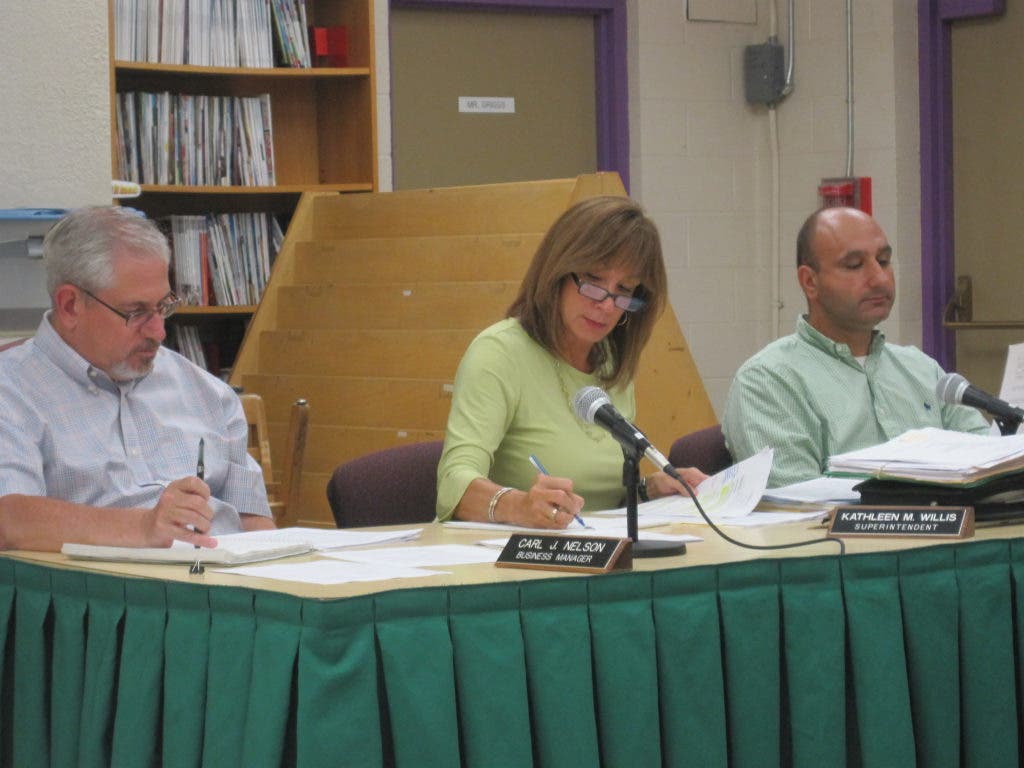


The School Committee met on Monday and discussed a number of undertakings for the 2011-2012 school year.
Capital improvements
One area requiring action is the condition of school facilities.
Find out what's happening in Readingfor free with the latest updates from Patch.
Director of Budget and Finance Carl Nelson distributed the Large Capital Plan report. Nelson discussed the functioning of aging equipment, the cost of repairs, and the inevitable necessity of replacing out-dated and failing equipment.
"We are spending money on items that are costly to run and to repair," said Nelson. "There are some conditions that need our attention. Particularly in areas where new technology would save money in the long run. Less desirable conditions impact the schools quite clearly."
Find out what's happening in Readingfor free with the latest updates from Patch.
A partial list from Nelson's report includes a new septic system at the and with an estimated cost of $2,500,000. The replacement of worn tile at the middle and high schools with a plan for asbestos removal is estimated at $275,000. The 1955 HVAC system at the high school needs replacement to help correct air quality issues. The estimated cost for a new system: $3,200,000.
The committee discussed these and other items on the report with concern for the safety and operation of the schools in the coming years.
Little School Boiler Replacement
Wayne Hardaker, the Supervisor of Buildings and Grounds reported on the complex process of replacing the boiler at the .
"We expect the removal of the old system and the installation of the new one to be complete by November 1," Hardaker assured the committee. "Should the weather turn cold before the project is complete there is a back up boiler that will be in place."
Hardaker detailed the comprehensive process involved. The removal of the asbestos is carefully monitored by a federal government specialist who tests air quality before, during and after the process.
Hardaker explained that the old boiler and piping will be removed through an exterior door. A cinder block wall encloses the boiler and all materials are in sealed-off containment. At no time will students or faculty be exposed to asbestos or other materials.
"We accepted the lowest bidder for the project knowing the engineer in charge. We've been pleased with his work before," stated Hardaker. Asbestos removal has been an on-going project with several clean-ups in recent years. All have been without incident of any kind.
The new system will have three small condensing boilers operating on gas-fired energy that is 95% efficient. Each of the three operates according to the temperature in the building. The second and third boiler do not fire unless the building is cold enough to call for more heat. A computerized system monitors the building and the boilers.
"We will begin to realize some payback for the cost ($250,000) in as little as nine months," Hardaker informed the committee.
Teachers contracts
An agreement with the North Reading Education Association (NREA) was signed by the committee and now passes to the NREA for ratification. Chairman Gerry Venezia said NREA President Eric Forman expects the agreement to be ratified by the membership.
Because town employees agreed to change health care companies from Blue Cross and Blue Shield to Harvard Pilgrim Healthcare the town saves money. The change includes greater co-payments for individuals and cost savings to the town on prescription medications.
The agreement covers the period through June 30, 2012. The committee intends to begin new contract talks with the NREA in the fall.
Performance targets
Each year all school districts are analyzed by testing results and other student data as established in the No Child Left Behind (NCLB) legislation passed under the Bush administration.
Schools are evaluated each year and goals of achievement are set in subsequent years. Measuring achievement from year to year determines a district's Adequate Yearly Progress (AYP). Reports are given to the school district and forwarded to U.S. Department of Education.
Mitchell D. Chester, the Commissioner of the Massachusetts Department of Elementary and Secondary Education (DESE) recently notified Superintendent Kathleen Willis that the students in Title I at the middle school have not seen expected improvement in Mathematics in the last two years.
Middle School Principal Catherine O'Connell sent a letter to parents whose children are part of the group identified for "corrective action."
"English Language Arts scores surpassed their performance target," O'Connell told parents.
"Mathematics did not meet our performance target," she added. "... this does not indicate a failing school. It simply indicates areas where more work is needed by principals, teachers and parents."
As stated in the letter after school tutoring will be provided to students needing more support.
Some committee members questioned the NCLB report.
"This is one reason why schools across the country have asked U.S. Secretary of Education Arne Duncan to reconsider the NCLB requirements," said Mel Webster.
"When a system is doing well as our system is, it's hard to get a higher level of achievement. A school doing less well may be hitting their targets even though they are behind us," Webster explained.
The superintendent addressed the issue.
"There are things we can and will do to see evidence of more learning in the coming year," Willis reassured the committee. "We have work to do but it will get done."