Community Corner
17th-Century Salem Cabinet Could Fetch $800K At Auction
Sotheby's placed an estimated value of $600,000 to $800,000 for the cabinet that has a history tied to the Salem Witch Trials.


SALEM, MA — A wood cabinet that was carved in 1677 and has ties to the Salem Witch Trials is expected to fetch up to $800,000 at auction, according to Sotheby's.
The auction house said at the newly discovered cabinet "stands as a monument to early Colonial American artistry" and is "a symbol of Western urbanity on the Puritan shorts of Massachusetts, a poignant witness of the Salem Witch Trials and an early example of the westward migration of the English immigrants' first generation's children."
According to Sotheby's, the cabinet is one of five known examples of the Symonds shop of Salem, and the only one not held in a public institution.
Find out what's happening in Salemfor free with the latest updates from Patch.
It was likely produced by one or both sons of John Symonds, as part of a "woodworking dynasty that served the citizens of Salem and surrounding communities well into the 18th century."
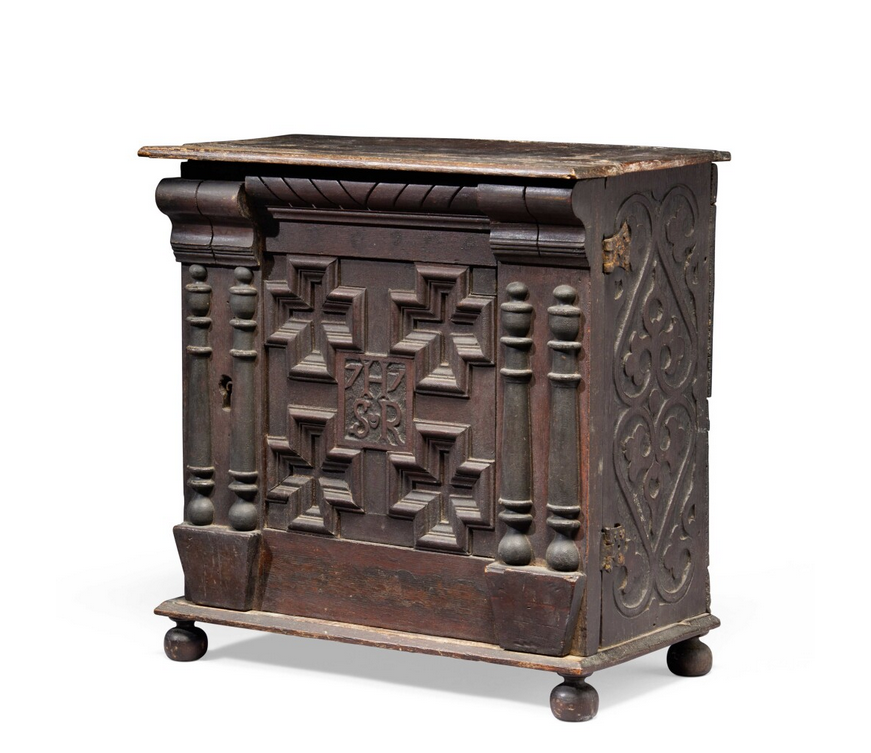
According to documents accompanying the cabinet, it was originally made for Symon Horne and Rebeckah Rea Stevens of Andover.
Find out what's happening in Salemfor free with the latest updates from Patch.
Given this chronology, it is possible that the cabinet was commissioned to commemorate the birth of their first child, Joshua. After Horney's death, Stevens remained a widow until she married Joseph Ballard in 1692.
The family then became embroiled in the Salem witch hysteria when his first wife, Elisabeth, fell ill and he questioned whether she may have been afflicted with supernatural "enchantment." Ballard accused two Andover women, Mary Lacey Sr., and her daughter, Mary Lacey Jr., of witchcraft in his former wife's condition.
According to Sotheby's, both women were cross-examined on July 21, 1692, and sentenced to death.
"They confessed to the charges of enchantment, and as the fever of hysteria soon subsided, their lives were spared," the auction house said.
The cabinet remained in the family for the next three centuries, including in the possession of American Revolution soldier Josiah Ballard, who fought in the battle of Fort Ticonderoga.
"Very rarely do objects appear on the marketplace that are of such profound importance to the study of American material culture and a witness to American history," Sotheby's said.
The auction expired on Jan. 23.
A full history of the item and description of its unique woodworking can be found here.
Get more local news delivered straight to your inbox. Sign up for free Patch newsletters and alerts.