Community Corner
Allegations Mount Against Northeast Animal Shelter Management
Ex-employees describe stressful working conditions and a grim directive: "You need to get this dog out of here or I'm going to kill it."


SALEM, MA -- When Peggy Fucillo started working at the Northeast Animal Shelter in 2010, she saw things that she hadn't seen before in her work with animals, including her previous job at the esteemed Angell Animal Medical Hospital in Boston. Salem-based Northeast Animal Shelter didn't have a vet or vet tech on staff, nor did they have a trainer on staff to work with dogs that had behavioral problems.
But the biggest problem, Fucillo said, was how quickly the shelter labeled dogs "unadoptable." As a no-kill shelter, Northeast Animal Shelter does not destroy adoptable pets. But once a dog is labeled unadoptable, the shelter can euthanize them.
"The situation got so bad that if a dog came in and did not have the temperament of a lap dog, they would panic. There was no trainer -- no certified trainer there to assess the dogs," she said. Once a dog was labeled unadoptable, "no one would touch them, no one would go near them. It’s counterintuitive because dogs showing that kind of inhibition need more socialization and more contact -- not less."
Find out what's happening in Salemfor free with the latest updates from Patch.
More former employees and volunteers came forward Monday and Tuesday to voice concerns about the Northeast Animal Shelter's management and how it screens pets to determine whether or not they should be labeled "unadoptable" and euthanized. Donald Shapiro, a director for Northeast Animal Shelter, dismissed the complaints as the venting of disgruntled employees.
"There are a group of disgruntled ex-employees, many of whom are upset that they were fired. We do not feel their perspective fairly depicts the working conditions at Northeast Animal Shelter," Shapiro said.
Find out what's happening in Salemfor free with the latest updates from Patch.
Fucillo resigned from the shelter in 2013 because of health issues. But she continued to work to place dogs Northeast Animal Shelter refused with other shelters. She estimates she saved 15 dogs that had been labeled unadoptable by Northeast Animal Shelter, all of whom went on to find permanent homes when they were admitted at other shelters in New England. At one point, Fucillo said, a director called her after she had stopped working at Northeast Animal Shelter and said "You need to get this dog out of here or I'm going to kill it."
"They Never Paid For Training"
The flap started over the weekend when some former employees made social media posts claiming Northeast had euthanized healthy animals, seemingly in violation of its own "no-kill" policy. The shelter responded by noting it had only euthanized three dogs since the start of 2017, and each of those dogs had a history of biting.
But in interviews with Patch, former employees said the shelter had been less reluctant in recent years to accept hard-to-place pets like pit bull terriers or pets with a history of behavioral problems that may have been corrected with training.
"They never paid for training, I raised money on my own to help a dog named Diesel who is still, to this day, in a loving home," said Cindi Hudson, who worked at the shelter from 2009 until 2014. "The shelter only wanted to take money in, never spend money on any training for any of its dogs who would have benefited from it."
Shapiro acknowledged that the shelter does not employ a trainer. "We do not have a professional trainer on staff, nor do we feel this is necessary. Most of our dogs are adopted so quickly that it is best for the adopter to take their pet to training classes or hire their own professional trainer," he said.
He did say, however, that the shelter sometimes sends hard-to-adopt pets to an offsite trainer. In 2017 Northeast Animal Shelter spent more than $15,000 on so-called "doggy boot camp" services, Shapiro said.
"Volunteers and staff also spend extra time with these difficult-to-place pets to socialize them," he said. "Sometimes they will bring these dogs to public places, wearing 'adopt me' vests."
"You Need To Stay Quiet"
While Northeast Animal Shelter maintains that it has only had to euthanize three dogs since the start of 2017, people in the animal rescue field and former employees and volunteers at the shelter said that it has kept that number artificially low by refusing to accept pets that would be difficult to place in permanent homes.
The co-founder of an animal rescue who asked that her name not be used for publication told Patch that about two years ago she received a call from a Northeast Animal Shelter employee who was desperate to place dogs that Northeast had labeled "unadoptable." The dogs were either going to be returned to the southern animal rescue groups that had sent them to Northeast Animal Shelter or were going to be put down, and the employee was making a last-ditch effort to save the animals.
"These dogs were thought to have behavior issues (which they either did not, or they were extremely minor), or they were thought to be at least part pit bull, so the shelter was either going to euthanize them, or return them to the miserable lives they left in the south," the woman, who evaluated the dogs, said. "All of them went on to find homes. Once that staff member left the shelter, I was never contacted again to help with their dogs."
The operator of another animal rescue group said Northeast Animal Shelter is not alone in its desire to focus on rescuing pets that are more likely to be adopted. One of the appeals of the dogs being sent from southern states with canine over-population problems is they often send younger dogs and puppies, which are easier to place in permanent homes.
"Which is fine but they do it at the expense of helping their own community dogs. Rarely do they help a stray in MA or an owner surrender in Salem," that rescue operator said in an interview with Patch. That rescue operator confirmed the account of the other rescue operator, who said Northeast Animal Shelter had been less willing to accept dogs seen as less adoptable, but noted it was part of the culture around the nonprofit animal rescue industry.
Shapiro said of more than 5,000 dogs Northeast Animal Shelter took in during 2017, 1,013 were local pets, including 291 adoption returns whose original source could have been out of state.
"The issue is systemic. I equate it to the most recent sex scandals in Hollywood," the rescue operator said. "It is a known fact but you need to stay quiet. If you don’t you will be banned from helping the animals in the shelter."
"If You're Not Happy, Then You Need To Leave"
Another former Northeast Animal Shelter employee, who also spoke on the condition of anonymity, said she finally resigned after changes in management made her job as an adoption counselor too stressful. Like Hudson, she felt Northeast had lost sight of the original mission set out when it was founded by Cindi Shapiro in 1976. She said many of the changes that had caused poor morale followed a shakeup of the shelter's board of directors in which long-time shelter supporters Julie Potter and Betty Bilton retired.
"The staff turnover has been incredible...Employees who tried to voice an opinion or offer any suggestions were told 'If you're not happy, then you need to leave'," the woman said. "Most employees were forced to sign a letter of resignation in order to get a recommendation for a future job. The shelter has lost many good and caring employees because of the way that they treat them."
Much of the strife at the board-level seems to stem from the conflict over how a "no-kill" shelter should make decisions on euthanasia. And many of the former employees argued on the side that a no-kill shelter should never put down a healthy animal, regardless of its behavioral issues.
"I stressed that it was Cindi’s mission to rehab dogs and not euthanize or they could not be called a no-kill shelter," said the former adoption counselor. "They receive a great deal of monies from people who believe that they are a no-kill shelter."
Shelter Can't Accept Dogs "People Do Not Want To Adopt"
After Patch ran its first stories on Northeast Animal Shelter on Sunday and Monday, two donors emailed to say they were concerned and considering canceling fundraising or considering no longer donating to the shelter.
According to tax documents that nonprofits are required to make public, Northeast Animal Shelter collected $2.87 million in donations in 2016. It also collected $1.28 million in program revenue, which includes adoption fees and fundraisers.
Shapiro confirmed that the stories had harmed the shelter in his own email to Patch.
"Printing articles based solely on Facebook posts from disgruntled ex-employees without further investigation is poor journalism and has damaged our organization," Shapiro said in an email to Patch on Sunday. "The Facebook posts claiming we euthanize many healthy pets are false, but unfortunately that is what people now believe after reading your article."
On Tuesday, Shapiro further elaborated on the shelter's policies.
"We openly acknowledge that we have returned a few aggressive pets to the source rescue group because we expect our sources to be able to properly screen out aggressive pets," he said. "Northeast Animal Shelter is not a pet sanctuary, and we cannot accept large numbers of any breeds that people do not want to adopt. If we did that, these pets would sit in their kennels for the rest of their lives or until we went out of business because we had no room for adoptable pets and no adoption income. That would surely not be fulfilling our mission. Instead of saving over 5,200 lives each year, we’d save none."
- Northeast Animal Shelter Responds To Allegations By Ex-Employees (03/19/2018)
- Ex-Employees Claim No-Kill Animal Shelter Euthanized Healthy Pets (03/18/2018)
Subscribe to Salem Patch for more local news and real-time alerts.
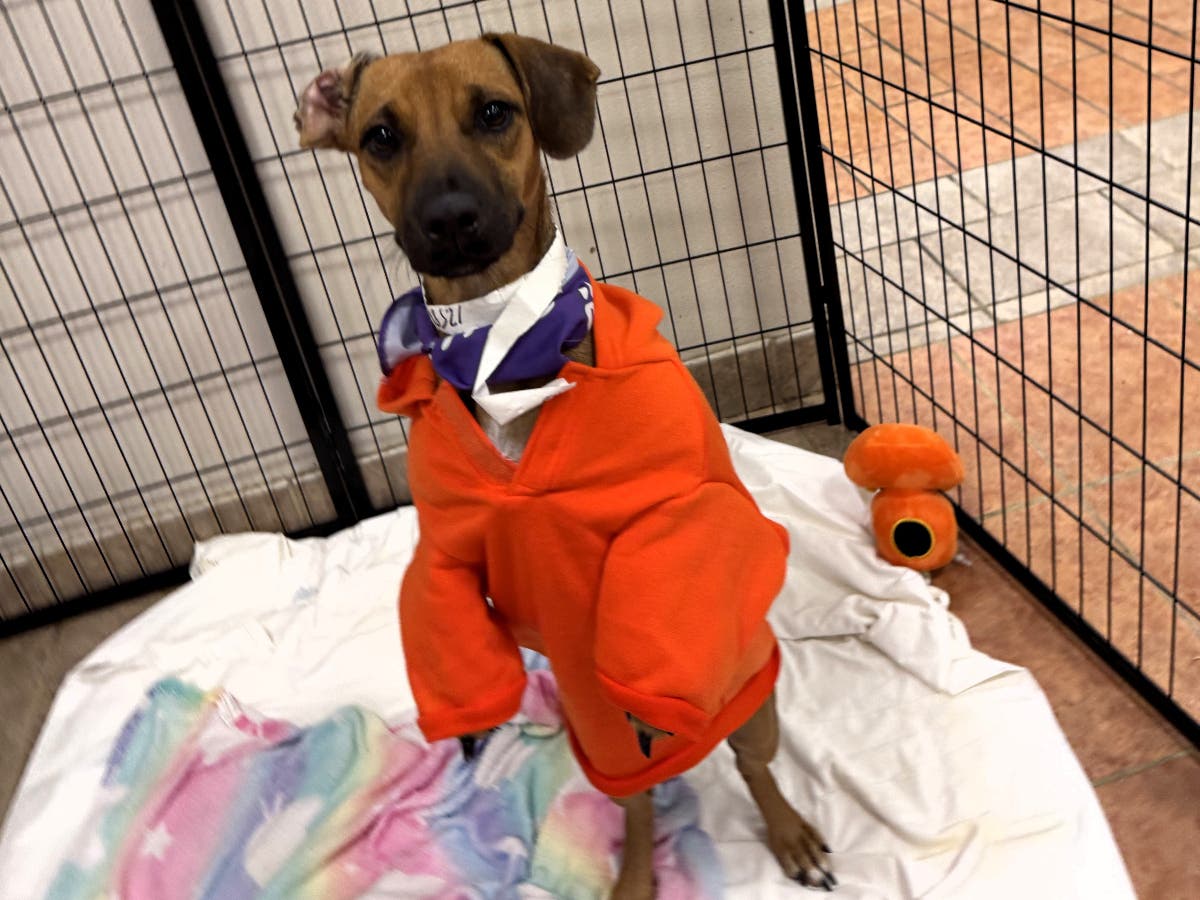
Photo of Rukia by former Northeast Animal Shelter employee Julie Orsillo. Orsillo said Rukia was euthanized after being labeled as unadoptable by the staff at Northeast Animal Shelter.
Dave Copeland can be reached at dave.copeland@patch.com or by calling 617-433-7851. Follow him on Twitter (@CopeWrites) and Facebook (/copewrites).
Get more local news delivered straight to your inbox. Sign up for free Patch newsletters and alerts.