Politics & Government
Could Ranked-Choice Voting Be Coming To Salem?
The City Council Committee on Government Services held a two-hour presentation and discussion on the pros and cons of a possible switch.


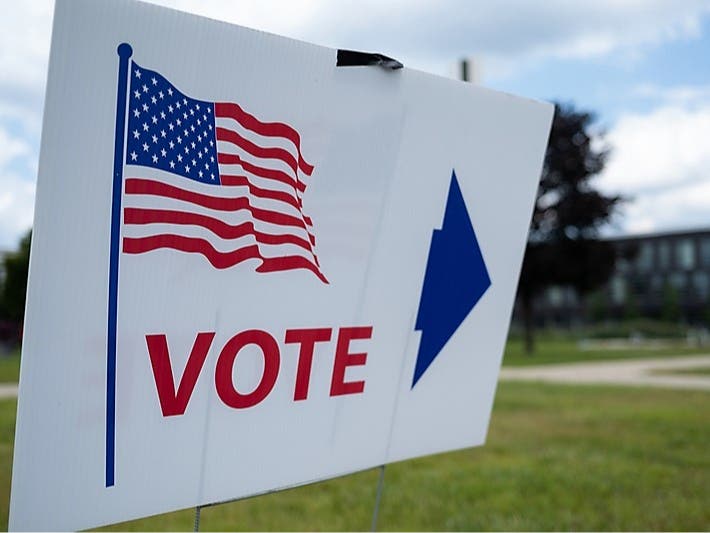
SALEM, MA — The possibility of bringing ranked-choice voting — which failed in a statewide vote in 2020 — to Salem municipal elections was the subject of a two-hour presentation and discussion Wednesday night during which several City Council members and residents expressed support for a change, while there were many questions about the practicality of bringing it to the local level without a statewide framework.
Proponents argued during the statewide campaign — and again during Wednesday's City Council Committee on Government Services meeting — that ranked-choice voting produces a more proportionally representative elected body that tends to be more diverse. Opponents of the change have said it could be too complicated and is ultimately an unnecessary change from the traditional system of electing candidates.
While several City Councilors expressed support for the concept of ranked-choice voting, City Clerk Ilene Simons and others on the Council voiced concern about the logistics of joining Cambridge and Easthampton as the two state municipalities that have implemented the change, with Amherst, Northampton, Concord, Arlington and Acton in the process of doing so as well.
Find out what's happening in Salemfor free with the latest updates from Patch.
"Whether you are for or against it I think there is another implication that we should be looking at," Committee Chair Conrad Prosniewski said. "Councilor (Patricia) Morsillo alluded to it and I want to back her up on this, and that's the legality of putting the responsibility on Salem to develop a policy and procedure that could be tested."
Prosniewski reiterated some concerns that Salem's history of close elections could make it susceptible for legal action from candidates who charge the system itself was flawed beyond any questions of vote counting.
Find out what's happening in Salemfor free with the latest updates from Patch.
Simons indicated that many of the city's voting mechanisms are in its city charter, which would then have to be changed through the often-unpredictable home-rule petition process at the state level, which was the case when it needed to change some scheduling procedures for the recent mayoral special election.
Still, the concept of ranked-choice voting did garner support from those who said it would cut down on "vote splitting" among demographic groups, tactical voting in races in races with multiple winners — such as School Committee and City Council At-Large — where voters only choose one candidate as not to add to the totals of those who might overtake their preferred candidate, and eliminates the concerns of "spoiler" voting where voters do not vote for a preferred candidate under the concern that candidate may have little chance to win and the vote might be "wasted."
Perhaps the argument for ranked-choice voting that resonated most in the room was that voting with a first, second, third and fourth choice would eliminate the need for a preliminary election each cycle since that process of narrowing the field to two candidates in a single-winner race would be wrapped into the ranked options.
"Eliminating a primary would not only save money but it will give our city clerk's office more time to get down to what needs to happen (for the general election), prioritize and do so without being so stressed out," City Councilor Andy Varela said. "I also believe we still have a problem with voter engagement in our city and it's safe to say that the current way we vote is not working. I really believe that when it comes to voter engagement we need to make the way we vote less confusing and figure out a way to get more people to vote."
According to Rank the Vote, Salem had only a 13 percent turnout for the preliminary election compared to 41 percent for the general in 2017, 17 percent in the preliminary and 26 percent in the general in 2019, 21.5 percent in the preliminary and 34.5 percent in the general in 2021, and 22 percent in the preliminary and 28 percent in the general in most recent mayoral special election.
"When it comes to 25 percent of the electorate coming out to vote that's not enough. And I think that simplifying the way we vote — eliminating the primary — it really lets people know that we're voting once on this date," Varela said. "That's what it is. Here we go. So I really think that this is something we should really take seriously."
It was noted that while the 2020 statewide vote on ranked-choice voting failed, it did pass in Salem with 52.4 percent in favor and 47.6 percent against.
The path forward to a change to ranked-choice voting could be a long one for proponents with the likely next step the appointment of a city commission to analyze the possibility and draft language for a home-rule petition that would likely then have to pass a vote of the City Council and be adopted at the state level, along with the possibility of a citywide ballot referendum on whether to adopt the change as well.
(Scott Souza is a Patch field editor covering Beverly, Danvers, Marblehead, Peabody, Salem and Swampscott. He can be reached at Scott.Souza@Patch.com. Twitter: @Scott_Souza.)
Get more local news delivered straight to your inbox. Sign up for free Patch newsletters and alerts.