Politics & Government
Strong Yes Vote On MA Trans Protections Buoys LGBTQ Community
Massachusetts voters overwhelmingly voted to reaffirm state protections against discrimination over gender identity.


QUINCY, MA — CJ Garber loved playing hockey at North Quincy High School, where he graduated in 2007 with high honors. He had been accepted at Lasell College, and in other ways seemed to have a lot going for him.
But he lasted only a semester and a half at Lasell, dropping out in 2008. And on Jan. 26, 2009, he died of a drug overdose.
CJ, born Kristen Garber, was transgender. Although his family supported him and he had an accepting group of friends in high school, his mother, Marcia Garber, said there were times he was bullied on public transportation. CJ also had trouble finding work.
Find out what's happening in Salemfor free with the latest updates from Patch.
All this happened before state protections against discrimination based on gender identity in employment, housing, credit, and education were enacted in 2011 and further protections, in public places like restaurants, stores and doctors’ offices, were signed into law in 2016 by Gov. Charlie Baker.
Read Patch's election night coverage >> Election 2018 Ballot Questions: What Passed
Find out what's happening in Salemfor free with the latest updates from Patch.
Though there's no way of knowing for sure, but Marcia Garber believed things might have been different for her son if these protections had been in place earlier.
“Even if you have everything, you have all the experts and all the community and all the treatment, and you follow the course of action you think you want, there’s no guarantee,” she said.
These protections were put in jeopardy this year when the Massachusetts Family Institute, a Woburn-based group that advocates "strengthening the family and affirming the Judeo-Christian values," mounted a successful effort to put a measure before voters requiring them to reaffirm or repeal them.
Opponents argued that putting such protections into law made it possible for men to photograph or videotape women in changing rooms and restrooms, citing three incidents and two arrests as evidence for their case.
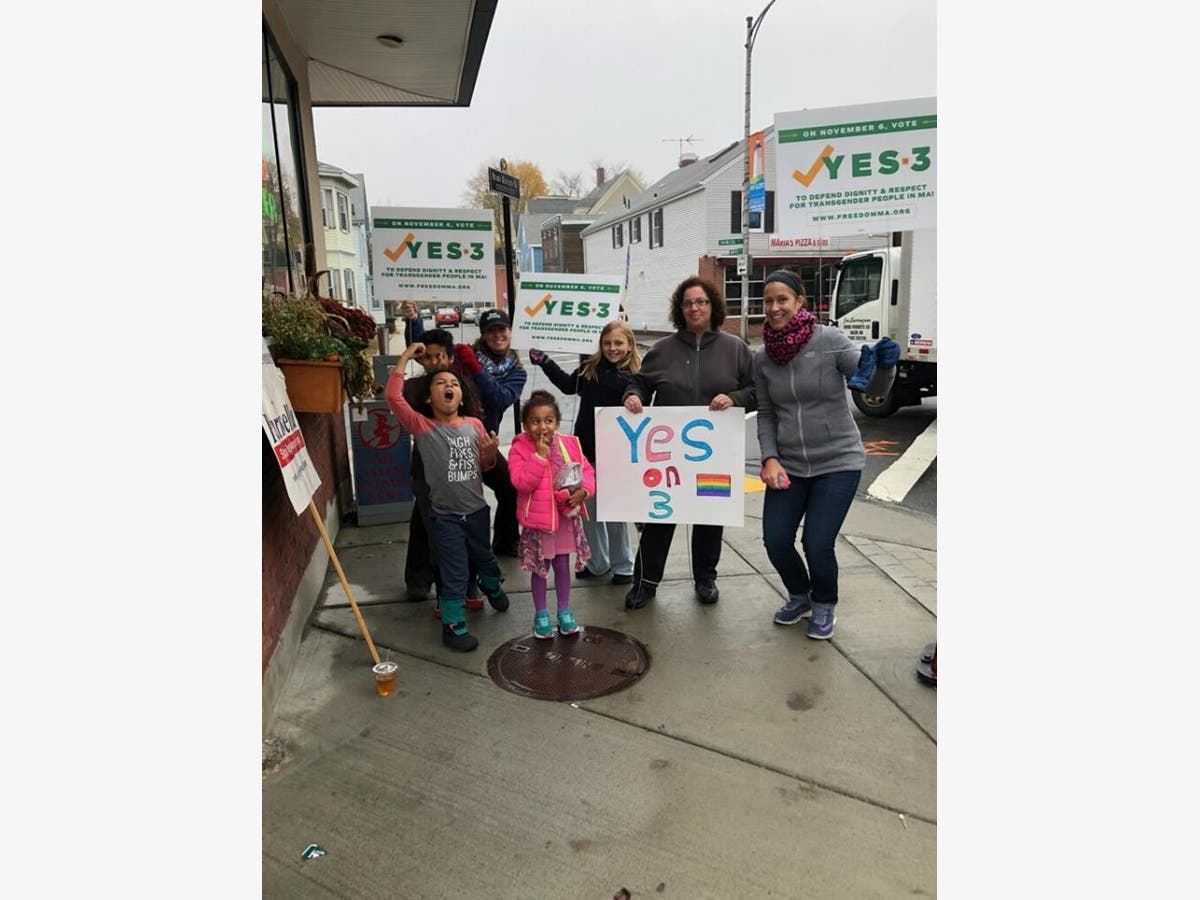
Mason Dunn, a transgender man and co-chair of the Yes On 3/Freedom for All Massachusetts campaign and executive director of the Massachusetts Transgender Political Coalition, tried to counter these arguments.
-1541630171-6946.jpg)
"It has been so hurtful to see our identities as transgender people equated with criminal acts," Dunn said. "The myth that our rights to access places like hospitals, parks, and other public spaces is somehow a threat to safety has been the predominate narrative from opponents to transgender equality, but it is a narrative that has been thoroughly debunked in peer-reviewed research, fact, and now by the voters themselves."
Massachusetts voters overwhelmingly voted yes on Question 3 , thereby upholding the protections Baker had signed into law. With 94 percent of the precincts reporting, more than 68 percent of voters had said the law should stay in place.
Freedom For All Massachusetts, an advocacy group, hailed the vote, saying it made Massachusetts was the first state to successfully defend transgender rights at the ballot box.
Stereotypes were broken that transgender people in public spaces such as bathrooms are a threat to others, said Kasey Suffrendini, co-chair of the Yes on 3 Campaign co-chair and president of Strategy at Freedom for All Americans.
"Winning this popular vote is irrefutable proof that public support for transgender people is growing, and (the) outcome will provide the necessary momentum to change the landscape on transgender rights everywhere,” he said Tuesday night.
Matthew Wilder, of Freedom For All Massachusetts, said the campaign's success should encourage efforts in other parts of the country to enshrine gender identify protections in law. Only 22 states have legislation that prohibits discrimination based on gender identity in employment, housing, and/or public accommodations, he said.
"This win will provide a playbook to win in other places," Wilder said.
The "Yes" campaign encouraged people from the transgender community to share their stories in television ads.
Other proponents of Question 3, including the Rev. Irene Monroe, an activist associated with Action for Transgender Equality, were ecstatic with the victory. As a "proud" black lesbian, Monroe has frequently spoken on issues of race, sexual orientation and gender identity, and campaigned hard to secure a yes vote on 3.
"The response to discrimination is a resounding 'No,' " she told Patch.
"The election results on Question 3 makes me feel much like an innocent person who has just been acquitted of a crime that they didn't commit," added Davie Curewitz, an Auburn resident who identifies as a transgender man. "On the one hand, I am grateful for the outcome; but at the same time, I'm wondering why I even had to go through it in the first place."
Monroe agreed that the issue shouldn't have come to a vote. In her view, gender identity rights were granted when President Barack Obama extended the Civil Rights Act of 1964 to transgender people via executive order, but were needlessly threatened when President Trump rescinded protections for transgender people in using the public restroom with which they identify.
Wilder agreed that a statewide vote wasn't the best way to defend transgender rights, that the law should not have been challenged in the first place.
"Most people agree civil rights shouldn't be put for a popular vote," he said.
Photos used with permission from Freedom For All Massachusetts and Mason Dunn
Never miss another local news story: Get free local news alerts right to your inbox.
Charlene Aresenault contributed to this story.
Get more local news delivered straight to your inbox. Sign up for free Patch newsletters and alerts.