Politics & Government
Salem Funding Dispute Threatens Annual Black Negro Election Day Events
Salem United, Inc. founder Doreen Wade told Patch that city restrictions may force the cancellation of the city's state holiday observation.


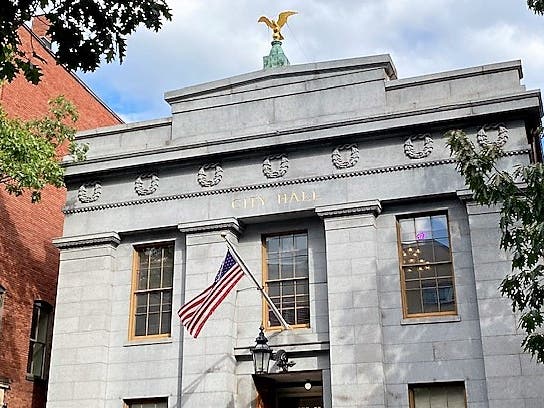
SALEM, MA – A funding dispute between Salem United, Inc. – Doreen Wade's organization that has coordinated the annual Negro Election Day events since 2015 – and the city is putting the 284-year-old celebration of the first Black voting system in America traditionally held on the third weekend of July in jeopardy.
Wade told Patch that the event, which was born out of the longtime informal Black Picnic gatherings at Salem Willows Park, is in need of support after she said Mayor Dominick Pangallo told her the city could no longer help fund the event while restricting her ability to raise funds independently through grants and vendor fees.
"He said they have no money," Wade said. "I am going to go begging to banks, credit unions, and anybody else who will reach out and help us because right now the city of Salem has put us in a bind.
Find out what's happening in Salemfor free with the latest updates from Patch.
"If we don’t raise the money, there will be no Negro Election Day."
Wade said the event was the recipient of a $10,000 city grant tied into COVID-19 funding last year and costs about $35,000 to run each year. Last year's event included a Negro Election Day parade beginning at Shetland Park that aired live on NBCU Boston as well as a daylong festival at Salem Willows Park on Fort Avenue with an opening ceremony, performers, sports, vendors, speakers and awards.
Find out what's happening in Salemfor free with the latest updates from Patch.
Gov. Charlie Baker signed a proclamation declaring Negro Election Day an official state holiday in 2022.
"For them to want to dismantle a history of this nation, that is already a state holiday and is on the national historic registry, there's something wrong here," Wade said.
She told Patch that she was told in December that Salem United, Inc. could not independently fundraise for the event, or charge vendor fees, without becoming solely responsible for it as a private event — which she said is infeasible.
"If we can't raise money, then the event has to be canceled," she said. "Where are we going to get the money? I am not a wealthy woman."
Pangallo responded to a Patch question about the event's future and the city's responsibility to continue it with the following statement:
"The city of Salem is proud to have Salem Willows Park serve as a gathering place of Black families from across our community, our region, and even our country each year on the third Saturday of July on Negro Election Day in a tradition that is a deeply important part of our history. … The day is about celebrating the democratic system of self-government here in the community. The day is about celebrating the legacy of self-government and the power of collective action and unity. We're proud to host this event in Salem.
"As we consider the future structure for this event, we want to be sure it is supported and able to continue strong."
He said the city's support has traditionally included approval to use the park, city-provided police, and public works support for the parade and park cleanup and the one-time awarding of the pandemic grant.
“While that program has since ended, with the conclusion of the federal funding that made it possible, our commitment to the success of Negro Election Day remains," he said. "The city is always assessing how it can support this important celebration and ensure we are doing so consistent with state laws regarding the use of public property and resources."
Wade said she is frustrated with what she calls a lack of support for Salem United, Inc., which she said was promised to her when she began organizing the events in 2015, and "with the racial inequities and the deceptive practices and the misleading information that the city of Salem has given to Salem United."
She added that there was a meeting with city and state officials to discuss the event on Dec. 6 but that she had not heard a response despite repeated attempts to get clarification on funding and support until she confronted Pangallo at the First Muster on Salem Common on April 13 at which time she said she was told the city did not have the resources to give her for this year's events.
"He made clear we are not getting a dime," she said.
She said the $75 each she was looking to charge vendors is not enough to pay for the whole event but would be necessary as a small part of what she needs to help offset costs.
"This is the first year we've asked for a dime from any vendors," she said. "I don’t think we're going to get rich off $75."
She told Patch she is publicizing her frustrations now in hopes of saving the organized observation of the centuries-old celebration in Salem.
"If I let this go, it is going to be null and void," she said. "It is going to be a history and an event that is going to be washed away."
(Scott Souza is a Patch field editor covering Beverly, Danvers, Marblehead, Peabody, Salem and Swampscott. He can be reached at Scott.Souza@Patch.com. Twitter: @Scott_Souza.)
Get more local news delivered straight to your inbox. Sign up for free Patch newsletters and alerts.