Community Corner
VFW Post Commander — 9/11 Changed the Army
Kim Emerling saw the quality of soldiers and the Army itself change after the 9/11 attacks.
Some people saw the 9/11 attacks up close and personal. Most watched the events unfold on television.
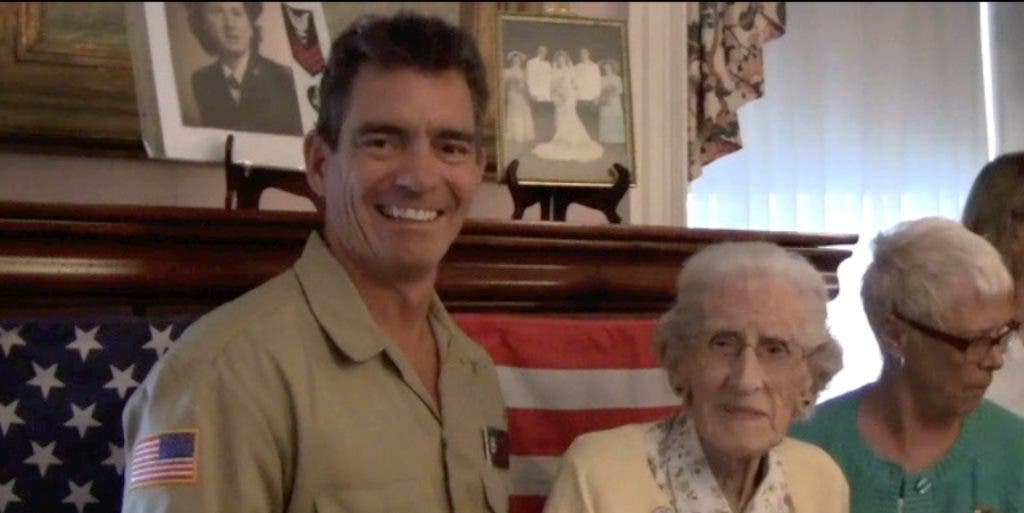
Salem's Commander Kim Emerling, now a Command Sergeant Major (CSM) in the Army Reserves, experienced things from inside the military.
Enlisting in the Army in 1979, CSM Emerling had no way of knowing where the path would lead. He would serve in the 2nd Ranger Battalion and with the 10th Special Forces Group. After serving on active duty, he moved into Military Intelligence with the reserves.
Find out what's happening in Salemfor free with the latest updates from Patch.
On Sept. 11, 2001, CSM Emerling had just dropped his two boys off at school and was on the phone with a friend from the Army when he saw that the north tower of the World Trade Center had been hit by an aircraft. He suggested that his friend turn on his television just before the south tower was hit by a second aircraft.
"When I saw the second plane go in, I knew it was terrorists," he said.
Find out what's happening in Salemfor free with the latest updates from Patch.
Time hasn't served to soften his feelings concerning those who planned and executed the attacks on American soil and its citizens 10 years ago and the changes brought in the aftermath.
"I still feel anger every time I have to take my shoes off at the airport. I understand that changes were needed. We had gotten complacent," he said.
Emerling's reserve unit was activated, and over the next five months, its personnel were split between Fort Huachuca in Arizona and Guantanamo Bay in Cuba.
Changes in military culture and training were immediate and profound.
"The recruits we saw after 9/11, the new enlistees, were a whole lot more serious than we were used to seeing," Emerling said. "They knew where they were going and, as a result, were more focused on what they had to do. They weren't there just for the school money."
Deploying to Fallujah, Iraq in 2004 with his unit, CSM Emerling and his troops were responsible for training an Iraqi Army Division. They arrived in time to experience some of the heaviest urban combat since the Vietnam War in The Second Battle of Fallujah during November and December of that year.
He and his wife, Cathy, a retired Command Sergeant Major, have two boys, Jack (14) and Will (12), who have been raised in this climate of seemingly perpetual conflict.
"We try to keep the boys informed. They have a pretty good handle on things," Emerling said.
When asked if he will encourage his sons to serve, CSM Emerling did not hesitate.
"I won't encourage or discourage. They will choose their own path, but I won't be surprised if at least one of them chooses to serve."
His experiences in Iraq tell him that it will be a long time before things settle down over there.
"We need to take a long term view," he explained. "I remember a conversation with some Iraqi soldiers where they were talking in very passionate and animated terms about a shrine of some sort that had been destroyed by the Iranians. They were personally offended and, from listening to them, I thought it was something that had happened recently. It hadn't. They were speaking of an event from the 14th century."
CSM Emerling closed the conversation by endorsing the American soldier and Army of today.
"I would encourage anyone considering the service not to take it lightly. It is a noble profession, but it's not for everybody. The job is tough. The world has never seen an Army like this one."