Kids & Family
Everwood Leader Teaches Camp World By Example
The Lakeview Street day camp is Scott Brody's '20/20 Vision' project.


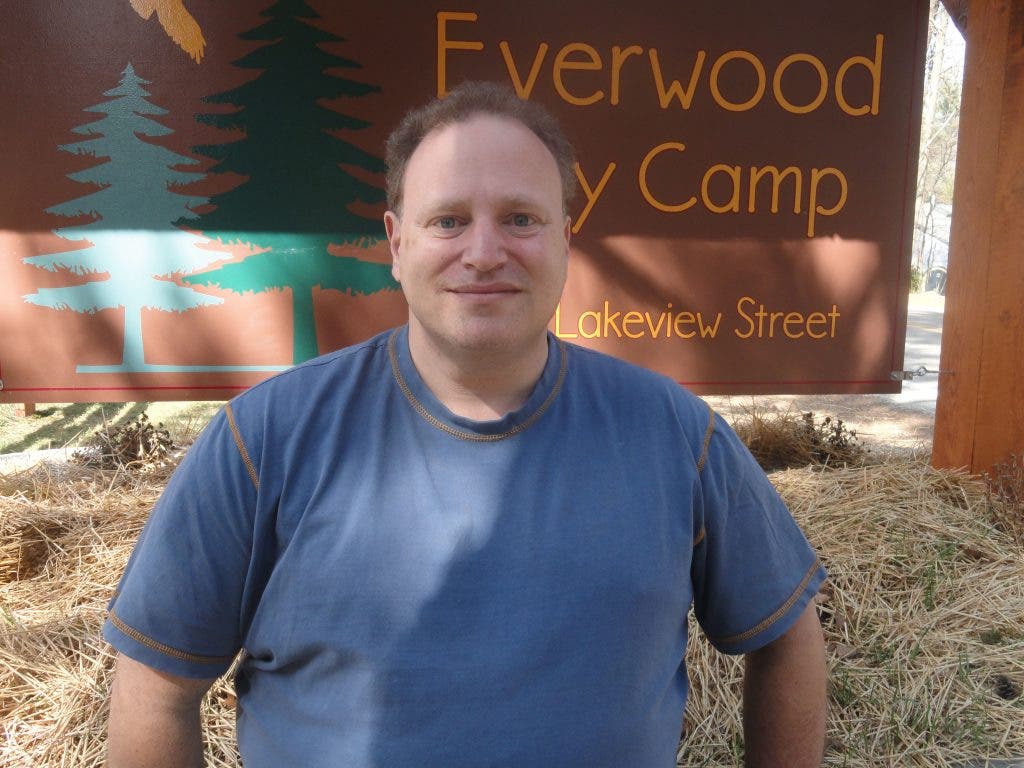
Scott Brody might be the best student.
He's a founder, too.
Brody recently shared those lessons during the American Camp Association's Tri-State Camp Conference, held March 13 to March 16 in Atlantic City, N.J. His presentation was entitled, "21st Century Skills: How Camps Teach What Children Really Need to Learn!".
Find out what's happening in Sharonfor free with the latest updates from Patch.
And this winter, the camp association presented Brody, and fellow Everwood founder Steve Baskin, with its National Honor Awards. The award recognizes "major contributions to the camp profession," Brody says. Brody is in his second term as a national vice president of the group.
Everwood, and Brody's talk, are rooted in the association's "20/20 Vision," an effort promoting "opening up the camp experience to 20 million children by the year 2020, which would essentially double the number of kids that go to camp," he says.
Find out what's happening in Sharonfor free with the latest updates from Patch.
Brody says the association has become "much more forward facing" during his eight years on the board.
"The board of directors used to be mostly a group of camp directors who were focused on good things -- on trying to make camps the best that they could be for kids, safe and developmentally impactful -- and ACA has a whole accreditation system. The board of directors was very focused on that," says Brody, who also is the owner and director of Camp Kenwood and Evergreen.
"About four or five years ago, we recognized that it's one thing to look at the existing kids who go to camp and making their experience the best it can be. It's another thing to say, 'Why do so few kids have the opportunity to benefit from a camp experience?'
"And what ultimately we asked ourselves was, 'What would need to be true for the camp experience to be much more broadly available to kids?'
The 20/20 Vision grew out of that, he says.
"Everwood is my personal project to do that," Brody says of the camp, which starts its second season this summer.
"This is why I created Everwood. Everwood is my 20-20 Visionp roject. Part of what drove us to do this was to try to create a camp experience that could provide these 21st century skills, but at a price point that was affordable to most Sharon families, and families from the area.
"I was working on the theory level on the board, but on the practice level here."
SHARON PATCH
Is part of the reason why kids don't go to camp is that there's so much for kids to do?
SCOTT BRODY
I think that's a piece of it.
There's certainly more choices than there used to be. There's more opportunity. And parents, to some extent, are out there the world trying to figure out among all the choices that they have, which are the choices that are going to benefit their kids the most.
It's difficult to figure that out. I'm a parent, and I'm asking myself that question.
A piece of it is price.
That, as camp has traditionally been defined, you have not-for-profit camps that are trying to keep their prices as low as possible and have their sessions as short as possible to serve as many kids as they can.
And then you have for-profit camps. And running a for-profit camp is an expensive proposition.
Every one of these experiences has value.
But a piece of what we have to ask ourselves as parents, and ultimately as camp professionals, is "How can I do the best good for kids?"
Part of what I've been asking myself, and the board has been asking itself, is, "OK, what do kids need the most now?"
Utimately, that requires stepping away from the way camp has been defined in the past, and saying, "OK, what's most relevant to kids now? What kind of developmental experiences do they need to round them out and make them happy and healthy human beings that are going to be ready for the world that they're stepping into?" That really is the formative question.
The board realized that the people sitting around the table couldn't answer that question. Because they were all camp directors. They knew what they did. But they didn't have a broad enough understanding of the broader challenges. So we decided that we were going to take half of our board seats and open them up to broader members of the public.
I was the first board development chairperson in that new beginning.
SHARON PATCH
It's always interesting to put theory into practice. How has it translated for you?
SCOTT BRODY
I have the luxury at our overnight camps of having the same kids for seven weeks. So, we can create an intentional community at our overnight camps that really has very strong outcomes in the areas that we're focusing on."
I wondered whether we could do that same work in day camp.
What we did when we created Everwood is we worked with Michael Thompson, who's our consulting psychologist, and we talked to people who lead programs throughout the country. I really looked out there to see who in the day camp world was doing the most meaningful work with kids.
We sort of went counter to the market. In Massachusetts, the Boston area, the market had sort of shifted. Parents said, "We want portability. We want shorter sessions, so that we can pick and choose. We want two weeks at this camp, and then we'll do two weeks at basketball camp." Because they were all trying to answer that question: 'What does my kid need?' They don't know the answer to it. So, "A little bit of everything" became the answer.
It sort of pushed camps into this "shorter session shoebox." They started offering all of these specialty programs. You can call it "camp." But now it's "science camp" and it's "computer camp."
That has value. But when you're working on 21st century skills, you really want to work on things like teamwork and collaboration. Creativity. Those cross areas.
We went the other way.
We said, "We don't think we can do it in two weeks. Or one week. So, we're going to say, 'Three weeks is our minimum. And parents, we're promising these outcomes. So, take a flyer. Take a chance, and we'll deliver.'"
And ultimately what happened is we delivered strongly enough that parents wanted more.
We actually found that the vast majority of our families that signed up last summer for three weeks extended to an average of five weeks. Some extended through the entire summer.
SHARON PATCH
Is part of the appeal having everything in one place?
SCOTT BRODY
I think part of it was convenience, and we certainly went for '"Look, we will bring your kids here."" We included transportation. We priced ourselves at a much more affordable level than many.
Especially when people saw that their kids were coming home with this greater sense of confidence and independence that wasn't grounded in people saying, "Hey, you're the greatest" but they were feeling like they were the greatest. Feeling like, "Oh gosh. I'm doing things I never thought I could do. I'm in this community where I really feel loved and valued." That provides real growth.
Get more local news delivered straight to your inbox. Sign up for free Patch newsletters and alerts.