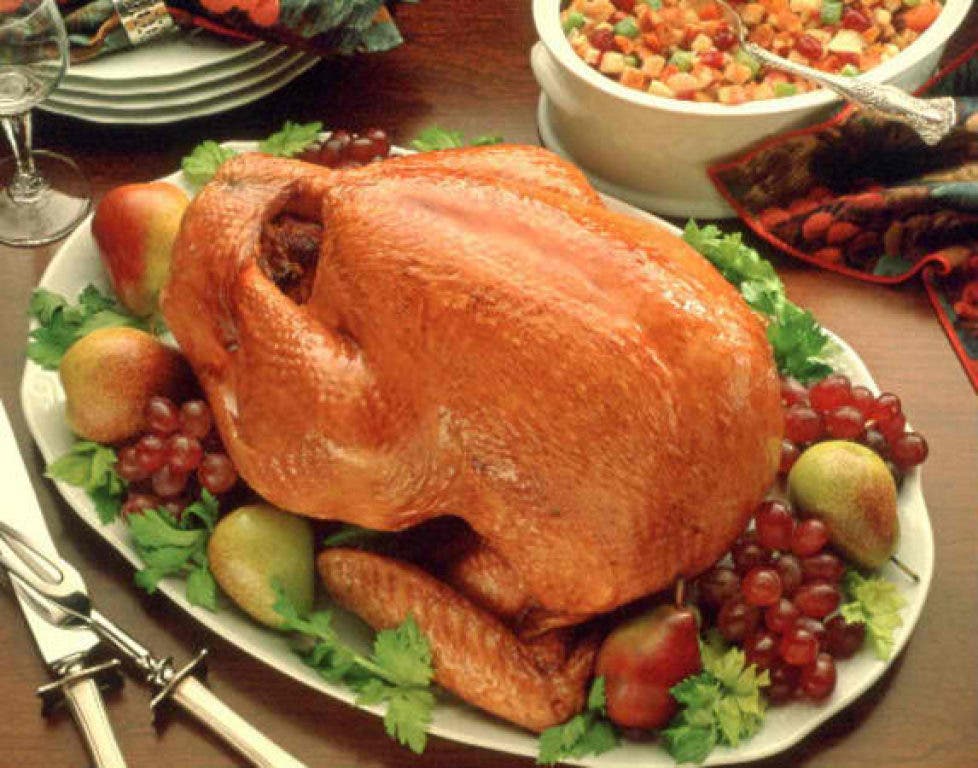
Today, Thanksgiving is celebrated once a year with feasting, parades, football, and other revelry. Throughout the seventeenth and early eighteenth centuries however, Massachusetts Bay Colony proclaimed public days of thanksgiving at various times of the year to honor God and to celebrate good fortune. In the early seventeenth century, the settlers of Plymouth Colony proclaimed a day of solemn thanksgiving to offer praise to God and to pray for God’s guidance. Sometimes New England's colonial governments held days of thanksgiving at the end of a conflict while other days were held at the end of the harvest. These harvest thanksgiving days were celebrated with other various thanksgiving days throughout the year. Gradually, a day of thanksgiving at harvest time appeared every year, while other days of thanksgiving gradually declined, especially after the American Revolution.
By the early nineteenth century, New England residents honored their autumn harvest day of thanksgiving as an important ancestral tradition. Families gathered and feasted on turkey, pumpkin pie, and other seasonal fare, and games, sport, and dancing gradually crept into their celebrations. However, the harvest thanksgiving was not yet fixed to a particular day. It fluctuated between late November and early December. The governor of Massachusetts proclaimed Massachusetts' official day a few weeks beforehand and other New England states usually celebrated on the same day.
As Kendra Nordin tells us in her , Abraham Lincoln proclaimed the last Thursday of November as the national day of Thanksgiving in 1863. Be sure to check out her article and read her take on the green bean casserole's role in Thanksgiving Day feasts.
Find out what's happening in South Endfor free with the latest updates from Patch.
So how were South Enders and other Bostonians celebrating? An 1887 article of the Boston Daily Globe describes feasting, sporting, and dancing. Sporting included rifle competitions, fox hunts, foot races, roller-skating, bicycle club rides, and, of course, football. Although this was well before the establishment of the National Football League, college games, high school games, and informal games were an established part of the day. The South End Grounds (where Ruggles T station stands today) hosted Thanksgiving football games, including contests between Boston College and Boston University, until its demolition in 1914. Late nineteenth and twentieth century South End celebrations were held at public places like the Catholic Union building on Washington Street (the Allen House) and Odd Fellows’ Hall where, in 1887, the St. James Young Men’s Catholic Total Abstinence Society held a Thanksgiving ball. Odd Fellows’ Hall stood at the corner of Berkeley and Tremont Streets, where Atelier 505 stands today. Fire destroyed the hall in 1932 (as a non-Thanksgiving related side note- check out the Boston Fire Historical Society’s website for images of the 1932 fire). Some public dinners featured prominent speakers like Reverend Edward Everett Hale, Robert Treat Paine and, in 1896, Booker T. Washington. South End House’s Robert Woods also attended public celebrations as an honored guest.
Thanking God remained a central focus of Thanksgiving until well into the twentieth century and for many, God is still a central focus today. The Cathedral of the Holy Cross, Clarendon Street Baptist Church (now condominiums), Tremont Street Methodist Church (now New Hope Baptist), Warren Avenue Baptist Church (where Hayes Park is today), and many other Boston congregations held services on Thanksgiving.
Find out what's happening in South Endfor free with the latest updates from Patch.
Many Boston area organizations hosted dinners to feed the destitute and to raise money for charitable causes. The Boston Daily Globe held an annual dinner for its newsboys and staffed it with volunteers from various charitable societies. Prisoners on Deer Island and almshouse residents of Long and Rainsford Islands also received turkey dinners and were provided with musical entertainment. Late nineteenth and twentieth century South End charitable celebrations could be found at the Home for Little Wanderers (in Jamaica Plain today but then on West Newton Street where Titus Sparrow Park is now), the Home for Destitute Catholic Children on Harrison Avenue, the Salvation Army at 1522 Washington Street, the Boston Industrial Home on Davis Street (Davis Street ran between Washington St. and Harrison Ave. and was about three or four blocks east of Dover (East Berkeley) Street), St. Joseph’s Refuge at 25 Rollins Street, and Parker Memorial on Appleton Street, among many others. Many of these dinners continued well into the mid-twentieth century. Some continue today, like those held at Pine Street Inn, which started serving Thanksgiving dinner to homeless men in 1969.
While Abraham Lincoln chose the last Thursday of November as the national Thanksgiving holiday, it was Franklin Delano Roosevelt who, in 1939, proclaimed that Thanksgiving would be held on the fourth Thursday of November. The fourth Thursday of November is not always the last Thursday of the month and this extra time extends the official Christmas shopping period.
Even though it is a long-established holiday, the president still issues a proclamation declaring the date of the official national Thanksgiving. Find President Obama’s 2011 proclamation here.
I’ll be celebrating my Thanksgiving with the Macy’s Thanksgiving Day Parade, friends, feasting, and perhaps some after-dinner board games (Apples to Apples, anyone?). However you celebrate, I hope you enjoy your day!