Schools
Learning how to Breathe: Scuba and a South End Student
Denise Caban recently returned from her scuba trip to the Bahamas with the New England Aquarium program, Sea TURTLES.
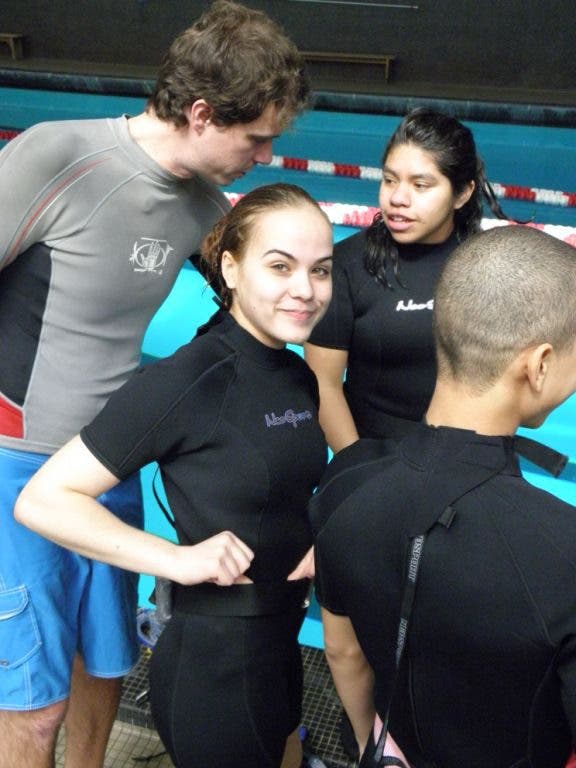
“I know that scuba diving has taught me a lot," said Denise Caban, 18, a resident of the South End. "It will be a huge affect through my whole life.”
Caban recently returned from a week of scuba diving in Bimini, Bahamas as part of the New England Aquarium Sea TURTLES program. The Teen Underwater Research, Training and Learning Expedition sponsored 11 students in the Boston area, including Caban.
After training in the MIT pool since February, Caban’s transition to the saltwater of the Bahamas meant burning eyes whenever she had to clear her scuba mask. Her original scuba training took place at the Blackstone Community Center.
Find out what's happening in South Endfor free with the latest updates from Patch.
“I never knew you could scuba dive, period,” Caban said, until her lifeguard mentor Dewey Crespo gave her a brochure and helped train her for her original certification. At that point, she knew she wanted scuba in her life and looked for opportunities to continue it.
“I didn’t want that to be the last time I dived," she said.
Find out what's happening in South Endfor free with the latest updates from Patch.
Down in the Bahamas, the group continued to expand their knowledge of marine bases, fish and scuba lingo. Buoyancy Compensators, known as BCs to divers, pump more or less air into the vest to keep the diver floating at different depths. In the water it was as much about trusting the equipment as it was supporting a swim partner, Caban said.
Her daily routine included cleaning the equipment, snorkeling, and "learning how to breathe."
“Once you put the regulator in your mouth… you cannot stop breathing,” she said. The repercussions can be tight lungs and sickness when a diver surfaces.
"Make sure you learn how to breathe constantly and learn languages and signs for 'out of air,'” she said. All divers must know the signs because, as Caban said, “you need a partner.”
Although the dives were memorable, Caban enjoyed the free time around 10 p.m. when she and her fellow divers were able to sit together on the dock and reminisce about the day’s experiences.
“[I'd like to] thank the Aquarium for giving me this opportunity to see what is out there, and see things I never believed in,” she said.