Crime & Safety
Defense Could Rest Wednesday In Matthew Farwell Murder Trial: Reports
Matthew Farwell is accused of killing pregnant Sandra Birchmore and staging her death to look like a suicide.


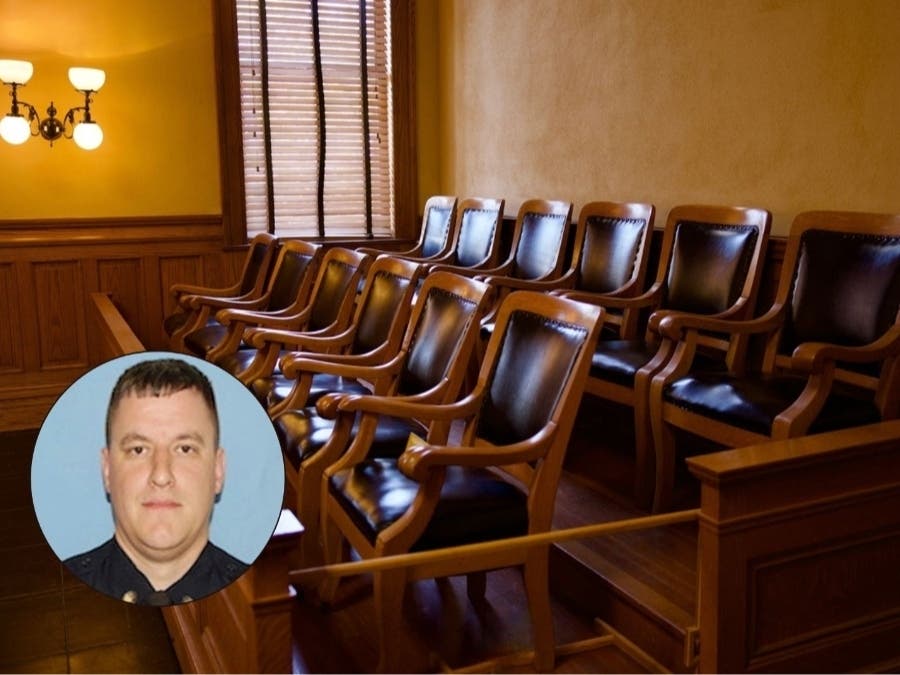
STOUGHTON, MA — The defense could rest its case on Wednesday in the federal trial of former Stoughton police detective Matthew Farwell, who is accused of killing Sandra Birchmore and staging her death to look like a suicide.
Five defense witnesses testified Monday and Tuesday: Kentucky Chief Medical Examiner Dr. William Ralston, forensic anthropologist Heather Garvin, forensic science expert Alicia McCarthy, forensic DNA expert Dr. Maher “Max” Noureddine and forensic anthropologist Angi Christensen, according to multiple reports.
Farwell, 40, is charged with killing Birchmore and causing the death of her unborn child. Prosecutors say he strangled the pregnant 23-year-old in her Canton apartment in 2021 to prevent her from disclosing their relationship, which they say began when she was 15. Farwell has pleaded not guilty and maintains Birchmore died by suicide.
Find out what's happening in Stoughtonfor free with the latest updates from Patch.
Prosecutors say Farwell killed the 23-year-old to prevent her from disclosing that he had groomed and sexually abused her beginning when she was 15, according to the U.S. Attorney’s Office.
The first set of witnesses took the stand on Oct. 13 after a jury of 16 was finalized the week before.
Find out what's happening in Stoughtonfor free with the latest updates from Patch.
Farwell faces federal charges of killing a witness or victim and causing the death of a child in utero, according to a superseding indictment. Prosecutors claim Farwell strangled Birchmore in her apartment on Feb. 1, 2021, then staged the scene to appear as though she died by suicide.
Farwell’s defense acknowledges that he had an affair with Birchmore but maintains that he did not kill her.
He would face life in federal prison if convicted.
See Related: 5 Things To Know About The Matthew Farwell Trial
Defense Testimony
Three experts testified for the defense Monday.
Ralston, who is the Kentucky Chief Medical Examiner, questioned the qualifications of prosecution expert Dr. William Smock, though Ralston had not reviewed the evidence in Birchmore’s case. Garvin, a forensic anthropologist, testified that Birchmore’s fractured hyoid bone alone could not establish whether she was strangled or died by hanging. She acknowledged that the fracture did not rule out strangulation, according to Boston.com.
McCarthy, a forensic science expert, testified that she could not determine whether a clasp on the ligature caused a mark found on Birchmore’s chest. She said differences in how the clasp and injury were photographed made the comparison inconclusive, according to Boston.com.
On Tuesday, forensic DNA expert Noureddine questioned how investigators packaged and handled the ligature and other evidence, saying those conditions created opportunities for DNA contamination or transfer. He also challenged the state laboratory’s interpretation of DNA mixtures, though he acknowledged that he did not request independent testing of the physical evidence, according to Boston.com.
Lastly, forensic anthropologist Christensen testified that Birchmore had a single fracture in a common fracture location on the right side of her hyoid bone. She said hyoid fractures are less common in younger people, according to Boston.com.
Get more local news delivered straight to your inbox. Sign up for free Patch newsletters and alerts.