Politics & Government
Redrawn State Legislative Districts Keep Stoughton Divided in Massachusetts House
Under the proposed redistricting plan, Stoughton's state legislative districts remain unchanged, with the town still having two representatives in the Massachusetts House and one in the State Senate.


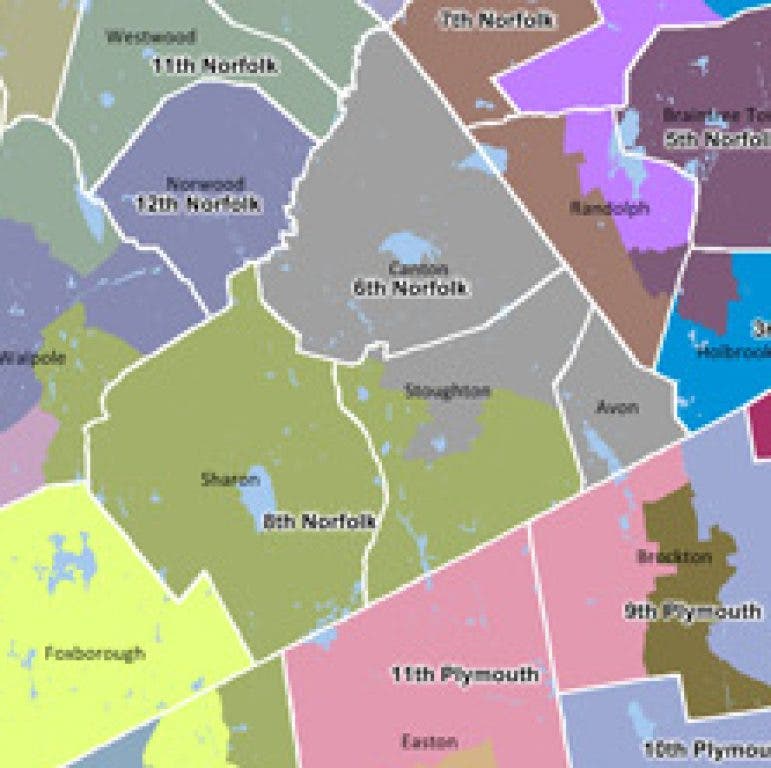


The the Massachusetts State House and State Senate districts was released on Tuesday at a hearing of the Massachusetts State Legislature’s joint redistricting committee, and while some towns were impacted, Stoughton’s state legislative districts remain unchanged.
According to the proposal, Stoughton is still part of the Norfolk, Bristol and Plymouth district in the State Senate, which is currently represented by Senator Brian A. Joyce (D-Milton).
While a single state senator represents Stoughton, the proposal calls for the town to continue having split representation in the Massachusetts House of Representatives, with precincts 1,5,7 and 8 part of the Sixth Norfolk District in the House, and with precincts 2,3,4 and 6 part of the Eighth Norfolk District.
Find out what's happening in Stoughtonfor free with the latest updates from Patch.
Rep. William C. Galvin (D-Canton) represents precincts 1,5,7 and 8 in Stoughton. The rest of his district, the Sixth Norfolk, includes the entire towns of Avon and Canton, in addition to his four precincts in Stoughton.
Rep. Louis L. Kafka (D-Stoughton) represents precincts 2,3,4 and 6 in Stoughton. The rest of his district, the Eighth Norfolk, consists of the entire town of Sharon, two precincts in Walpole and one precinct in Mansfield, in addition to his four precincts in Stoughton.
Find out what's happening in Stoughtonfor free with the latest updates from Patch.
The proposed redistricting aimed to increase the number of districts across the state where most voters identify themselves as members of minority groups, the Boston Globe reports. There will be 20 “minority majority” districts in the house and three in the senate, according to the Globe.
There are 160 state representative districts and 40 state senate districts in total. According to the Massachusetts Legislature’s website, each state representative represents about 40,000 people, while each state senator represents about 160,000 people.
Most legislative districts remained intact statewide, the Brockton Enterprise reported.
Redistricting takes place after the census is conducted (once every ten years). Any new potential districts will become effective for the 2012 election cycle, according to the Massachusetts Legislature’s website.
The public is invited to submit comments and feedback regarding the proposal.
The proposed changes to the legislative districts need the approval of the Massachusetts House, Senate and Governor Deval Patrick before the redrawn map becomes official.
To view the proposed changes, click on the link:
Get more local news delivered straight to your inbox. Sign up for free Patch newsletters and alerts.