Health & Fitness
Standards
Afghans have a far different standard in construction than Americans, can I live with that on the projects over here?
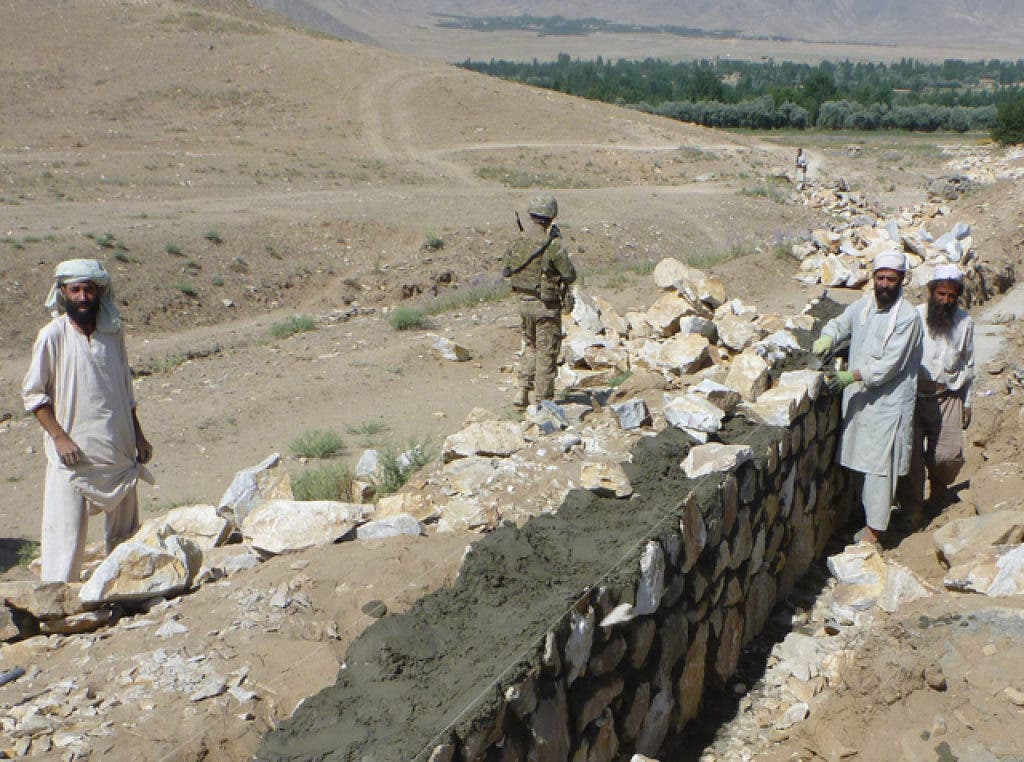

One of the key parts of our strategy to win hearts and minds here in Afghanistan is to engage the local populace in projects that provide them jobs, train them in a trade and build the infrastructure in their villages. The projects I manage include medical clinics, government buildings and roadways. My team also manages smaller projects like repairing mosques, building retaining walls and assessing infrastructure that's already in place.
There are projects going on all around us in the many different areas where we operate, some that are secure and some that are not. The Afghans working on the projects all have a different skill level - some have never laid brick but are building a wall, some have never studied about electrical distribution yet they are running electrical lines. There are places where the work is great, and equally there are places where the work is pretty poor, even by Afghan standards.
I find myself having difficulty in trying to resolve what is the best course of action for my projects when substandard work is being done. There are so many factors at play and many times, the factors are in conflict. For instance, there is one wall project I am working that is a fairly simple project - construct a stone foundation, then on top of that a brick wall that surrounds a government building. The problem in front of us was the construction of the foundation was so poor, we could not allow the construction to continue. We had two options, ask the contractor to tear down the wall or accept a solution he and his workers proposed to rectify the problems.
I might have demanded the wall be completely torn down and forced the contractor to start again if this was a US based project. But in Afghanistan, where the wall is being built by mostly first time masons, what good will that do the local populace?
It's almost a certainty that if we take a hard stand and tell the contractor to rebuild, the workers will be fired. That's a common theme, we see a problem, the response is, "We fired the man that did this part of [insert project here]." In one inspection, no less than nine locals had supposedly been fired in the first 10 minutes.
How does my decision to rebuild or fix affect my overall mission, and how do I balance what is good construction and what is good for civil military operations? I can't help but look at the workers, listen to their words, and judge their actions. Before I made my decision to tear down or fix, I spoke with two locals, one of which was a new, experienced mason brought in to help mentor and fix the problems.
The mason was approximately 39 years old, but looked as if he was over 50. His leathery, deeply tanned face wore wrinkles that told more of his life than you might imagine. His deep brown eyes looked young and vibrant when he spoke about how all he wanted to do was teach the young workers how to do a good job and make us happy with the work. When he talked he was very animated, his thin but obviously strong arms working hard to trying to emphasize to me as he spoke in Pashto how dedicated he was to the project. His mortar-caked hands with thick calluses were flying in the air to add emphasis. We spoke at length about how he could train the workers to do so much better, and that he guaranteed on his family's honor that I would be happier when I returned in a week.
I then asked him about his family, where he came from and why he chose to work on this project. The stark change in his posture and his eyes took me by surprise. I've not engaged enough Afghans here to truly understand how much some Afghans care about their country. It seemed all at once, the brightness of his eyes yielded to a sad, sorrowful, almost hollow appearance as he looked away towards the mountains where he lived. He began to talk about how many family members he'd lost fighting over the past few decades. Gone was the animation and rapid speech, slower now his words came as if each person he spoke about brought back a memory of a happy time now gone. He looked often from side to side seeming to will himself not to look at me directly or my interpreter as he spoke.
He mentioned the beautiful apple orchards his family had once managed when Afghanistan was more prosperous. The apples sold all over Afghanistan when he was much younger and there was always more than they could eat or sell. I caught a smile as a thousand wrinkles on his face appeared of as many boyhood memories might have passed through his mind as he spoke. But soon his shoulders fell and his smile was gone as he described how his family's lands were eventually ruined by Soviet tanks and years of war that helped destroy the majority of the trees that were mature and productive. He was forced at a young age to leave home to find work and eventually became a mason.
After years of living a nomadic life searching for work where and when he could find it, a few years ago he tried to return to his home village. He wanted to work with members of his extended family to try and replant the orchards and return to farming. He knew the Americans were building wells and irrigation systems and he had high hope to return his land to how it had been productive so many years before. At first, he said it looked promising, but soon there were so many wells and so many systems tapping into the water system that the water dried up in the wells and there was no more water for irrigation. He had to leave again to find work to support his family.
This was a difficult story to hear as I cannot even begin to imagine having to live a life with those kinds of challenges. I am so very sad to have left my girls to come to Afghanistan, but I do so out of my own free will knowing the challenges we as a family would face. I wasn't forced to go, and it wasn't out of desperation. Hearing his story helped me in my decision about the project's next steps.
Not everyone in Afghanistan is trust worthy, and many people will attempt to get anything and everything they can out of the Americans. But I didn't get a sense of this from this man. Maybe it's idealism, maybe it's naiveté, but I couldn't help but think about the second and third order of effects from my decision and how many families could be negatively affected.
Force the contractor to rebuild the wall from scratch, and this man's honor would be questioned (he promised me I would be happy on his family's honor after all). The contractor might fire all these workers and start with new workers that might not do any better and we'd be right back where we started. And likely if they were all fired, the contractor wouldn't pay them a dime for work they've already done. Second or third order effects? I felt as if I was getting into fourth and fifth order of effects.
I accepted the contractor's option to back fill the mortar and redo the pointing in order to strengthen the wall and I took a gamble on whether the contractor and the workers would follow through on their promises. I went against my command's recommendation (but was told it was my decision) and realized how much credibility I would lose if this blew up in my face.
A week later and the work they've done to correct the problems not only looks good, they identified another issue with the construction that they took upon themselves to fix. The desire to prove they were true to their word was evident. I am not so ignorant as to believe that every project will turn out this way, but it seemed like it worked out well for everyone.
That day was the first time I went back to the FOB feeling as if I made a positive and tangible, even if small, difference in Afghanistan. In the movie "Contact," Ted tells his daughter Ellie, "Small moves, Ellie, small moves." I'm trying my best to make the small moves meaningful ones.