Crime & Safety
Swampscott Police Have a New Weapon in Battle Against Opioid Overdoses
All on-duty officers are now equipped with a potentially life-saving drug.

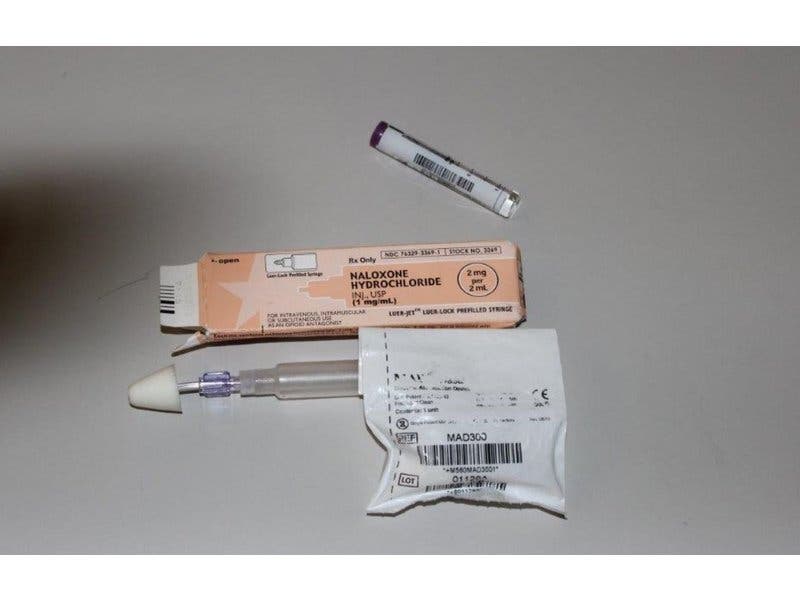
People in Massachusetts are dying from opiate overdoses. It’s a fact Swampscott police are hoping they can help change now that all on-duty officers are equipped with and trained to use nasal Narcan.
According to Wikipedia, the drug naloxone (Narcan is a trade name), counters the effects of opioids and “it will usually reverse the depression of the central nervous system, respiratory system, and hypotension.”
Swampscott officers have dealt with a number of overdoses in the past year, and Massachusetts on the whole suffered more than 1,000 opioid overdose deaths in 2014, according to The Boston Globe. In Essex County, 145 people died from opiate overdoses in 2014, according to The Daily Item.
Find out what's happening in Swampscottfor free with the latest updates from Patch.
“We’ve had several overdoses,” Swampscott Sgt. Tom Hennessey said. “We’ve had fatal overdoses. We’ve had overdoses when officers have administered rescue breathing or CPR until paramedics got there.”
Hennessey said that each Swampscott officer now carries a kit containing the Narcan and the atomizer to administer it through the nasal passages. (Check out the image on the Swampscott Police Department page.) Officers were trained in how to use it -- “it’s pretty simple, really,” Hennessey said -- by Officer Jack Dube who attended a more extensive training and is responsible for medical training for the department.
Find out what's happening in Swampscottfor free with the latest updates from Patch.
No one from the department has yet had to use the Narcan, Hennessey said, but he witnessed the intravenous version of it used by Swampscott paramedics after he and other officers administered rescue breathing to an overdose victim who had a pulse but was not breathing.
“If someone is under the influence of opiates, it will bring them out,” Hennessey said. “You see people who have been dead, blue, not breathing and you give them the two little blasts and they’re up talking.”
Hennessey said he worked a school resource officer in the late ‘90s and early 2000s and saw first-hand the tragedy of opiate addiction, so he’s glad to have a tool that could save a life.
“The opiate crisis has been so bad, and there have been kids that I’ve seen pass away,” Hennessey said. “There were kids that I knew and cared about and were great kids. If there’s anything that I can personally do that will save somebody, that’s what I’m here for.”
Get more local news delivered straight to your inbox. Sign up for free Patch newsletters and alerts.