Schools
Brandeis 'Deeply Disappointed' In SCOTUS Affirmative Action Decision
Brandeis President Ron Liebowitz said the college would comply with the ruling, but it won't change the diversity commitment of the school.


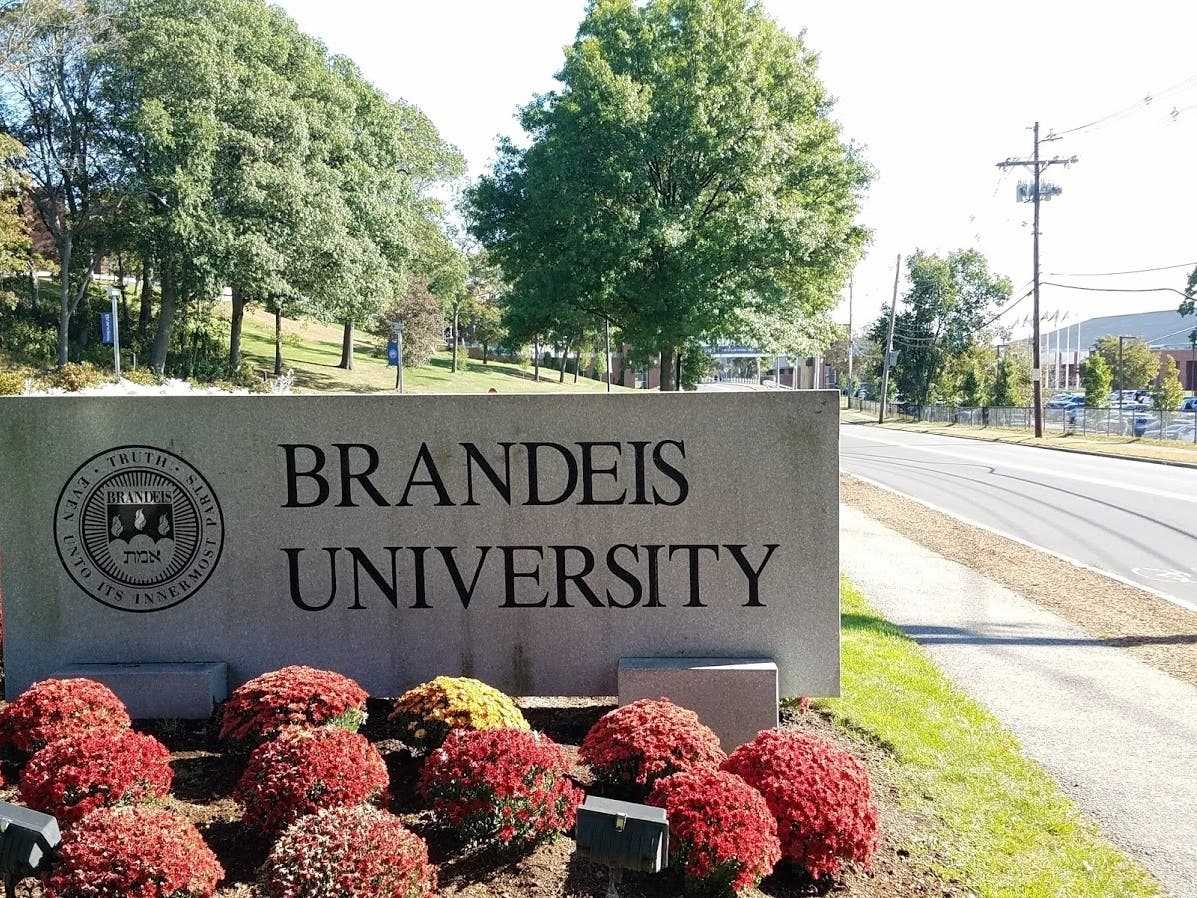
WALTHAM, MA — Brandeis University President Ron Liebowitz said he was "deeply disappointed" by the Supreme Court's recent college affirmative action decision, but said the move wouldn't lessen the administration's commitment to diversity at the college.
The U.S. Supreme Court on Thursday ended race-conscious affirmative action policies similar to those used for decades by some Massachusetts colleges and universities to increase diversity on their campuses.
In a 6-3 decision, the court held that race-conscious admissions programs at Harvard and the University of North Carolina violate the equal protection clause of the 14th Amendment, effectively eliminating the ability of colleges and universities to use affirmative action to achieve a racially diverse student body.
Find out what's happening in Walthamfor free with the latest updates from Patch.
The majority opinion by Chief Justice John Roberts said the court has "permitted race-based admissions only within the confines of narrow restrictions. University programs must comply with strict scrutiny, they may never use race as a stereotype or negative, and — at some point — they must end.”
Liebowitz issued a statement in response to the move, which is included in full below:
Find out what's happening in Walthamfor free with the latest updates from Patch.
"Brandeis was established 75 years ago to address antisemitism, racism, and gender discrimination in higher education, and it remains today an institution dedicated to its founding values of inclusivity and justice.
We at Brandeis are deeply disappointed by today’s Supreme Court decision, which reverses decades of court precedent recognizing the compelling interest colleges and universities have in creating diverse student enrollments.
We believe that diversity is crucial to academic excellence, innovation, and the free exchange of ideas. We will comply with this ruling, but the decision does not change our commitment to these ideals.
It will take some time to fully understand how this decision will affect admissions and the composition of our undergraduate and graduate student bodies at Brandeis. Yet we will remain dedicated to providing opportunities for students of all backgrounds."
Liebowitz wasn't the only state or college official to respond in opposition.
In a letter, signed by officials ranging from Gov. Maura Healey to Senate President Karen Spilka to the presidents of dozens of private and public Massachusetts colleges, education leaders said they will remain committed to diversity — although did not say if the state would pursue an alternative to affirmative action.
The State Universities of Massachusetts Council of Presidents said they would "stand firmly that the state universities will continue to ensure that students of color, first-generation college students, LGBTQIA+ students, and other historically underrepresented students in higher education are able to access the high-quality postsecondary education we offer and they deserve."
"We are disappointed with this decision and remain committed to the aims and goals of the Board of Higher Education’s Strategic Plan for Racial Equity," said John Keenan, President of Salem State University and the Chair of the State Universities Council of Presidents.
Framingham State University President Nancy Niemi said the Supreme Court's college affirmative action decision will have no effect on Framingham State, but should be concerning to those hopeful that colleges can — and should — continue to find ways to diversify the student body.
Read more: SCOTUS Affirmative Action Decision Has 'No Practical Impact' On FSU
The two separate but similar cases before the court — Students for Fair Admissions v. University of North Carolina and Students for Fair Admissions v. President and Fellows of Harvard College — were brought by a conservative activist group that argues the Constitution forbids the use of race-conscious admissions policies.
The plaintiffs asked the justices to strike down the landmark 1978 ruling in Regents of the University of California v. Bakke that upheld schools’ use of race-conscious admissions policies, and Grutter v. Bollinger, a 2003 case affirming it. Writing for the majority in that case, Justice Sandra Day O’Connor said the University of Michigan Law School’s use of a race-conscious admissions program did not unduly harm nonminority candidates.
Specifically, the plaintiffs argue Harvard’s policy violates Title VI of the Civil Rights Act prohibiting institutions that receive federal funding from discriminating based on race. Because of the policies, they argued, Asian American students were less likely to be admitted to Harvard than similarly qualified white, Black or Hispanic applicants.
The group argued the University of North Carolina violated the 14th Amendment’s equal protections clause, which bars racial discrimination by government entities, by considering race when it’s not necessary to do so to achieve a racially diverse student body.
In the North Carolina case, lawyer Patrick Strawbridge told the justices “racial classifications are wrong,” as established in Brown v. Board of Education, saying the Supreme Court’s 1954 landmark ruling striking down racial segregation in public schools.
Students for Fair Admissions, the group that brought the lawsuits against Harvard and the University of North Carolina, is headed by Edward Blum, a conservative legal strategist who has spent years fighting affirmative action.
In a statement after the court agreed to hear the case, Blum said both Harvard and the University of North Carolina “have racially gerrymandered their freshman classes in order to achieve prescribed racial quotas.”
“Every college applicant should be judged as a unique individual, not as some representative of a racial or ethnic group,” he said at the time.
Blum also bankrolled a 2016 Supreme Court case Fisher v. University of Texas, in which a white student said she had been denied admission to the school because of her race. The court narrowly upheld race-conscious admissions policy in that case, but warned that not all affirmative action policies would pass constitutional muster.
Many predominantly white colleges and universities developed affirmative action plans in the 1960s and 1970s as they struggled to attract people from historically disadvantaged and underrepresented communities. Polices were also created to promote greater inclusion of women.
Since the late 1970s, the Supreme Court has three times upheld affirmative action on the grounds that institutions have a compelling interest to address past discrimination that shut nonwhite students out of higher learning. Justices have also agreed with arguments that more diverse student bodies promoted cross-racial understanding.
Race is among a confluence of admissions standards, including grades, test scores and extracurricular activities, but institutions say it can be a deciding factor when considering large numbers of equally qualified students for a limited number of spots.
About a quarter of schools said in a 2019 National Association of College Admission Counseling survey said race had a “considerable” or “moderate” influence on admissions, while nearly 60 percent said race had no influence at all.
Nine states — Arizona, California, Florida, Idaho, Michigan, Nebraska, New Hampshire, Oklahoma and Washington — have banned race-based admissions policies at public colleges and universities.
Affirmative action hasn’t cured inequities in education, Sarah Hinger senior staff attorney in the Racial Justice Program at the American Civil Liberties Union, recently told EducationWeek, “but it has been an important tool in an effort to at least partially recognize the substantial inequities that exist and that people are positioned with when applying to colleges, and on college campuses.”
The Associated Press contributed reporting.
Get more local news delivered straight to your inbox. Sign up for free Patch newsletters and alerts.