Neighbor News
OPINION: At the Fernald, First Responders and Kids Come Last
The Fernald has become an emblem of the city's misuse of taxpayers funds. Now, failed policy is putting first responders and kids at risk.
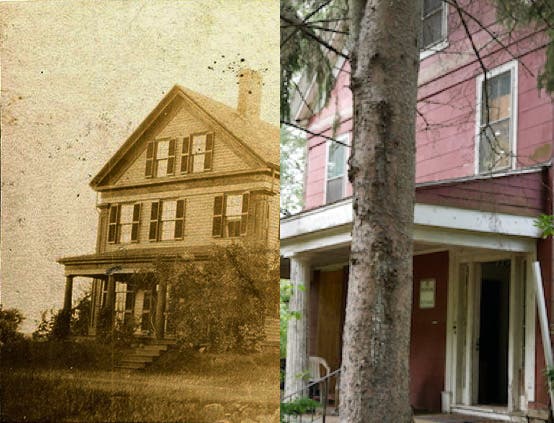
The Cardinal Cottage is the oldest building at the massive former Fernald School campus, which the City of Waltham bought from the Commonwealth in 2014. When it burned in the early hours of Tuesday morning, it showed how failed public policy is putting the lives of first responders and kids at risk every day in this community.
Built in the mid-19th century, the once-beautiful red house predates the arrival of the Fernald School, and is one of the last of the historic cottages that lined Trapelo Road. Sadly, it is not the first building at the Fernald to burn. Hundreds of ghost hunters have flooded the former campus to gawk at its decay, and they have brought ruin in their wake. The decay exists for a simple reason. The city refuses to file a legally-mandated deed restriction required for having used millions of dollars in taxpayer funds at the site.
That restriction is required because, in 2014, the city purchased the national register historic site (and its vast collection of then-largely intact buildings) for a pittance using money that comes with strings attached. Those strings include an agreement to sensibly reuse the many buildings that were in good condition, while maintaining the open space around them. Because we have flouted that agreement at every turn it is the dangerous ruin that it is today.
Find out what's happening in Walthamfor free with the latest updates from Patch.
Without the restrictions in place, city employees, boards, and commissions are not empowered to do anything at the site and attempts to do so are discouraged, with even the most routine communications to the state being labelled conspiracies. All that's left then, is politics, which unsurprisingly, haven't helped. This began as soon as we bought the property, with rumor-mongering that the site conditions were worse than they were. Those rumors were just that. Rumors. But as lies, they persuaded people that the site should be destroyed, and could be destroyed. That's the reality we see today and it is increasingly clear why this level of destruction is useful. All along, the mayor never intended to honor this bargain and the majority of the city council did not understand it. It was a deal done in bad faith.
This extends to the entire fund that was used to buy most of the Fernald, which the city has misused for years. The Community Preservation Act, which funds acquisitions of land for historic preservation, affordable housing, and open space, comes with requirements that cities file deed restrictions for long-term preservation with the Commonwealth. The restrictions are a promise of good faith in return for using taxpayer money from a dedicated fund.
Find out what's happening in Walthamfor free with the latest updates from Patch.
Waltham chronically fails to do so because signing those documents would force compliance with state standards. To pull this scam off, the city exploits a loophole that does not set a time limit on when the restrictions must be filed. But years after spending millions of dollars, it looks like the malfeasance it is. It is a brazen stance, and effectively says that we are using state money, pooled from multiple communities, but refuse to commit to the terms of doing so.
Much as the city tries to pretend otherwise, the absence of oversight doesn't mean there aren't costly consequences to working in bad faith. Look no further than the failed attempt to locate a high school at the Fernald. One of the biggest reasons why the state denied the city’s request was not, as many have claimed, concerns about environmental contamination. It was because the preservation restrictions were not in place.
It does not have to be this way. The Fernald School is the nation’s most important property in the history of special education. It has horrible elements that draw ghost hunters. But it also has less-widely known progressive ones that tell the story of a school that created much of the educational landscape we see today. It was also the site of one of the most important civil rights battles for people with disabilities in American history.
With the Cardinal Cottage, records of one group that helped lead that battle were just lost forever. A story of dignity; of the fight for a better world that was waged by our neighbors, lost. That is not just local history lost. That’s history important in our national understanding of who we are.
Even if you don’t care about history, this history should matter to you because its significance means that enormous outside sources of money are available for the upkeep and revitalization of this landscape for community open space use and memorialization. For instance the Commonwealth offered to consider an application from the city to restore the wetlands at the Fernald at no cost to Waltham. It is rumored that the city refused to take action because the state’s proposal wouldn’t create a pond for hockey teams to skate on.
All of this goes on because of a widespread trope that accountability will mean having to commit to following pre-determined standards made by the state, who the city accuses of leaving the Fernald in neglect. But city officials know that the Fernald today is in worse shape than the state left it. Moreover, the state’s standards exist solely to protect the health and safety of individuals like the first responders who monitor these buildings.
This malfeasance is destined to continue. Nearly every effort to do the right thing has stalled because the council plays games while the Mayor’s office leaves the site wide open, accelerating the collapse of a place it seems to variously want to turn into an amusement park or obliterate from the face of the planet. All of it is abetted by our absentee state representatives who refuse to do the necessary oversight. Make no mistake, if this seems overwhelming, it's because of a conspiracy of ineptitude and nothing more.
In reality, it all boils down to one thing: they are treating a straightforward, mandatory filing that hundreds of Massachusetts communities make every day as if it's optional.
Perhaps what is most galling is that this snide balking at our obligations fuels a community-wide narrative of hopelessness about this site that abdicates our obligation to the memory of the individuals who worked there and lived their lives there. We have work to do, and instead of dragging our feet, undermining good intentions with political schemes, complaining that it’s not fair, or telling people it is too complex to understand (it isn’t), we need to do it.
This fire is proof that doing otherwise is a game of brinksmanship. If we continue along this course, it is only a matter of time before it claims the life of a first responder or a kid out roaming the grounds. That is not what I was agreeing to when I was a signatory to the city’s memorandum for purchasing the property from the state in 2014. Preservation is about respecting the past, and done right it puts expert tradespeople to work in the present. It should never be reduced to a balance sheet with historic buildings on one side and the lives of individuals on the other.
What can you do?
- Demand an opening of the site to guided walks. Transparency is needed. I, for one, would be honored to share the history of this place with neighbors, who have always been the ones to do right by the Fernald School.
- The enormous sums of money that were expended to demolish buildings at the site should no longer be approved. Those sums could have been spread out across the whole site in order to stabilize the buildings, gut them for future use, and honor an agreement that is frankly not that difficult to uphold. Protest any spending, aside from memorialization, that does not do this.
- Resist any distracting political process in the months ahead, especially listening sessions that have repeatedly gone nowhere or distracting proposals to open the site without committing to restrictions.
- Reject hopelessness. Stop repeating the old “buildings are beyond repair” argument that most politicians want you to believe.
- But most importantly, make a simple demand. The city must file the conservation restrictions for the Fernald School with the Middlesex County Register of Deeds within 60 days, in full, clear, and open consultation with the City’s Historical, Conservation, and Community Preservation Commissions.
Alex Green is a Waltham resident who served as chairperson of the city's historical commission and helped lead the acquisition of the former Fernald Developmental Center from the Commonwealth.