Neighbor News
Rep. Stanley, Massachusetts House Pass Opioid Bill
Comprehensive bill seeks to prevent opioid-related overdose deaths
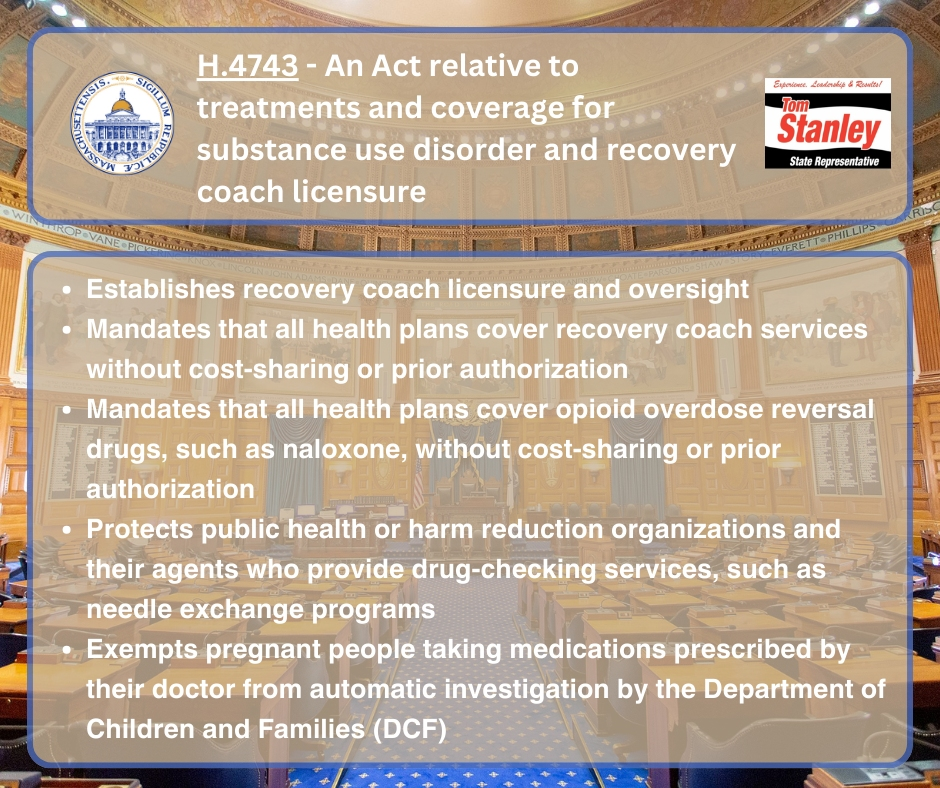
BOSTON – Thursday, June 13, 2024 – The Massachusetts House of Representatives today passed a wide-ranging opioid bill which covers the licensure of recovery coaches, makes opioid overdose reversal drugs more accessible, protects harm reduction providers, and removes barriers that new mothers in recovery face at the time they give birth.
“With the passage of this comprehensive opioid bill, we continue this commitment to evolving our legislative framework to address the urgent public health crisis posed by the opioid epidemic,” said Representative Thomas M. Stanley (D-Waltham). “By enhancing access to life-saving treatments and support services, and protecting those who provide and seek harm reduction resources, we are taking crucial steps to save lives and support families affected by substance use disorders. This legislation embodies our ongoing dedication to safeguarding the health and well-being of all our residents.”
In 2023, there were 2,125 confirmed and estimated opioid-related overdose deaths, according to the latest data published by the Department of Public Health (DPH). In 2023, there were 232 fewer confirmed and estimated deaths than 2022.
Find out what's happening in Walthamfor free with the latest updates from Patch.
Recovery coaches
Recovery coaches help people with substance use needs become and stay engaged in their recovery process. The bill passed today establishes recovery coach licensing and oversight within DPH, and mandates that all health plans cover recovery coach services without cost-sharing or prior authorization. The bill also directs the Bureau of Substance Addiction Services (BSAS) to study and report on barriers to certification, credentialing, and other employment and practice requirements for recovery coaches, and requires them to create a peer support program for recovery coaches consisting of mentorship, technical assistance on billing and employment practices, and resources.
Find out what's happening in Walthamfor free with the latest updates from Patch.
Opioid overdose reversal drugs
The bill passed today mandates that all health plans cover opioid overdose reversal drugs, such as naloxone, without cost-sharing or prior authorization. It also requires substance use disorder treatment facilities to educate on and dispense at least two doses of opioid overdose reversal drugs to an individual upon discharge, as well as requires hospitals to educate on and prescribe or dispense at least two doses of opioid overdose reversal drugs to an individual with a history of opioid use or opioid use disorder upon discharge.
It also requires pharmacies in areas with high incidence of overdose to maintain a continuous supply of opioid overdose reversal drugs and to report to DPH if they are unable to maintain compliance with this provision due to insufficient stock or supply.
Patient education
In an effort to prevent opioid misuse, the bill requires prescribers to be educated on pain treatment, including appropriate non-opioid alternatives to pain treatment. It also requires pharmacists to provide printed educational materials issued by DPH on non-opioid alternatives for the treatment of pain to patients prior to dispensing an opioid.
Harm reduction
The bill protects public health or harm reduction organizations and their agents who provide drug-checking services, such as needle exchange programs, to reduce the risk of accidental overdose from civil liability or professional disciplinary action from a board of registration, as well as from being criminally charged or prosecuted for possession of drug paraphernalia, unlawful possession of controlled substances, and conspiracy to violate the Controlled Substances Act (the CSA).
It also protects individuals who seek drug-checking services on substances intended only for personal use from being criminally charged or prosecuted for possession of drug paraphernalia, unlawful possession of controlled substances, and conspiracy to violate the CSA while on the premises of a public health or harm reduction organization providing said services.
Ensuring non-discriminatory treatment
The bill clarifies DPH’s authority to enforce anti-discrimination protections for people with substance use disorder who are on public health insurance. It also prohibits life insurance companies from limiting or refusing coverage to individuals solely because they obtained an opioid overdose reversal drug for themselves or others. It also prohibits discrimination on the basis of lawful possession and use of a medication for the treatment of an opioid-related substance use disorder, such as methadone or buprenorphine.
Pregnant people on medications for addiction treatment
The bill passed today removes “physical dependence upon an addictive drug at birth” from the conditions necessitating a child abuse and neglect report, thereby exempting pregnant people taking medications prescribed by their doctor from automatic investigation by the Department of Children and Families (DCF). It requires DCF, in consultation with DPH, the Office of the Child Advocate (OCA), and stakeholders, to promulgate regulations on the care, treatment, and reporting of substance-exposed newborns (SENs).
Having passed the House of Representatives 153-0, the bill now goes to the Senate for its consideration.
###